
 Earn with Nexo
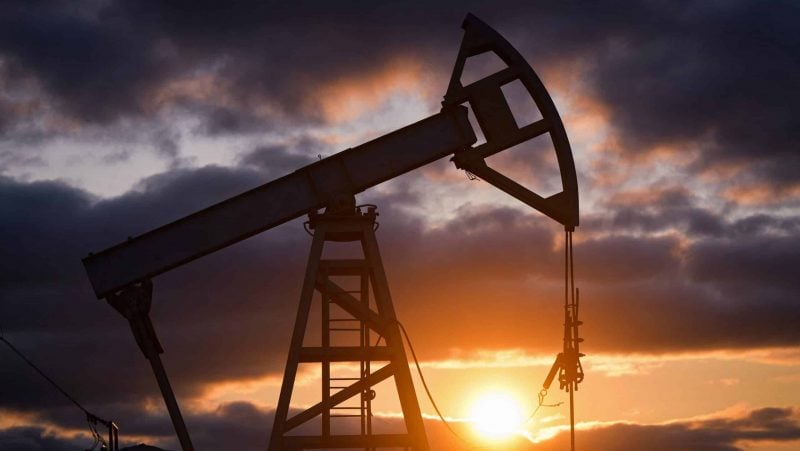
Photo: Alexander Manzyuk
Oil jumps as Trump Iran warning and weak jobs data rattle markets
Surging crude prices and a surprise 92K job loss sent Bitcoin tumbling to $69K as the Fear & Greed Index plunged to 18.
Markets took a double hit on Thursday. Oil spiked to $88 on geopolitical drama. Then a brutal jobs report kicked risk assets while they were already on the floor.
Bitcoin dropped 3.7% to around $69K. Ethereum slid 4.2%, falling below the $2K mark. Solana took the worst beating among majors, down 5% to roughly $85. The crypto Fear & Greed Index? Sitting at 18. That’s “Extreme Fear” territory — barely up from last week’s 13.
Not great.
The geopolitical trigger
Former President Trump posted on Truth Social that Iran must accept “unconditional surrender.” Two words. That’s all it took to send oil traders into a frenzy.
West Texas Intermediate crude jumped to $88 per barrel. The market started pricing in potential disruptions to the Strait of Hormuz — the narrow waterway that handles roughly 20% of the world’s daily oil supply. Translation: it’s the global economy’s jugular vein, and someone just waved a knife near it.
For context, $88 oil isn’t catastrophic. Crude topped $120 in June 2022 after Russia invaded Ukraine. But direction matters more than the number. When oil spikes on geopolitical risk instead of demand, it acts as a tax on consumers and a headwind for corporate margins. At the same time.
Here’s the thing: higher energy costs feed directly into inflation expectations. And inflation expectations are the one number the Fed absolutely does not want moving the wrong way right now.
A jobs report nobody wanted
If the oil shock was the left hook, the employment data was the right cross.
The US economy shed 92,000 jobs last month. Wall Street expected a gain of 59,000. That’s not a miss. That’s a 151,000-job swing in the wrong direction.
In English: economists predicted modest hiring. They got significant layoffs instead.
A miss this big is rare outside of recessions. The last time payrolls came in more than 150K below consensus was during the initial COVID shock in early 2020. This isn’t that. But the comparison isn’t exactly comforting.
The combo is toxic. Rising oil says inflation is building — argues against rate cuts. Falling employment says the economy is weakening — argues for rate cuts. The Fed can’t fix both at once. That’s stagflation in a nutshell. It’s the macro scenario that gives portfolio managers actual nightmares.
Crypto’s correlation problem
Bitcoin was supposed to be the uncorrelated asset. The digital gold. The hedge against exactly this kind of chaos.
Instead, BTC fell in lockstep with equities. Again.
The correlation between Bitcoin and the S&P 500 has been stubbornly persistent through 2024 and into 2025. When institutional money dominates crypto flows — spot ETFs, treasury allocations, prime brokerage desks — the asset class behaves like a high-beta tech stock. Not a safe haven.
The damage was broad:
- XRP settled around $1.36
- The wider altcoin landscape bled deep red
- The one exception: US Treasury-backed stablecoins, up 28.9% over seven days as capital rotated into the safest on-chain parking spot available
When stablecoins are your best-performing category, the market is basically saying it wants to sit this one out.
One silver lining, though. Bitcoin is still up 4% on the week despite Thursday’s selloff. The broader trend hasn’t fully reversed — yet. Whether that weekly gain survives another session of risk-off trading is the question worth watching.
What to watch from here
The immediate risk is a feedback loop. Higher oil erodes spending power. Weaker spending kills jobs. Fewer jobs reduce spending again. Rinse, repeat.
If Friday brings hawkish Fed commentary focused on the inflation signal while ignoring the jobs weakness, expect another leg down.
For crypto, three levels matter:
- Bitcoin at $69K — near the previous cycle’s all-time high from November 2021. A sustained break below $67K likely triggers a wave of leveraged liquidations, potentially sending BTC toward the mid-$60Ks.
- Ethereum below $2K — this level has been a battleground multiple times in 2025. Each test weakens buyer conviction.
- Solana at $85 — well below its 2024 highs and approaching shakeout territory for momentum traders.
That Fear & Greed reading of 18 does offer one contrarian signal. Historically, readings below 20 have preceded meaningful rallies — not immediately, but within weeks. Extreme fear tends to mark capitulation zones where weak hands exit and patient capital steps in.
The caveat: that only works if the macro backdrop stabilizes. A Fear & Greed of 18 during a genuine stagflationary episode could easily become a 10.
The bottom line: Geopolitical risk and economic weakness arriving at the same time is the macro cocktail markets hate most. Crypto proved — once again — that it trades as a risk asset during stress, not a hedge against it. The Fear & Greed Index screaming “Extreme Fear” could be a buying signal or a warning. Which one depends entirely on whether the next few data points say this was a bad week — or the start of something worse.