
 Earn with Nexo
Saylor says Kevin Warsh will become first pro-Bitcoin Fed chair
Warsh appears pro-blockchain based on his record.
Michael Saylor, executive chairman of Strategy, predicts that Kevin Warsh, recently nominated by Trump to lead the Federal Reserve, will soon become the first pro-Bitcoin chairman of the central bank.
Soon, Kevin Warsh will be the first pro-Bitcoin Chairman of the Federal Reserve.pic.twitter.com/afEBrBFeWX
— Michael Saylor (@saylor) January 30, 2026
Trump has praised Warsh as possibly “the best” choice to lead the Fed. But is the Bitcoin hype justified?
Based on what we’ve known so far, the former Fed governor is neither anti-Bitcoin nor a maximalist. In a 2021 interview with CNBC’s Squawk Box, Warsh likened Bitcoin to gold as a potential store of value or reserve asset.
Warsh was involved early in crypto, backing firms like Basis, a now-defunct algorithmic stablecoin project, and Bitwise, now one of the key players in crypto asset management.
More recently, he described Bitcoin as a market signal that could help discipline policymakers.
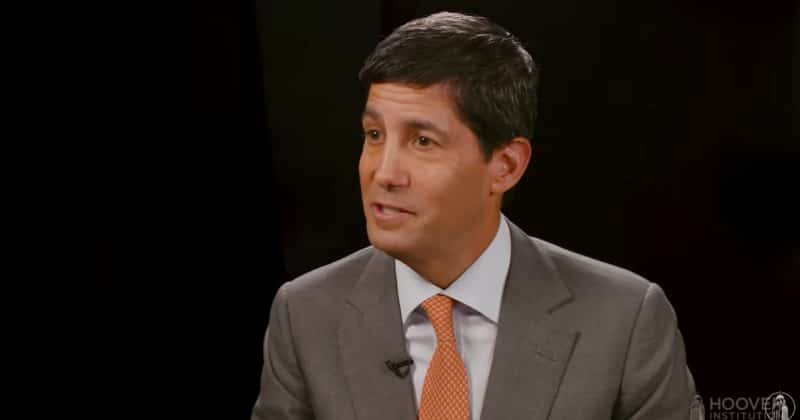
“It could provide market discipline, or it could tell the world that things need to be fixed,” Warsh said in a May 2025 interview with the Hoover Institution, responding to criticism that Bitcoin undermines the Fed’s ability to manage the economy. “Bitcoin does not make me nervous.”
Warsh also recalled during the conversation that he was introduced to the Bitcoin white paper by Marc Andreessen, co-founder of Andreessen Horowitz (a16z), in 2011.
“I wish I had understood as clearly as he did how transformative Bitcoin and this new technology would be,” Warsh said.
“I think of it as an important asset that can help inform policymakers when they’re doing things right and wrong. It is not a substitute to the dollar. I think it can often be a very good policeman for policy,” he described.
On blockchain, Warsh sees it as neutral software with transformative potential. He also highlighted that building these technologies in the US could boost productivity and deliver long-term economic benefits.
Despite his early investments in crypto firms, Warsh’s past remarks suggest a more cautious view of private cryptocurrencies.
He previously warned that these assets “masquerade as money,” contending that a US central bank digital currency would be a more effective tool for preserving monetary sovereignty amid competition from China’s digital yuan.
What Trump’s Fed chair pick could mean for crypto
A Warsh-led Fed would likely blend tighter liquidity with clearer institutional rules, though his long-standing reputation as a monetary hawk may not fully define his approach in the future.
While Warsh has been critical of balance-sheet expansion and is expected to favor quantitative tightening, which typically creates a headwind for speculative crypto assets, he has more recently aligned himself with the White House’s push for lower borrowing costs.
His Wall Street background suggests support for institutional-grade crypto regulation, potentially easing entry for pension funds, insurers, and other large investors.
At the same time, Warsh has been skeptical of private stablecoins and would likely favor strict, fully-backed frameworks to preserve dollar sovereignty.
He supports blockchain innovation broadly but has expressed wariness toward permissionless environments, instead favoring a regulated, bank-centric infrastructure and a wholesale CBDC.