
Aave plans to grow revenue streams and expand GHO over next year
Stani Kulechov outlines a 12-month strategy focused on sustainable revenue, GHO stablecoin expansion, and turning the Aave App into a distribution layer.
Aave founder Stani Kulechov laid out a revenue-first roadmap for the lending protocol on May 23, framing sustainable income generation as the defining metric for DeFi’s long-term viability. The 12-month plan centers on diversifying revenue streams, boosting profit margins through GHO (Aave’s native stablecoin), and transforming the Aave App into a distribution layer governed by $AAVE token holders.
The timing is deliberate. In mid-May, Aave’s governance passed the “Aave Will Win” proposal, which mandates that 100% of revenue generated by Aave-branded products flows directly to the Aave DAO treasury rather than being retained by Aave Labs.
Revenue as the north star
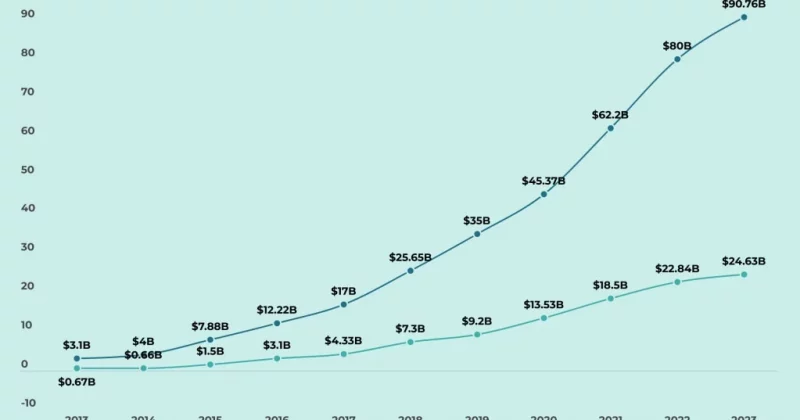
Aave V3 has given him some ammunition to make that argument. Over the past 365 days, the protocol generated more revenue than all other lending protocols combined. That’s not a rounding error. It’s market dominance in a category that includes Compound, Spark, and a growing roster of newer entrants.
The strategy Kulechov outlined isn’t about squeezing more fees from existing users. It’s about building new revenue channels while improving margins on the ones that already exist. GHO sits at the center of that margin story.
Launched in July 2023, GHO is Aave’s overcollateralized stablecoin. Instead of earning a spread on someone else’s stablecoin (USDC, USDT), Aave mints GHO and captures the full economic value of that issuance. Every dollar of GHO in circulation is a dollar where Aave doesn’t have to share revenue with a third-party stablecoin issuer.
The Aave App as a distribution layer
The second pillar of Kulechov’s plan involves the Aave App itself. Rather than treating the frontend as just a user interface, Aave is positioning it as a distribution layer—essentially a gateway through which users access Aave’s lending markets, GHO minting, and whatever new products the protocol rolls out.
The news moving money, markets, and the world—before your day starts.
Daily. Free. Join 34,000+ readers across crypto, finance, and policy.
Under the “Aave Will Win” framework, governance over this distribution layer rests with $AAVE token holders. That creates a tighter feedback loop between the token’s value and the protocol’s commercial success. If the Aave App generates meaningful revenue, that revenue flows to the DAO, which token holders govern.
Aave’s latest moves extend beyond its core lending business as well. The protocol has been pursuing real-world asset (RWA) initiatives through Project Horizon and has deployed Aave V4, its next-generation lending architecture.
What this means for investors
No significant price movements in $AAVE, and no notable shifts in total value locked were observed right away following Kulechov’s announcement.
The real test will play out over the next 12 months. Investors should watch several key metrics. First, GHO’s circulating supply and adoption rate. If GHO expands meaningfully, it validates the margin thesis. Second, the actual revenue flowing to the DAO treasury under the new framework. The “Aave Will Win” proposal creates transparency around this, so the data will be publicly verifiable on-chain.
Third, look at whether the Aave App gains traction as a standalone product rather than just a frontend for the protocol.
There’s also a governance risk worth flagging. Directing all Aave Labs revenue to the DAO means Aave Labs needs alternative funding mechanisms to sustain development. If the DAO becomes slow or contentious in allocating resources, development velocity could suffer.