
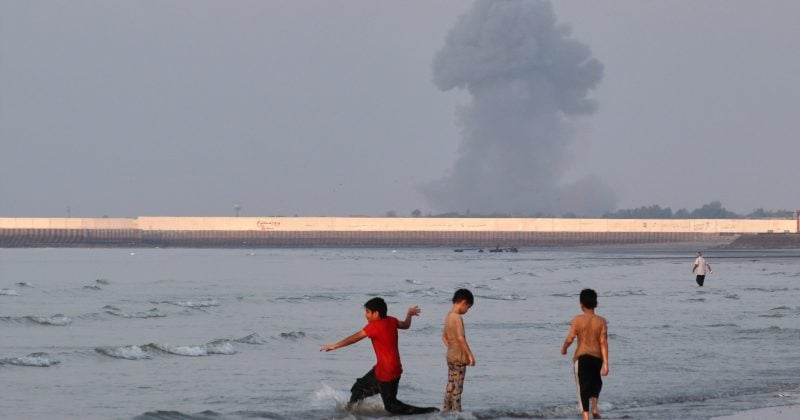
ADNOC tankers struck by Iranian missiles in Strait of Hormuz, one crew member killed
Two VLCCs operated by the UAE's ADNOC Logistics were hit by cruise missiles in Omani waters, killing one Indian seafarer and injuring eight others
Two massive oil tankers operated by ADNOC Logistics and Services were struck by Iranian cruise missiles in the Strait of Hormuz on July 13, 2026, killing one Indian crew member and injuring eight others. The attack hit both vessels while they were navigating the southern shipping lane of the strait, within Omani territorial waters.
The tankers involved were the Al Bahyah, a 2023-built Very Large Crude Carrier, and the Mombasa B, built in 2016. Both ships sustained material damage, though the UAE Ministry of Defence confirmed that onboard fires were successfully extinguished.
Among the nine casualties, eight were injured, six of them Indian nationals and two Ukrainian crew members. Four of the injured were reported to be in serious condition. One Indian seafarer did not survive.
Why the Strait of Hormuz makes this everyone’s problem
Roughly one-fifth of the world’s petroleum liquids pass through the Strait of Hormuz every single day, making it the oil market’s single most important chokepoint.
This attack did not come from nowhere. UAE maritime authorities had already recorded at least three other tanker strikes around July 8, 2026, and further incidents earlier in March of that year. The July 13 attack represents a meaningful escalation in both the scale and precision of the strikes, targeting vessels operated by one of the Gulf’s most prominent state-owned logistics firms.
The news moving money, markets, and the world—before your day starts.
Daily. Free. Join 34,000+ readers across crypto, finance, and policy.
Market implications: insurance, oil prices, and cascading risk
Attacks on tankers in the Strait of Hormuz typically trigger two immediate responses: oil prices rise on supply disruption fears, and war-risk insurance premiums for vessels transiting the region increase sharply. Tanker operators who want to keep running routes through the strait now face a harder negotiation with their insurers. Some may reroute around the Cape of Good Hope, adding weeks to transit times and meaningful costs to cargo delivery.
The UAE has stated it reserves the right to respond to provocations of this nature, though no military response had been confirmed as of the incident date.
Investors watching energy markets would be wise to track Brent crude spot pricing relative to futures curves, tanker day rates, and any diplomatic statements from Oman, which controls the waters where the attack occurred and has historically maintained a neutral posture in Gulf conflicts.