
David Albright says US and Israeli strikes have set back Iran’s nuclear program by years

David Albright says US and Israeli strikes have set back Iran’s nuclear program by years

Post-strike assessments find thousands of centrifuges destroyed, key sites idle, and no meaningful reconstruction as of mid-2026

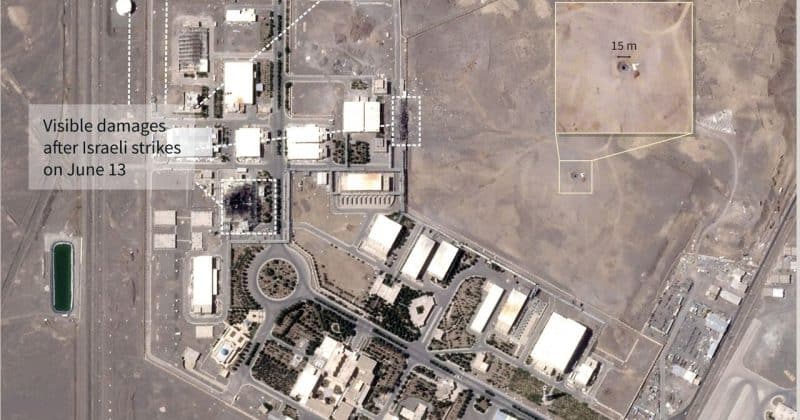
When two of the world’s most capable militaries spend 12 days methodically dismantling your nuclear infrastructure, the damage tends to be lasting. That appears to be exactly where Iran finds itself following the June 2025 strikes carried out under Israel’s Operation Rising Lion and the US Operation Midnight Hammer.

David Albright, president of the Institute for Science and International Security, has spent the months since those operations doing what he does best: piecing together satellite imagery, technical assessments, and open-source intelligence to figure out how badly Iran’s nuclear program was actually hurt. His conclusion is unambiguous. The strikes, he says, severely damaged Iran’s nuclear capabilities and will delay any path to a nuclear weapon by a significant margin.

What the strikes actually hit

Between six and nine nuclear facilities were targeted, with Natanz and Fordow, Iran’s two most important uranium enrichment sites, taking the heaviest blows.

Advertisement

Thousands of advanced centrifuges were destroyed at Natanz during the strikes. Fordow, built deep inside a mountain specifically to survive aerial bombardment, was also hit. Bunker-buster munitions were used at facilities like the Taleghan 2 site, with precision strikes reported in the March to May 2026 window.

Albright’s November 2025 assessment confirmed extensive damage not just to enrichment capacity but to Iran’s weaponization-related facilities as well.

Where things stand in 2026

Satellite imagery analyzed as of early May 2026 shows no meaningful reconstruction activity at Natanz or Fordow. Nearly a year after the strikes, two of Iran’s most critical nuclear sites remain essentially idle.

Albright has noted that residual enriched uranium stockpiles do exist. Iran had accumulated uranium enriched to 60% purity, well above the 20% threshold that marks weapons-relevant enrichment territory, along with stocks at lower enrichment levels. The precise locations and quantities of remaining stocks are now uncertain, which creates complications for any reconstitution effort.

The strikes also targeted personnel. Albright’s assessments indicate that the operations deliberately targeted weaponization infrastructure and the people connected to it. Albright stated it would be a long time before Iran could approach its pre-attack nuclear capabilities.

Why this matters beyond the headlines

By some pre-strike estimates, Iran’s breakout timeline had compressed to a matter of weeks. A damaged enrichment infrastructure and destroyed centrifuge capacity pushes that timeline back out considerably.

Enriched uranium that survived the strikes is still enriched uranium. Centrifuges that were moved or stored before the operations began are still functional centrifuges. The Albright assessments indicate that any reconstitution effort faces compounding obstacles: destroyed infrastructure, uncertain material stockpiles, diminished technical personnel, and the demonstrated willingness and capability of both the US and Israel to strike again.

Disclosure: This article was edited by Editorial Team. For more information on how we create and review content, see our Editorial Policy.

David Albright says US and Israeli strikes have set back Iran’s nuclear program by years

David Albright says US and Israeli strikes have set back Iran’s nuclear program by years

Post-strike assessments find thousands of centrifuges destroyed, key sites idle, and no meaningful reconstruction as of mid-2026

When two of the world’s most capable militaries spend 12 days methodically dismantling your nuclear infrastructure, the damage tends to be lasting. That appears to be exactly where Iran finds itself following the June 2025 strikes carried out under Israel’s Operation Rising Lion and the US Operation Midnight Hammer.

David Albright, president of the Institute for Science and International Security, has spent the months since those operations doing what he does best: piecing together satellite imagery, technical assessments, and open-source intelligence to figure out how badly Iran’s nuclear program was actually hurt. His conclusion is unambiguous. The strikes, he says, severely damaged Iran’s nuclear capabilities and will delay any path to a nuclear weapon by a significant margin.

What the strikes actually hit

Between six and nine nuclear facilities were targeted, with Natanz and Fordow, Iran’s two most important uranium enrichment sites, taking the heaviest blows.

Advertisement

Thousands of advanced centrifuges were destroyed at Natanz during the strikes. Fordow, built deep inside a mountain specifically to survive aerial bombardment, was also hit. Bunker-buster munitions were used at facilities like the Taleghan 2 site, with precision strikes reported in the March to May 2026 window.

Albright’s November 2025 assessment confirmed extensive damage not just to enrichment capacity but to Iran’s weaponization-related facilities as well.

Where things stand in 2026

Satellite imagery analyzed as of early May 2026 shows no meaningful reconstruction activity at Natanz or Fordow. Nearly a year after the strikes, two of Iran’s most critical nuclear sites remain essentially idle.

Albright has noted that residual enriched uranium stockpiles do exist. Iran had accumulated uranium enriched to 60% purity, well above the 20% threshold that marks weapons-relevant enrichment territory, along with stocks at lower enrichment levels. The precise locations and quantities of remaining stocks are now uncertain, which creates complications for any reconstitution effort.

The strikes also targeted personnel. Albright’s assessments indicate that the operations deliberately targeted weaponization infrastructure and the people connected to it. Albright stated it would be a long time before Iran could approach its pre-attack nuclear capabilities.

Why this matters beyond the headlines

By some pre-strike estimates, Iran’s breakout timeline had compressed to a matter of weeks. A damaged enrichment infrastructure and destroyed centrifuge capacity pushes that timeline back out considerably.

Enriched uranium that survived the strikes is still enriched uranium. Centrifuges that were moved or stored before the operations began are still functional centrifuges. The Albright assessments indicate that any reconstitution effort faces compounding obstacles: destroyed infrastructure, uncertain material stockpiles, diminished technical personnel, and the demonstrated willingness and capability of both the US and Israel to strike again.

Disclosure: This article was edited by Editorial Team. For more information on how we create and review content, see our Editorial Policy.