
Amazon leads in AI data center capacity as Google bets big on renewables to close the gap

Amazon leads in AI data center capacity as Google bets big on renewables to close the gap

The race to power artificial intelligence is reshaping the energy landscape, with hyperscalers spending hundreds of billions on infrastructure and clean power

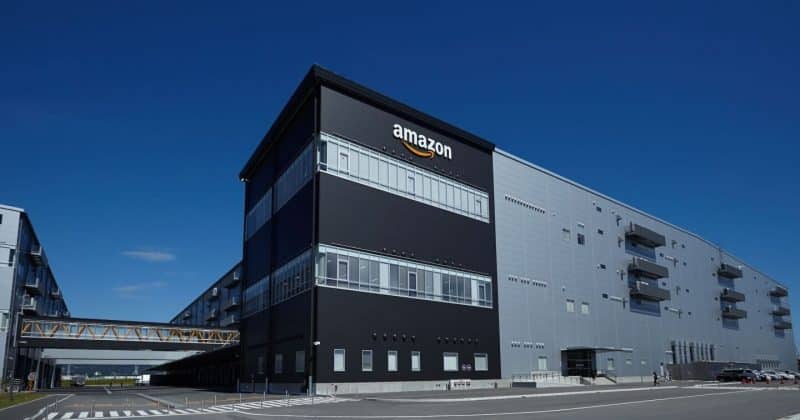
Amazon Web Services isn’t just the biggest cloud provider. It’s also sitting on the largest pile of data center capacity in the world. AWS currently operates roughly 2.3 gigawatts of active IT capacity. Meta trails at 1.5 GW, Microsoft Azure sits at 1.2 GW, and Google Cloud rounds out the top four at 508 megawatts.

The spending spree that’s rewriting corporate budgets

The three biggest hyperscalers, Amazon, Microsoft, and Alphabet, now account for more than 60% of global hyperscale data center capacity. Combined capital expenditures from these companies are projected to exceed $350 billion in 2025. By 2026, that number could push toward $400 billion.

Advertisement

Amazon has been investing heavily in AI-specific infrastructure, including its ambitious Project Rainier supercluster. Google’s cloud division is adding capacity at the fastest rate among the group, with a particular emphasis on doing it cleanly.

Google’s renewable energy play

Google has struck a $20 billion alignment with Intersect Power to develop co-located clean energy and data center parks. The company has also secured 312 megawatts of operational storage capacity as of 2025.

Amazon leads the entire US solar development pipeline with 13.6 GW under construction. Across all major hyperscalers, more than 50 GW of renewable power purchase agreements have been contracted.

What this means for investors and the broader market

The renewable energy angle adds another dimension. Companies that can provide clean power at scale, particularly those offering co-location services or large-format energy storage, are positioned to capture significant revenue from hyperscaler contracts. Google’s deal with Intersect Power at $20 billion is the kind of anchor contract that can define a company’s trajectory for a decade.

Some bitcoin miners have begun pivoting toward high-performance computing leases, essentially repurposing their energy-intensive facilities for AI workloads instead of, or in addition to, mining.

Disclosure: This article was edited by Editorial Team. For more information on how we create and review content, see our Editorial Policy.

Amazon leads in AI data center capacity as Google bets big on renewables to close the gap

Amazon leads in AI data center capacity as Google bets big on renewables to close the gap

The race to power artificial intelligence is reshaping the energy landscape, with hyperscalers spending hundreds of billions on infrastructure and clean power

Amazon Web Services isn’t just the biggest cloud provider. It’s also sitting on the largest pile of data center capacity in the world. AWS currently operates roughly 2.3 gigawatts of active IT capacity. Meta trails at 1.5 GW, Microsoft Azure sits at 1.2 GW, and Google Cloud rounds out the top four at 508 megawatts.

The spending spree that’s rewriting corporate budgets

The three biggest hyperscalers, Amazon, Microsoft, and Alphabet, now account for more than 60% of global hyperscale data center capacity. Combined capital expenditures from these companies are projected to exceed $350 billion in 2025. By 2026, that number could push toward $400 billion.

Advertisement

Amazon has been investing heavily in AI-specific infrastructure, including its ambitious Project Rainier supercluster. Google’s cloud division is adding capacity at the fastest rate among the group, with a particular emphasis on doing it cleanly.

Google’s renewable energy play

Google has struck a $20 billion alignment with Intersect Power to develop co-located clean energy and data center parks. The company has also secured 312 megawatts of operational storage capacity as of 2025.

Amazon leads the entire US solar development pipeline with 13.6 GW under construction. Across all major hyperscalers, more than 50 GW of renewable power purchase agreements have been contracted.

What this means for investors and the broader market

The renewable energy angle adds another dimension. Companies that can provide clean power at scale, particularly those offering co-location services or large-format energy storage, are positioned to capture significant revenue from hyperscaler contracts. Google’s deal with Intersect Power at $20 billion is the kind of anchor contract that can define a company’s trajectory for a decade.

Some bitcoin miners have begun pivoting toward high-performance computing leases, essentially repurposing their energy-intensive facilities for AI workloads instead of, or in addition to, mining.

Disclosure: This article was edited by Editorial Team. For more information on how we create and review content, see our Editorial Policy.