
Nexo Earn with Nexo
Amazon unveils next-gen Proteus robot that takes orders in plain English

Amazon unveils next-gen Proteus robot that takes orders in plain English

The e-commerce giant's upgraded warehouse bot swaps specialized code for conversational commands, part of a $11.6 billion European logistics push.

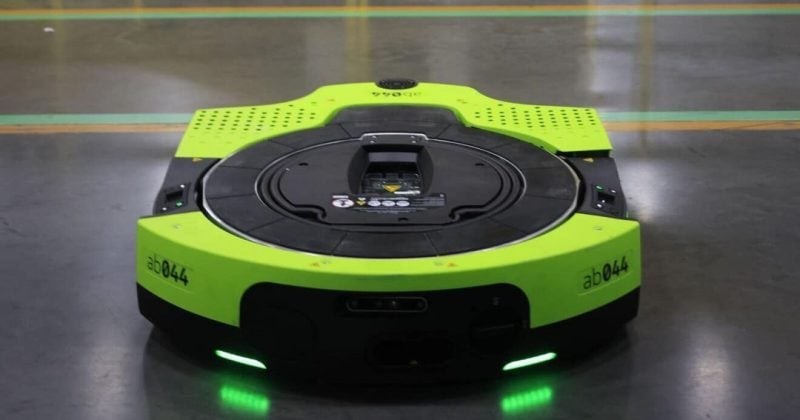
Amazon just made talking to a warehouse robot as simple as talking to a coworker. The company’s next-generation Proteus robot, unveiled at its ‘Delivering the Future’ event in London on June 4, can now receive task instructions through natural language instead of specialized software.

In English: instead of programming the robot through a technical interface, a warehouse employee can just tell it what to do. Think less “enter command sequence” and more “hey, move that cart to station 12 by noon.”

From code to conversation

The original Proteus debuted in 2022 as Amazon’s first fully autonomous mobile robot designed to share floor space with human workers. It handles heavy lifting, specifically hauling large carts through fulfillment centers.

Advertisement

Previous versions required employees to use dedicated software to route and direct the machines. The AI-powered upgrade strips that friction away. Workers can now assign the robot tasks using plain conversational phrases about what needs to go where and when. The robot navigates shared spaces alongside people, using built-in safety systems like lights and sounds to signal its presence and intentions.

Amazon operates over 520,000 robotic drive units across its global facilities, a fleet that traces its origins to the company’s 2012 acquisition of Kiva Systems. Proteus sits at the top of that hierarchy as the most autonomous unit in Amazon’s arsenal.

A $11.6 billion European bet on automation

The upgraded Proteus isn’t staying in the lab. Amazon plans to deploy it across European fulfillment centers in the first half of 2027, folding it into a broader investment of €10 billion, roughly $11.6 billion, into the company’s logistics infrastructure across the region.

What this means for investors

This announcement has zero direct connection to crypto or blockchain. Amazon didn’t mention digital assets, tokenized supply chains, or decentralized anything. The Proteus upgrade is a pure robotics and AI play.

For crypto-adjacent investors, the more interesting signal is what Amazon isn’t doing. Despite years of speculation about the company exploring blockchain for supply chain management, this announcement doubles down on centralized AI and robotics as the primary tools for logistics optimization.

Disclosure: This article was edited by Editorial Team. For more information on how we create and review content, see our Editorial Policy.

Amazon unveils next-gen Proteus robot that takes orders in plain English

Amazon unveils next-gen Proteus robot that takes orders in plain English

The e-commerce giant's upgraded warehouse bot swaps specialized code for conversational commands, part of a $11.6 billion European logistics push.

Amazon just made talking to a warehouse robot as simple as talking to a coworker. The company’s next-generation Proteus robot, unveiled at its ‘Delivering the Future’ event in London on June 4, can now receive task instructions through natural language instead of specialized software.

In English: instead of programming the robot through a technical interface, a warehouse employee can just tell it what to do. Think less “enter command sequence” and more “hey, move that cart to station 12 by noon.”

From code to conversation

The original Proteus debuted in 2022 as Amazon’s first fully autonomous mobile robot designed to share floor space with human workers. It handles heavy lifting, specifically hauling large carts through fulfillment centers.

Advertisement

Previous versions required employees to use dedicated software to route and direct the machines. The AI-powered upgrade strips that friction away. Workers can now assign the robot tasks using plain conversational phrases about what needs to go where and when. The robot navigates shared spaces alongside people, using built-in safety systems like lights and sounds to signal its presence and intentions.

Amazon operates over 520,000 robotic drive units across its global facilities, a fleet that traces its origins to the company’s 2012 acquisition of Kiva Systems. Proteus sits at the top of that hierarchy as the most autonomous unit in Amazon’s arsenal.

A $11.6 billion European bet on automation

The upgraded Proteus isn’t staying in the lab. Amazon plans to deploy it across European fulfillment centers in the first half of 2027, folding it into a broader investment of €10 billion, roughly $11.6 billion, into the company’s logistics infrastructure across the region.

What this means for investors

This announcement has zero direct connection to crypto or blockchain. Amazon didn’t mention digital assets, tokenized supply chains, or decentralized anything. The Proteus upgrade is a pure robotics and AI play.

For crypto-adjacent investors, the more interesting signal is what Amazon isn’t doing. Despite years of speculation about the company exploring blockchain for supply chain management, this announcement doubles down on centralized AI and robotics as the primary tools for logistics optimization.

Disclosure: This article was edited by Editorial Team. For more information on how we create and review content, see our Editorial Policy.