
Nexo Earn with Nexo
Anthropic’s Claude Fable 5 generates video games from single prompts

Anthropic’s Claude Fable 5 generates video games from single prompts

The first publicly available Mythos-class model can create browser-playable 3D games from minimal input, raising questions about what AI-generated gaming means for crypto's play-to-earn ecosystem.

Anthropic just shipped a model that can build an entire 3D video game from a single sentence. Claude Fable 5, released on June 9, is the company’s first generally available Mythos-class model, and it’s designed to turn the loosest creative whims into fully playable browser experiences.

What Claude Fable 5 actually does

The model excels at what Anthropic frames as long-horizon coding: complex, multi-step software engineering tasks that previous models would stumble through or abandon halfway. In English: you can describe a game concept in a few words, and it builds the thing, complete with 3D rendering, playable in a browser.

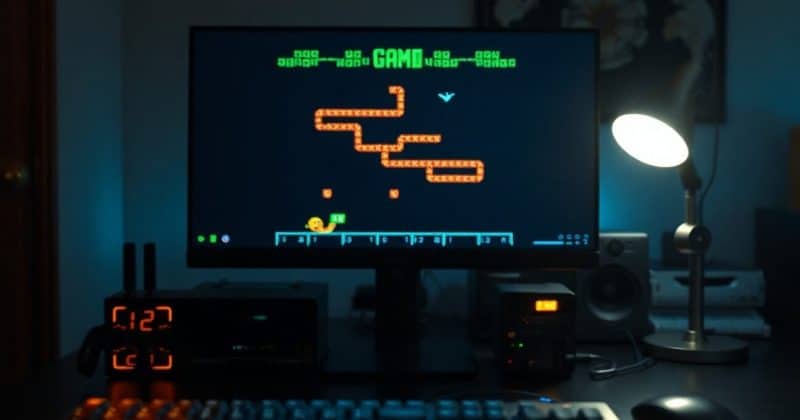
Demonstrated examples include a Library of Babel explorer and a self-aware version of Snake. These aren’t static demos. They’re functional games generated in one shot from minimal prompts.

Claude Fable 5 can also play games autonomously. Anthropic showed it navigating Factorio and Pokémon FireRed on its own, which is less a party trick and more a signal about the model’s capacity for sequential reasoning and spatial understanding.

Advertisement

Under the hood, the model runs on a 1 million token context window. It also features persistent memory and self-improvement through note-taking, meaning it can reference earlier parts of a long task without losing the thread.

On the safety side, Anthropic built in guardrails that redirect high-risk queries to the older Opus 4.8 model. This fallback triggers in less than 5% of sessions.

The price of power

Claude Fable 5 costs $10 per million input tokens and $50 per million output tokens. That’s roughly double what prior Opus models charged.

The model is available across Anthropic’s own platform at claude.ai, Amazon’s AWS Bedrock, and through GitHub Copilot.

What this means for crypto gaming and beyond

There’s no direct blockchain integration in Claude Fable 5. Anthropic hasn’t mentioned crypto, tokens, or decentralized anything in connection with the launch.

The play-to-earn and GameFi sectors have struggled with a fundamental problem for years: building games that people actually want to play is expensive and slow. Most blockchain games have felt like tokenomics experiments wearing a game’s skin. The gameplay itself has been an afterthought, largely because quality game development requires significant capital and specialized talent.

A model that can generate playable 3D experiences from a text prompt changes that equation dramatically. Indie developers and small crypto gaming studios could prototype and ship interactive experiences at a fraction of the traditional cost.

Disclosure: This article was edited by Editorial Team. For more information on how we create and review content, see our Editorial Policy.

Anthropic’s Claude Fable 5 generates video games from single prompts

Anthropic’s Claude Fable 5 generates video games from single prompts

The first publicly available Mythos-class model can create browser-playable 3D games from minimal input, raising questions about what AI-generated gaming means for crypto's play-to-earn ecosystem.

Anthropic just shipped a model that can build an entire 3D video game from a single sentence. Claude Fable 5, released on June 9, is the company’s first generally available Mythos-class model, and it’s designed to turn the loosest creative whims into fully playable browser experiences.

What Claude Fable 5 actually does

The model excels at what Anthropic frames as long-horizon coding: complex, multi-step software engineering tasks that previous models would stumble through or abandon halfway. In English: you can describe a game concept in a few words, and it builds the thing, complete with 3D rendering, playable in a browser.

Demonstrated examples include a Library of Babel explorer and a self-aware version of Snake. These aren’t static demos. They’re functional games generated in one shot from minimal prompts.

Claude Fable 5 can also play games autonomously. Anthropic showed it navigating Factorio and Pokémon FireRed on its own, which is less a party trick and more a signal about the model’s capacity for sequential reasoning and spatial understanding.

Advertisement

Under the hood, the model runs on a 1 million token context window. It also features persistent memory and self-improvement through note-taking, meaning it can reference earlier parts of a long task without losing the thread.

On the safety side, Anthropic built in guardrails that redirect high-risk queries to the older Opus 4.8 model. This fallback triggers in less than 5% of sessions.

The price of power

Claude Fable 5 costs $10 per million input tokens and $50 per million output tokens. That’s roughly double what prior Opus models charged.

The model is available across Anthropic’s own platform at claude.ai, Amazon’s AWS Bedrock, and through GitHub Copilot.

What this means for crypto gaming and beyond

There’s no direct blockchain integration in Claude Fable 5. Anthropic hasn’t mentioned crypto, tokens, or decentralized anything in connection with the launch.

The play-to-earn and GameFi sectors have struggled with a fundamental problem for years: building games that people actually want to play is expensive and slow. Most blockchain games have felt like tokenomics experiments wearing a game’s skin. The gameplay itself has been an afterthought, largely because quality game development requires significant capital and specialized talent.

A model that can generate playable 3D experiences from a text prompt changes that equation dramatically. Indie developers and small crypto gaming studios could prototype and ship interactive experiences at a fraction of the traditional cost.

Disclosure: This article was edited by Editorial Team. For more information on how we create and review content, see our Editorial Policy.