
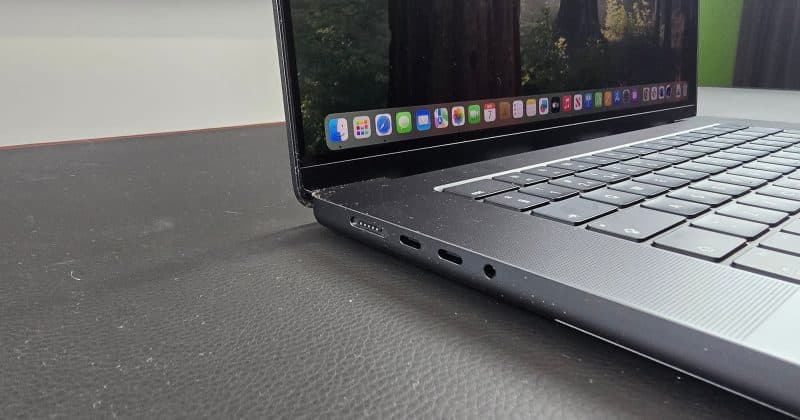
Apple raises prices on MacBooks and iPads amid memory cost surge driven by AI demand

Apple raises prices on MacBooks and iPads amid memory cost surge driven by AI demand

The tech giant hiked prices by $100 to $200 across Mac and iPad lineups as AI data center demand sends memory chip costs soaring, knocking Apple shares down 4.5%.

Apple just did something it almost never does: raised hardware prices across its Mac and iPad lineups because components got more expensive. The culprit is the same force reshaping every corner of the tech industry, AI.

The company announced price increases on June 25, 2026, pointing to soaring costs for DRAM (memory) and NAND flash (storage) chips.

The damage, model by model

The increases range from $100 to $200 depending on the product. The entry-level MacBook Neo jumped from $599 to $699. The 13-inch MacBook Air with 512GB of storage climbed from $1,099 to $1,299.

Advertisement

The MacBook Pro with 1TB of storage took the steepest hit, rising from $1,699 to $1,999.

iPads weren’t spared either. The 11-inch iPad Air with 128GB went from $599 to $749, a $150 increase.

iPhones, notably, stayed at the same price points.

Why memory chips are suddenly so expensive

Every major cloud provider and AI company is racing to build out infrastructure capable of training and running large language models. Those data centers are hungry for memory, the same DRAM and NAND flash chips that go into consumer laptops and tablets. When hyperscalers like Microsoft, Google, and Amazon are buying chips by the container ship, consumer electronics manufacturers end up competing for whatever’s left.

Apple called the situation an “unprecedented challenge.” IDC analyst Nabila Popal indicated that these price hikes exceeded what the market had anticipated. Investors seemed to agree. Apple shares dropped 4.5%, falling $13.29 to $279.88 after the announcement.

What this means for the broader tech market

This is the first time Apple has implemented widespread price increases specifically in response to component cost spikes. When Apple raises prices, it gives competitors cover to follow suit. Samsung, Dell, Lenovo, and other PC and tablet makers are almost certainly evaluating their own pricing in light of the same memory cost pressures.

Disclosure: This article was edited by Editorial Team. For more information on how we create and review content, see our Editorial Policy.

Apple raises prices on MacBooks and iPads amid memory cost surge driven by AI demand

Apple raises prices on MacBooks and iPads amid memory cost surge driven by AI demand

The tech giant hiked prices by $100 to $200 across Mac and iPad lineups as AI data center demand sends memory chip costs soaring, knocking Apple shares down 4.5%.

Apple just did something it almost never does: raised hardware prices across its Mac and iPad lineups because components got more expensive. The culprit is the same force reshaping every corner of the tech industry, AI.

The company announced price increases on June 25, 2026, pointing to soaring costs for DRAM (memory) and NAND flash (storage) chips.

The damage, model by model

The increases range from $100 to $200 depending on the product. The entry-level MacBook Neo jumped from $599 to $699. The 13-inch MacBook Air with 512GB of storage climbed from $1,099 to $1,299.

Advertisement

The MacBook Pro with 1TB of storage took the steepest hit, rising from $1,699 to $1,999.

iPads weren’t spared either. The 11-inch iPad Air with 128GB went from $599 to $749, a $150 increase.

iPhones, notably, stayed at the same price points.

Why memory chips are suddenly so expensive

Every major cloud provider and AI company is racing to build out infrastructure capable of training and running large language models. Those data centers are hungry for memory, the same DRAM and NAND flash chips that go into consumer laptops and tablets. When hyperscalers like Microsoft, Google, and Amazon are buying chips by the container ship, consumer electronics manufacturers end up competing for whatever’s left.

Apple called the situation an “unprecedented challenge.” IDC analyst Nabila Popal indicated that these price hikes exceeded what the market had anticipated. Investors seemed to agree. Apple shares dropped 4.5%, falling $13.29 to $279.88 after the announcement.

What this means for the broader tech market

This is the first time Apple has implemented widespread price increases specifically in response to component cost spikes. When Apple raises prices, it gives competitors cover to follow suit. Samsung, Dell, Lenovo, and other PC and tablet makers are almost certainly evaluating their own pricing in light of the same memory cost pressures.

Disclosure: This article was edited by Editorial Team. For more information on how we create and review content, see our Editorial Policy.