
Nexo Earn with Nexo
Apple to unveil significant Siri redesign with AI features in iOS 27 on June 8

Apple to unveil significant Siri redesign with AI features in iOS 27 on June 8

The voice assistant is getting a dedicated app, a new dark-themed interface, and possible integration with third-party AI models like Gemini and Claude.

Apple’s Siri is about to get the biggest makeover of its 14-year existence. The company plans to reveal a fundamentally redesigned voice assistant at its WWDC 2026 keynote on June 8, bundled into the upcoming iOS 27 release.

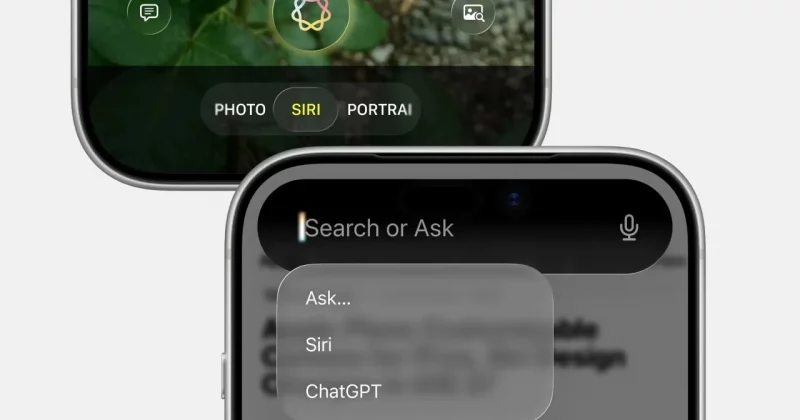
The update will reportedly include a dedicated Siri app, a new dark-themed user interface with glow effects, and chatbot-style conversational interactions.

What the new Siri actually looks like

Bloomberg’s Mark Gurman, who has been the most reliable pipeline into Apple’s plans for years, has reported that the redesigned Siri will feature integration with Apple’s Dynamic Island. That’s the pill-shaped cutout at the top of newer iPhones that Apple has gradually turned into a hub for live activities and notifications.

Advertisement

The new interface reportedly ditches the familiar colorful orb animation for a darker color scheme with ambient glow effects.

Perhaps more significant than the visual refresh is the shift toward chatbot-style interaction. Siri is expected to gain conversational AI capabilities, meaning it should be able to handle multi-turn conversations rather than treating every request like an isolated command.

The dedicated Siri app is a notable architectural change. Rather than existing solely as an overlay that appears when summoned, Siri would have its own persistent space on the device, similar to how ChatGPT or Google’s Gemini apps operate on mobile devices.

Third-party AI models enter the picture

Reports from MacRumors and 9to5Mac indicate that the redesigned Siri may support third-party AI models, with Gemini and Claude specifically mentioned as potential integrations.

Apple already introduced ChatGPT integration into its Apple Intelligence framework with iOS 18. Adding support for Anthropic’s Claude and Google’s Gemini would represent a significant expansion of that strategy, essentially turning Siri into a switchboard for multiple AI backends rather than relying solely on Apple’s own models.

A history of delays finally coming to a head

Many of the Siri enhancements expected to arrive in earlier iOS versions were repeatedly postponed. Features that were originally slated for iOS 18 got pushed back, and then pushed back again. iOS 27 appears to be the version where Apple finally delivers on promises it started making over a year ago.

Device compatibility remains an open question. Apple Intelligence features in iOS 18 required an iPhone 15 Pro or later, which limited adoption significantly. Whether iOS 27’s Siri redesign will carry similar hardware restrictions could determine how quickly these new capabilities reach a critical mass of users.

Disclosure: This article was edited by Editorial Team. For more information on how we create and review content, see our Editorial Policy.

Apple to unveil significant Siri redesign with AI features in iOS 27 on June 8

Apple to unveil significant Siri redesign with AI features in iOS 27 on June 8

The voice assistant is getting a dedicated app, a new dark-themed interface, and possible integration with third-party AI models like Gemini and Claude.

Apple’s Siri is about to get the biggest makeover of its 14-year existence. The company plans to reveal a fundamentally redesigned voice assistant at its WWDC 2026 keynote on June 8, bundled into the upcoming iOS 27 release.

The update will reportedly include a dedicated Siri app, a new dark-themed user interface with glow effects, and chatbot-style conversational interactions.

What the new Siri actually looks like

Bloomberg’s Mark Gurman, who has been the most reliable pipeline into Apple’s plans for years, has reported that the redesigned Siri will feature integration with Apple’s Dynamic Island. That’s the pill-shaped cutout at the top of newer iPhones that Apple has gradually turned into a hub for live activities and notifications.

Advertisement

The new interface reportedly ditches the familiar colorful orb animation for a darker color scheme with ambient glow effects.

Perhaps more significant than the visual refresh is the shift toward chatbot-style interaction. Siri is expected to gain conversational AI capabilities, meaning it should be able to handle multi-turn conversations rather than treating every request like an isolated command.

The dedicated Siri app is a notable architectural change. Rather than existing solely as an overlay that appears when summoned, Siri would have its own persistent space on the device, similar to how ChatGPT or Google’s Gemini apps operate on mobile devices.

Third-party AI models enter the picture

Reports from MacRumors and 9to5Mac indicate that the redesigned Siri may support third-party AI models, with Gemini and Claude specifically mentioned as potential integrations.

Apple already introduced ChatGPT integration into its Apple Intelligence framework with iOS 18. Adding support for Anthropic’s Claude and Google’s Gemini would represent a significant expansion of that strategy, essentially turning Siri into a switchboard for multiple AI backends rather than relying solely on Apple’s own models.

A history of delays finally coming to a head

Many of the Siri enhancements expected to arrive in earlier iOS versions were repeatedly postponed. Features that were originally slated for iOS 18 got pushed back, and then pushed back again. iOS 27 appears to be the version where Apple finally delivers on promises it started making over a year ago.

Device compatibility remains an open question. Apple Intelligence features in iOS 18 required an iPhone 15 Pro or later, which limited adoption significantly. Whether iOS 27’s Siri redesign will carry similar hardware restrictions could determine how quickly these new capabilities reach a critical mass of users.

Disclosure: This article was edited by Editorial Team. For more information on how we create and review content, see our Editorial Policy.