
Nexo Earn with Nexo
Aptos unveils encrypted mempool to protect transaction intent until block confirmation

Aptos unveils encrypted mempool to protect transaction intent until block confirmation

The Layer 1 blockchain claims to be the first to natively shield transactions from validators and front-runners at the protocol level.

Aptos just introduced what might be the most consequential anti-front-running mechanism any Layer 1 blockchain has shipped to date. The network’s new Encrypted Mempool lets users submit transactions as encrypted payloads, meaning no one, not even validators, can see what a transaction is trying to do until after block ordering is complete and the block is confirmed.

In English: imagine placing a sealed bid at an auction where the auctioneer can’t peek inside your envelope before deciding the order of bids. That’s essentially what Aptos is doing for on-chain transactions.

How the encrypted mempool works

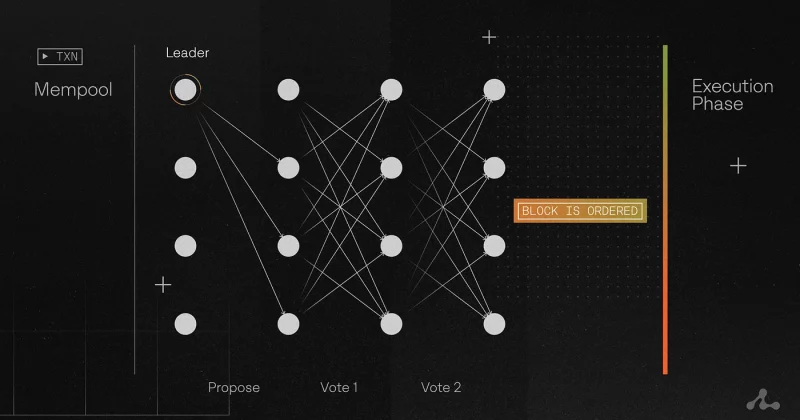
The feature relies on a batched threshold encryption scheme that integrates directly into Aptos’ existing consensus mechanism. Transactions enter the mempool encrypted. Validators order them without knowledge of their contents. Only after the block order is finalized do the encrypted payloads get decrypted and executed.

The technical elegance here matters. Batched threshold decryption reduces computational overhead to O(n), which means the cost scales linearly rather than exponentially as more transactions pile in. For a network processing high volumes of DeFi activity, that’s the difference between a practical feature and a theoretical one.

Advertisement

Aptos claims this upgrade introduces no additional trust assumptions and no meaningful performance impact. The consensus and execution models remain unchanged, which means the network’s existing speed and security parameters stay intact.

The feature is currently live on devnet, with testnet support expected soon and mainnet deployment contingent on governance approval. Users will be able to opt into the encrypted mempool with a single click per transaction, making it accessible rather than something only power users can navigate.

Why this matters: the front-running problem

The problem isn’t small. Decentralized exchange trading volumes exceeded $200 billion monthly in 2025, with Q3 averaging roughly $476 billion. At those volumes, even marginal extraction by front-runners and sandwich attackers amounts to enormous value being siphoned from ordinary traders.

Various solutions have been attempted across the blockchain ecosystem. Flashbots on Ethereum introduced private transaction pools. Solana has explored priority fee mechanisms. But Aptos is positioning its approach as the first native, protocol-level implementation on a Layer 1 blockchain, meaning encryption is baked into the chain itself rather than bolted on through third-party relayers or off-chain infrastructure.

That distinction is more than marketing. Third-party solutions introduce additional trust assumptions and potential points of failure. A native implementation, if it performs as advertised, eliminates those intermediary risks entirely.

The competitive landscape and investor implications

Aptos was built by former Meta engineers who worked on the Diem project (formerly Libra), and the network has consistently leaned into institutional-grade features as its differentiator. The encrypted mempool fits squarely into that strategy.

Investors considering Aptos’ ecosystem should pay close attention to the governance vote that will determine the mainnet timeline. The jump from devnet to mainnet is where theory meets reality, and any performance degradation or encryption-related bugs discovered during testnet would materially change the calculus. The feature’s opt-in nature also means adoption rates will be the real metric to watch: a tool only works if people use it.

Disclosure: This article was edited by Editorial Team. For more information on how we create and review content, see our Editorial Policy.

Aptos unveils encrypted mempool to protect transaction intent until block confirmation

Aptos unveils encrypted mempool to protect transaction intent until block confirmation

The Layer 1 blockchain claims to be the first to natively shield transactions from validators and front-runners at the protocol level.

Aptos just introduced what might be the most consequential anti-front-running mechanism any Layer 1 blockchain has shipped to date. The network’s new Encrypted Mempool lets users submit transactions as encrypted payloads, meaning no one, not even validators, can see what a transaction is trying to do until after block ordering is complete and the block is confirmed.

In English: imagine placing a sealed bid at an auction where the auctioneer can’t peek inside your envelope before deciding the order of bids. That’s essentially what Aptos is doing for on-chain transactions.

How the encrypted mempool works

The feature relies on a batched threshold encryption scheme that integrates directly into Aptos’ existing consensus mechanism. Transactions enter the mempool encrypted. Validators order them without knowledge of their contents. Only after the block order is finalized do the encrypted payloads get decrypted and executed.

The technical elegance here matters. Batched threshold decryption reduces computational overhead to O(n), which means the cost scales linearly rather than exponentially as more transactions pile in. For a network processing high volumes of DeFi activity, that’s the difference between a practical feature and a theoretical one.

Advertisement

Aptos claims this upgrade introduces no additional trust assumptions and no meaningful performance impact. The consensus and execution models remain unchanged, which means the network’s existing speed and security parameters stay intact.

The feature is currently live on devnet, with testnet support expected soon and mainnet deployment contingent on governance approval. Users will be able to opt into the encrypted mempool with a single click per transaction, making it accessible rather than something only power users can navigate.

Why this matters: the front-running problem

The problem isn’t small. Decentralized exchange trading volumes exceeded $200 billion monthly in 2025, with Q3 averaging roughly $476 billion. At those volumes, even marginal extraction by front-runners and sandwich attackers amounts to enormous value being siphoned from ordinary traders.

Various solutions have been attempted across the blockchain ecosystem. Flashbots on Ethereum introduced private transaction pools. Solana has explored priority fee mechanisms. But Aptos is positioning its approach as the first native, protocol-level implementation on a Layer 1 blockchain, meaning encryption is baked into the chain itself rather than bolted on through third-party relayers or off-chain infrastructure.

That distinction is more than marketing. Third-party solutions introduce additional trust assumptions and potential points of failure. A native implementation, if it performs as advertised, eliminates those intermediary risks entirely.

The competitive landscape and investor implications

Aptos was built by former Meta engineers who worked on the Diem project (formerly Libra), and the network has consistently leaned into institutional-grade features as its differentiator. The encrypted mempool fits squarely into that strategy.

Investors considering Aptos’ ecosystem should pay close attention to the governance vote that will determine the mainnet timeline. The jump from devnet to mainnet is where theory meets reality, and any performance degradation or encryption-related bugs discovered during testnet would materially change the calculus. The feature’s opt-in nature also means adoption rates will be the real metric to watch: a tool only works if people use it.

Disclosure: This article was edited by Editorial Team. For more information on how we create and review content, see our Editorial Policy.