
Argentina’s World Cup semifinal against England highlights crypto’s growing sports intersection under Milei

Argentina’s World Cup semifinal against England highlights crypto’s growing sports intersection under Milei

Argentine Falklands veterans call for sporting focus as the 2026 World Cup semifinal reignites a historic rivalry, while Milei's pro-crypto stance raises questions about digital assets in global football

Argentina and England are set to clash in a 2026 FIFA World Cup semifinal, reviving one of the most emotionally charged rivalries in sports history. Veterans of the 1982 Falklands War have weighed in with a simple message: keep the focus on football, not on four-decade-old geopolitical wounds.

The last time Argentina and England met in a World Cup match that truly mattered, Diego Maradona scored with the “Hand of God” and then followed it with arguably the greatest goal ever. That was 1986, just four years after the Falklands conflict ended with British forces reclaiming the islands Argentina calls the Malvinas.

Advertisement

Argentine veterans from the Falklands conflict have publicly urged fans and media to channel their energy into supporting the team rather than relitigating history.

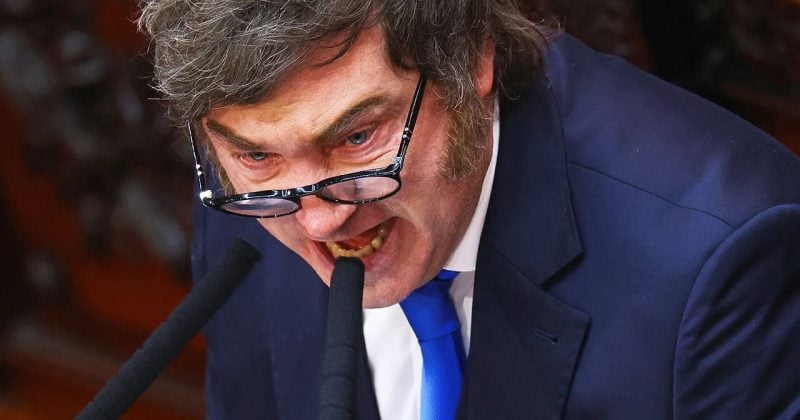
President Javier Milei, who took office in late 2023, has been publicly supportive of Bitcoin and digital assets broadly. His libertarian economic philosophy views decentralized finance as a natural extension of free-market principles, and Argentina’s population, long accustomed to currency instability and inflation, has been among the most enthusiastic retail crypto adopters in Latin America.

Yet for this specific Argentina-England World Cup semifinal, no cryptocurrency tokens, protocols, or sponsorship deals have been announced in connection with the match. No fan token pump. No branded NFT collection. No betting protocol launch timed to the fixture.

The lack of concrete crypto developments tied to what will be one of the most-watched sporting events of 2026 highlights a pattern that investors should understand. Several fan tokens saw significant price action in the weeks leading up to the 2022 World Cup in Qatar, only to give back gains as the novelty wore off and actual utility remained thin.

The 2026 FIFA World Cup will take place across Canada, Mexico, and the United States in an expanded tournament format. For traders eyeing the tournament, the lesson from 2022 is straightforward: wait for actual product announcements, partnership deals, or protocol integrations before allocating capital.

Disclosure: This article was edited by Editorial Team. For more information on how we create and review content, see our Editorial Policy.

Argentina’s World Cup semifinal against England highlights crypto’s growing sports intersection under Milei

Argentina’s World Cup semifinal against England highlights crypto’s growing sports intersection under Milei

Argentine Falklands veterans call for sporting focus as the 2026 World Cup semifinal reignites a historic rivalry, while Milei's pro-crypto stance raises questions about digital assets in global football

Argentina and England are set to clash in a 2026 FIFA World Cup semifinal, reviving one of the most emotionally charged rivalries in sports history. Veterans of the 1982 Falklands War have weighed in with a simple message: keep the focus on football, not on four-decade-old geopolitical wounds.

The last time Argentina and England met in a World Cup match that truly mattered, Diego Maradona scored with the “Hand of God” and then followed it with arguably the greatest goal ever. That was 1986, just four years after the Falklands conflict ended with British forces reclaiming the islands Argentina calls the Malvinas.

Advertisement

Argentine veterans from the Falklands conflict have publicly urged fans and media to channel their energy into supporting the team rather than relitigating history.

President Javier Milei, who took office in late 2023, has been publicly supportive of Bitcoin and digital assets broadly. His libertarian economic philosophy views decentralized finance as a natural extension of free-market principles, and Argentina’s population, long accustomed to currency instability and inflation, has been among the most enthusiastic retail crypto adopters in Latin America.

Yet for this specific Argentina-England World Cup semifinal, no cryptocurrency tokens, protocols, or sponsorship deals have been announced in connection with the match. No fan token pump. No branded NFT collection. No betting protocol launch timed to the fixture.

The lack of concrete crypto developments tied to what will be one of the most-watched sporting events of 2026 highlights a pattern that investors should understand. Several fan tokens saw significant price action in the weeks leading up to the 2022 World Cup in Qatar, only to give back gains as the novelty wore off and actual utility remained thin.

The 2026 FIFA World Cup will take place across Canada, Mexico, and the United States in an expanded tournament format. For traders eyeing the tournament, the lesson from 2022 is straightforward: wait for actual product announcements, partnership deals, or protocol integrations before allocating capital.

Disclosure: This article was edited by Editorial Team. For more information on how we create and review content, see our Editorial Policy.