
Nexo Earn with Nexo
Federal Reserve Bank of Atlanta reports rising business inflation expectations for third month

Federal Reserve Bank of Atlanta reports rising business inflation expectations for third month

Firms now expect 2.3% unit cost increases over the next year, up from 1.9% in February, as Bitcoin trades below $80K amid hawkish monetary policy fears.

American businesses are getting more pessimistic about inflation, and they’ve been getting more pessimistic for three months running. The Federal Reserve Bank of Atlanta’s Business Inflation Expectations survey for April 2026 shows firms anticipating a 2.3% increase in unit costs over the next twelve months, a meaningful jump from the 1.9% expectation recorded just two months earlier in February.

For the Federal Reserve, which has spent the better part of two years trying to engineer a soft landing, this is the kind of data that keeps rate cuts firmly off the table. For crypto markets already nursing wounds from a prolonged risk-off environment, it’s another reason to buckle up.

The inflation picture is getting stickier

The BIE survey matters because it captures something CPI data alone cannot: what the people actually running businesses expect to happen next. When firms start pricing in higher costs, those expectations have a nasty habit of becoming self-fulfilling. Companies raise prices preemptively, suppliers follow suit, and the whole cycle feeds on itself.

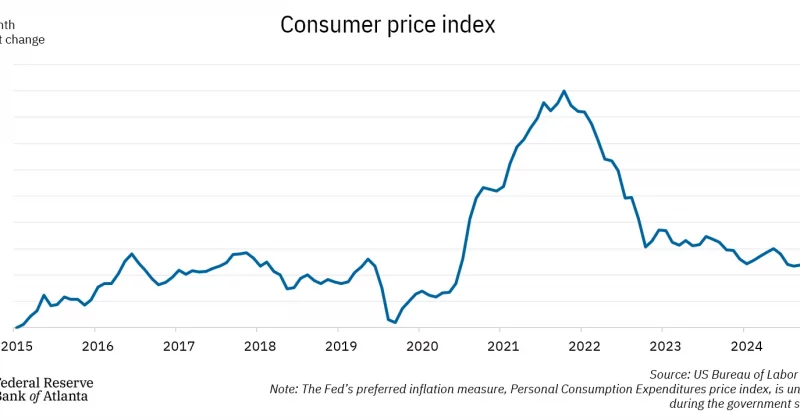
The broader inflation data backs up the pessimism. The Consumer Price Index for April 2026 came in at 3.8% year-over-year, a number that landed well above the Fed’s 2% target and sent a clear signal that the disinflation trend from late 2024 has reversed course.

Energy costs are doing a lot of the heavy lifting here. Annual energy prices surged 17.8% as of April 2026, driven by ongoing geopolitical conflicts that have kept global supply chains on edge. In English: the stuff that powers factories, heats buildings, and moves goods is getting dramatically more expensive, and businesses are passing those costs along.

Advertisement

Three consecutive months of rising expectations is particularly notable because it suggests this isn’t a one-off data blip. A single hot reading can be dismissed. A trend cannot. The Fed watches these survey-based measures closely because they’re leading indicators, showing where inflation is headed rather than where it’s been.

What the Fed does next, and why crypto cares

The practical consequence is straightforward: the Federal Reserve has no reason to cut interest rates and may soon have reasons to raise them. Market expectations have already shifted toward potential rate hikes, a scenario that seemed almost unthinkable six months ago when traders were pricing in multiple cuts.

Higher-for-longer interest rates, or worse, fresh rate increases, create a hostile environment for risk assets. The logic is simple. When you can earn meaningful yield on Treasury bonds with essentially zero risk, the opportunity cost of holding volatile assets like Bitcoin or equities goes up. Capital flows toward safety.

Bitcoin’s price action tells the story plainly. The largest cryptocurrency fell below $80,000 following the release of the hot inflation data and was trading at $77,326 as of May 20, 2026. That’s a far cry from the levels that had bulls celebrating earlier in the cycle, and the macro backdrop suggests the selling pressure isn’t going away anytime soon.

Think of monetary policy as the tide for all financial markets. When the Fed is easing, the tide rises and lifts everything, including speculative assets. When the Fed is tightening or even just refusing to ease, the tide goes out, and you find out who’s been swimming naked, as a certain Omaha-based billionaire once put it.

The broader context for investors

This three-month trend in business inflation expectations arrives at an awkward moment for anyone hoping the Fed would ride to the rescue. For most of 2025, the narrative in crypto markets was that rate cuts were coming, liquidity would expand, and risk assets would benefit. That thesis has been systematically dismantled.

The 3.8% CPI reading is particularly brutal in context. The Fed’s entire monetary framework is anchored to a 2% inflation target. Being nearly double that target while businesses simultaneously expect costs to accelerate doesn’t give policymakers much room to be dovish. If anything, it gives hawkish FOMC members ammunition to argue that policy isn’t restrictive enough.

For crypto investors specifically, the implications extend beyond just the price of Bitcoin. Higher interest rates tend to drain liquidity from DeFi protocols, reduce appetite for venture funding in Web3 startups, and suppress trading volumes across exchanges. The entire ecosystem runs on risk appetite, and risk appetite runs on monetary conditions.

The energy component adds another wrinkle. Bitcoin mining is an energy-intensive operation, and a 17.8% annual surge in energy costs directly compresses miner margins. Miners with thin balance sheets may be forced to sell more of their Bitcoin production to cover operating costs, adding incremental sell pressure to an already cautious market.

What to watch from here: the May CPI release and the next FOMC meeting will be critical. If inflation continues to run hot and the Fed signals it’s actively considering rate hikes rather than just holding steady, the sub-$80,000 Bitcoin environment could persist well into the summer. The BIE survey for May, due next month, will reveal whether businesses see the cost pressures as temporary or entrenched. Three months of rising expectations is a trend. Four months would start to look structural.

Disclosure: This article was edited by Editorial Team. For more information on how we create and review content, see our Editorial Policy.

Federal Reserve Bank of Atlanta reports rising business inflation expectations for third month

Federal Reserve Bank of Atlanta reports rising business inflation expectations for third month

Firms now expect 2.3% unit cost increases over the next year, up from 1.9% in February, as Bitcoin trades below $80K amid hawkish monetary policy fears.

American businesses are getting more pessimistic about inflation, and they’ve been getting more pessimistic for three months running. The Federal Reserve Bank of Atlanta’s Business Inflation Expectations survey for April 2026 shows firms anticipating a 2.3% increase in unit costs over the next twelve months, a meaningful jump from the 1.9% expectation recorded just two months earlier in February.

For the Federal Reserve, which has spent the better part of two years trying to engineer a soft landing, this is the kind of data that keeps rate cuts firmly off the table. For crypto markets already nursing wounds from a prolonged risk-off environment, it’s another reason to buckle up.

The inflation picture is getting stickier

The BIE survey matters because it captures something CPI data alone cannot: what the people actually running businesses expect to happen next. When firms start pricing in higher costs, those expectations have a nasty habit of becoming self-fulfilling. Companies raise prices preemptively, suppliers follow suit, and the whole cycle feeds on itself.

The broader inflation data backs up the pessimism. The Consumer Price Index for April 2026 came in at 3.8% year-over-year, a number that landed well above the Fed’s 2% target and sent a clear signal that the disinflation trend from late 2024 has reversed course.

Energy costs are doing a lot of the heavy lifting here. Annual energy prices surged 17.8% as of April 2026, driven by ongoing geopolitical conflicts that have kept global supply chains on edge. In English: the stuff that powers factories, heats buildings, and moves goods is getting dramatically more expensive, and businesses are passing those costs along.

Advertisement

Three consecutive months of rising expectations is particularly notable because it suggests this isn’t a one-off data blip. A single hot reading can be dismissed. A trend cannot. The Fed watches these survey-based measures closely because they’re leading indicators, showing where inflation is headed rather than where it’s been.

What the Fed does next, and why crypto cares

The practical consequence is straightforward: the Federal Reserve has no reason to cut interest rates and may soon have reasons to raise them. Market expectations have already shifted toward potential rate hikes, a scenario that seemed almost unthinkable six months ago when traders were pricing in multiple cuts.

Higher-for-longer interest rates, or worse, fresh rate increases, create a hostile environment for risk assets. The logic is simple. When you can earn meaningful yield on Treasury bonds with essentially zero risk, the opportunity cost of holding volatile assets like Bitcoin or equities goes up. Capital flows toward safety.

Bitcoin’s price action tells the story plainly. The largest cryptocurrency fell below $80,000 following the release of the hot inflation data and was trading at $77,326 as of May 20, 2026. That’s a far cry from the levels that had bulls celebrating earlier in the cycle, and the macro backdrop suggests the selling pressure isn’t going away anytime soon.

Think of monetary policy as the tide for all financial markets. When the Fed is easing, the tide rises and lifts everything, including speculative assets. When the Fed is tightening or even just refusing to ease, the tide goes out, and you find out who’s been swimming naked, as a certain Omaha-based billionaire once put it.

The broader context for investors

This three-month trend in business inflation expectations arrives at an awkward moment for anyone hoping the Fed would ride to the rescue. For most of 2025, the narrative in crypto markets was that rate cuts were coming, liquidity would expand, and risk assets would benefit. That thesis has been systematically dismantled.

The 3.8% CPI reading is particularly brutal in context. The Fed’s entire monetary framework is anchored to a 2% inflation target. Being nearly double that target while businesses simultaneously expect costs to accelerate doesn’t give policymakers much room to be dovish. If anything, it gives hawkish FOMC members ammunition to argue that policy isn’t restrictive enough.

For crypto investors specifically, the implications extend beyond just the price of Bitcoin. Higher interest rates tend to drain liquidity from DeFi protocols, reduce appetite for venture funding in Web3 startups, and suppress trading volumes across exchanges. The entire ecosystem runs on risk appetite, and risk appetite runs on monetary conditions.

The energy component adds another wrinkle. Bitcoin mining is an energy-intensive operation, and a 17.8% annual surge in energy costs directly compresses miner margins. Miners with thin balance sheets may be forced to sell more of their Bitcoin production to cover operating costs, adding incremental sell pressure to an already cautious market.

What to watch from here: the May CPI release and the next FOMC meeting will be critical. If inflation continues to run hot and the Fed signals it’s actively considering rate hikes rather than just holding steady, the sub-$80,000 Bitcoin environment could persist well into the summer. The BIE survey for May, due next month, will reveal whether businesses see the cost pressures as temporary or entrenched. Three months of rising expectations is a trend. Four months would start to look structural.

Disclosure: This article was edited by Editorial Team. For more information on how we create and review content, see our Editorial Policy.