
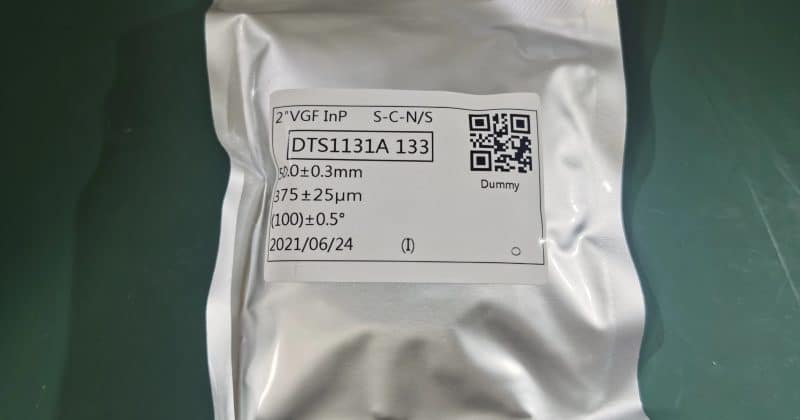
AXT Inc. rises 10% as Chinese export restrictions squeeze global indium phosphide supply
The compound semiconductor company controls a massive share of the world's InP supply, and Beijing's export permit delays are turning a niche material into a strategic flashpoint.
AXT Inc. jumped roughly 10% as investors scrambled to price in what happens when China tightens the spigot on a material the AI industry desperately needs.
The catalyst: indium phosphide, a compound semiconductor substrate that sits at the heart of the optical interconnects powering AI data centers. China’s export control regulations, which took effect on February 4, 2025, now require permits for overseas shipment of InP substrates. And those permits, it turns out, are not arriving on schedule.
A 250% price spike tells the story
Prices for 6-inch InP wafers have surged 250% to around $5,000 since Beijing’s export restrictions kicked in.
AXT and Japan’s Sumitomo Electric together control nearly 80% of the global InP supply. AXT’s primary production unit, Beijing Tongmei Xtal Technology, received its first export permits back in June 2025. But the company continues to face permitting delays stretching into 2026. AXT has called the export permit complications its “most significant challenge.”
The company’s North American revenue share dropped from 8% in 2024 to approximately 2% in 2025.
Why InP matters for AI infrastructure
Indium phosphide is the substrate material used to manufacture the photonic chips that enable high-speed optical communication inside and between data centers. Major clients in this space include companies like Coherent and Lumentum, both of which build the optical components that hyperscalers rely on. Industry players are already facing multi-year backlogs.
Macro, rates, and crypto—what moved markets and what matters next.
Daily. Free. Join 34,000+ readers across crypto, finance, and policy.
AXT’s local supplier model and strategic moves
AXT’s pitch to investors has centered on its local supplier model, which the company positions as a buffer against Chinese export restrictions. By vertically integrating through Tongmei and controlling its own substrate production in China, AXT aims to maintain more predictable access to materials than competitors who rely on third-party Chinese suppliers.
On the expansion front, AXT is pursuing capacity growth at Tongmei and exploring a potential listing for the subsidiary on the Shanghai STAR Market. A STAR Market listing would raise capital for expansion and anchor Tongmei more firmly in the Chinese domestic ecosystem.
What this means for investors
The 10% pop in AXT’s share price reflects a market waking up to concentration risk in a critical material. When two companies control 80% of global supply and one of them operates primarily in a country imposing export restrictions, the pricing power implications are significant.
AXT’s revenue numbers tell a cautionary tale. A drop from 8% to 2% North American revenue share suggests the export controls are doing real damage to the company’s ability to serve its most lucrative markets. Higher wafer prices don’t help if volumes collapse.
For investors evaluating AXT specifically, the key variables to watch are permit approval timelines and the progress of the potential STAR Market listing. If Tongmei’s export licenses start flowing more consistently, AXT’s stock has meaningful upside given the 250% increase in wafer prices. If permits remain bottlenecked, the company risks becoming a price beneficiary on paper that can’t translate elevated market prices into actual revenue growth in Western markets.