
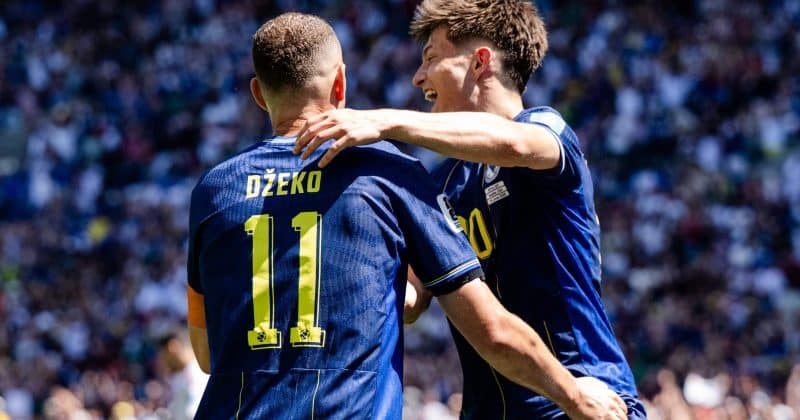
Esmir Bajraktarevic, the ‘Milwaukee Messi,’ set to face US in World Cup showdown

Esmir Bajraktarevic, the ‘Milwaukee Messi,’ set to face US in World Cup showdown

The Wisconsin-born winger chose Bosnia over the country that raised him, and now he's about to play against it on the biggest stage in sports

A 21-year-old from Appleton, Wisconsin, is about to walk onto a World Cup pitch and play against the United States. Not for the United States. Against them.

Esmir Bajraktarevic, nicknamed the “Milwaukee Messi” during his youth soccer days, chose to represent Bosnia and Herzegovina at the 2026 FIFA World Cup.

From Wisconsin youth leagues to World Cup hero

Bajraktarevic was born on March 10, 2005, in Appleton, Wisconsin. His parents are Bosnian refugees, survivors of the 1995 Srebrenica genocide. He grew up American in every practical sense, playing through US youth systems and eventually earning a senior cap for the US Men’s National Team in January 2024 against Slovenia.

Then, in July 2024, he switched his national allegiance to Bosnia and Herzegovina.

Advertisement

The decision wasn’t some cold strategic calculation about playing time. Bajraktarevic has spoken about wanting to honor his family’s heritage, to represent the country his parents fled under the worst circumstances imaginable. He also got to play alongside his childhood idol, Edin Dzeko.

His professional trajectory has been just as dramatic. He started with the New England Revolution’s youth setup before making the jump to Europe, joining PSV Eindhoven in 2025. In his debut season with the Dutch club, he helped secure an Eredivisie title.

But the moment that cemented his place in Bosnian football history came on March 31, 2026, when he stepped up and scored the decisive penalty in a shootout against Italy to qualify Bosnia for the World Cup. A 21-year-old kid from Wisconsin, sending a nation of 3.2 million people to only their second World Cup ever.

The collision course

Bosnia opened their group play against Canada on June 12, 2026. But the matchup everyone has been circling is the one against the United States.

Bajraktarevic didn’t just grow up in America. He played for America. He wore the shirt, heard the anthem, represented the stars and stripes at the senior level. And then he chose the other side.

What this means beyond the pitch

Bosnia’s presence at this World Cup is significant on its own. This is only their second appearance in the tournament’s history, and the path to get here ran through a penalty shootout against Italy. Bajraktarevic wasn’t just part of that qualifying run. He was the decisive figure in it.

For the USMNT, the matchup presents an awkward reality. This is a player they had in their system. He earned a senior cap as recently as January 2024. The fact that he switched allegiances just six months later raises uncomfortable questions about how the US federation handles dual-national recruitment.

Disclosure: This article was edited by Editorial Team. For more information on how we create and review content, see our Editorial Policy.

Esmir Bajraktarevic, the ‘Milwaukee Messi,’ set to face US in World Cup showdown

Esmir Bajraktarevic, the ‘Milwaukee Messi,’ set to face US in World Cup showdown

The Wisconsin-born winger chose Bosnia over the country that raised him, and now he's about to play against it on the biggest stage in sports

A 21-year-old from Appleton, Wisconsin, is about to walk onto a World Cup pitch and play against the United States. Not for the United States. Against them.

Esmir Bajraktarevic, nicknamed the “Milwaukee Messi” during his youth soccer days, chose to represent Bosnia and Herzegovina at the 2026 FIFA World Cup.

From Wisconsin youth leagues to World Cup hero

Bajraktarevic was born on March 10, 2005, in Appleton, Wisconsin. His parents are Bosnian refugees, survivors of the 1995 Srebrenica genocide. He grew up American in every practical sense, playing through US youth systems and eventually earning a senior cap for the US Men’s National Team in January 2024 against Slovenia.

Then, in July 2024, he switched his national allegiance to Bosnia and Herzegovina.

Advertisement

The decision wasn’t some cold strategic calculation about playing time. Bajraktarevic has spoken about wanting to honor his family’s heritage, to represent the country his parents fled under the worst circumstances imaginable. He also got to play alongside his childhood idol, Edin Dzeko.

His professional trajectory has been just as dramatic. He started with the New England Revolution’s youth setup before making the jump to Europe, joining PSV Eindhoven in 2025. In his debut season with the Dutch club, he helped secure an Eredivisie title.

But the moment that cemented his place in Bosnian football history came on March 31, 2026, when he stepped up and scored the decisive penalty in a shootout against Italy to qualify Bosnia for the World Cup. A 21-year-old kid from Wisconsin, sending a nation of 3.2 million people to only their second World Cup ever.

The collision course

Bosnia opened their group play against Canada on June 12, 2026. But the matchup everyone has been circling is the one against the United States.

Bajraktarevic didn’t just grow up in America. He played for America. He wore the shirt, heard the anthem, represented the stars and stripes at the senior level. And then he chose the other side.

What this means beyond the pitch

Bosnia’s presence at this World Cup is significant on its own. This is only their second appearance in the tournament’s history, and the path to get here ran through a penalty shootout against Italy. Bajraktarevic wasn’t just part of that qualifying run. He was the decisive figure in it.

For the USMNT, the matchup presents an awkward reality. This is a player they had in their system. He earned a senior cap as recently as January 2024. The fact that he switched allegiances just six months later raises uncomfortable questions about how the US federation handles dual-national recruitment.

Disclosure: This article was edited by Editorial Team. For more information on how we create and review content, see our Editorial Policy.