
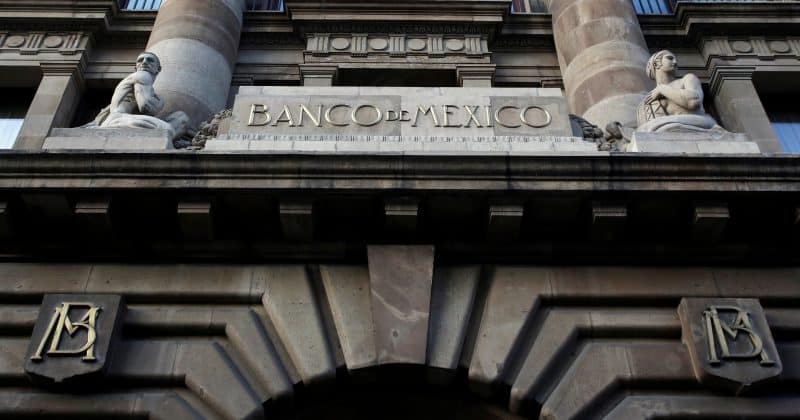
Banco de Mexico adds bond-buying tool to support liquidity as rate cuts reshape fixed-income landscape

Banco de Mexico adds bond-buying tool to support liquidity as rate cuts reshape fixed-income landscape

Mexico's central bank leans on government securities operations to manage liquidity amid a slowing economy and a benchmark rate now at 6.50%

Banco de México is expanding its use of bond-market tools to ensure stable funding conditions as the central bank navigates a tricky combination of lower interest rates, sluggish growth, and a peso that needs careful handling.

The central bank’s liquidity operations center on government securities, employing a toolkit that includes outright purchases, repurchase agreements, term repos, and open-market operations designed to steer the overnight interbank funding rate toward its target. During periods of acute market stress, Banxico has deployed extraordinary measures like government securities term repos and debt exchanges reaching up to MXN 100 billion.

Rate cuts and a growth problem

Banxico cut its benchmark interest rate by 25 basis points to 6.50% in May 2026, a decision widely interpreted as signaling the tail end of the current easing cycle. Inflation has been moderating, which gave policymakers room to move.

Advertisement

Mexico’s projected GDP growth for 2026 sits between 1.1% and 1.6%.

Banxico’s core liquidity instruments include Monetary Regulation Deposits (DRMs), auctions of Cetes (short-term treasury certificates), Bondes D (floating-rate bonds), liquidity-providing auctions, and repo operations collateralized with government securities.

What this means for the peso and fixed income

Every rate cut Banxico makes narrows the interest rate differential with the US Federal Reserve, which affects capital flows and, by extension, peso stability.

The bond-buying and repo operations also matter for banks. Mexican financial institutions rely on government securities as high-quality collateral for interbank lending and regulatory capital requirements.

No crypto angle, and that’s worth noting

No references to cryptocurrencies, tokens, or related technologies have emerged in conjunction with these recent policy developments. Banxico’s operations are designed to support peso-denominated government securities and interbank funding markets. Mexico’s regulatory approach to crypto has been cautious, and the central bank has historically maintained a clear boundary between its monetary operations and digital asset markets.

If Mexico’s growth projections of 1.1% to 1.6% prove optimistic and the economy softens further, pressure on the peso could intensify. Tether’s USDT trading volumes against the Mexican peso have spiked during previous periods of currency volatility.

Disclosure: This article was edited by Editorial Team. For more information on how we create and review content, see our Editorial Policy.

Banco de Mexico adds bond-buying tool to support liquidity as rate cuts reshape fixed-income landscape

Banco de Mexico adds bond-buying tool to support liquidity as rate cuts reshape fixed-income landscape

Mexico's central bank leans on government securities operations to manage liquidity amid a slowing economy and a benchmark rate now at 6.50%

Banco de México is expanding its use of bond-market tools to ensure stable funding conditions as the central bank navigates a tricky combination of lower interest rates, sluggish growth, and a peso that needs careful handling.

The central bank’s liquidity operations center on government securities, employing a toolkit that includes outright purchases, repurchase agreements, term repos, and open-market operations designed to steer the overnight interbank funding rate toward its target. During periods of acute market stress, Banxico has deployed extraordinary measures like government securities term repos and debt exchanges reaching up to MXN 100 billion.

Rate cuts and a growth problem

Banxico cut its benchmark interest rate by 25 basis points to 6.50% in May 2026, a decision widely interpreted as signaling the tail end of the current easing cycle. Inflation has been moderating, which gave policymakers room to move.

Advertisement

Mexico’s projected GDP growth for 2026 sits between 1.1% and 1.6%.

Banxico’s core liquidity instruments include Monetary Regulation Deposits (DRMs), auctions of Cetes (short-term treasury certificates), Bondes D (floating-rate bonds), liquidity-providing auctions, and repo operations collateralized with government securities.

What this means for the peso and fixed income

Every rate cut Banxico makes narrows the interest rate differential with the US Federal Reserve, which affects capital flows and, by extension, peso stability.

The bond-buying and repo operations also matter for banks. Mexican financial institutions rely on government securities as high-quality collateral for interbank lending and regulatory capital requirements.

No crypto angle, and that’s worth noting

No references to cryptocurrencies, tokens, or related technologies have emerged in conjunction with these recent policy developments. Banxico’s operations are designed to support peso-denominated government securities and interbank funding markets. Mexico’s regulatory approach to crypto has been cautious, and the central bank has historically maintained a clear boundary between its monetary operations and digital asset markets.

If Mexico’s growth projections of 1.1% to 1.6% prove optimistic and the economy softens further, pressure on the peso could intensify. Tether’s USDT trading volumes against the Mexican peso have spiked during previous periods of currency volatility.

Disclosure: This article was edited by Editorial Team. For more information on how we create and review content, see our Editorial Policy.