
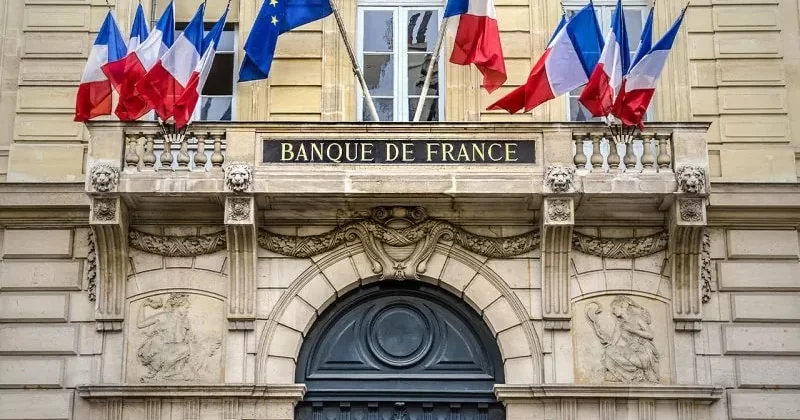
Bank of France raises 2026 inflation forecast as Iran war reshapes global energy outlook
Governor Emmanuel Moulin warns of 'less growth and higher inflation' as Middle East energy disruptions force central banks worldwide to revise projections upward.


France’s inflation outlook is darkening as higher energy prices threaten to slow growth and keep price pressure elevated for longer than expected.
The Bank of France projected in March that inflation would rise to 1.7% in 2026 from 0.9% in 2025, driven largely by energy prices. It expected inflation to ease to 1.4% in 2027 before rising again to 1.6% in 2028.
Those assumptions now look more vulnerable as the Iran conflict disrupts energy markets and raises costs across Europe. Higher fuel and gas prices tend to hit France through transport, industrial production, food supply chains, and household energy bills.
The risk is not just higher inflation. It is the mix of weaker growth and stickier prices, the scenario central banks hate most because it leaves them with fewer clean policy choices.
Macro, rates, and crypto—what moved markets and what matters next.
Daily. Free. Join 34,000+ readers across crypto, finance, and policy.
For the European Central Bank, the shift complicates any path toward easier policy. Cutting rates into an energy driven inflation shock risks keeping price pressure alive. Holding rates higher for longer risks adding more strain to households, companies, and governments already facing slower growth.
For France, the key question is whether the energy shock proves temporary or becomes embedded in wages, production costs, and consumer expectations. The first scenario is painful but manageable. The second would force central banks to stay tighter for longer.