
Bank of Canada Governor Macklem sees clearer signs of economic expansion

Bank of Canada Governor Macklem sees clearer signs of economic expansion

Canada's central bank holds rates steady at 2.25% while projecting modest GDP growth through 2028, but global trade risks loom large for crypto and traditional markets alike

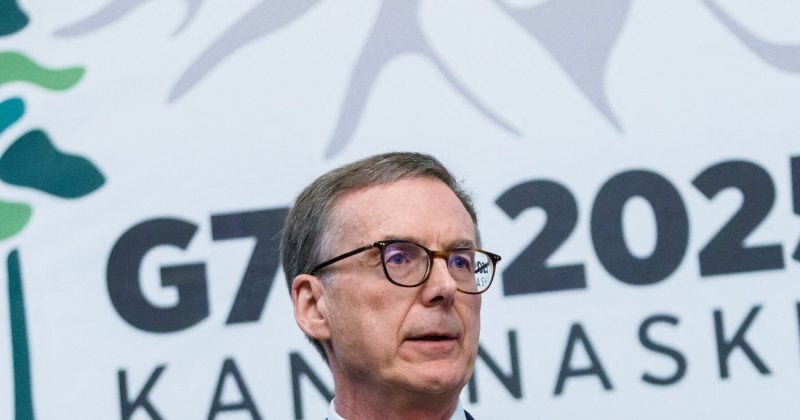
Bank of Canada Governor Tiff Macklem is feeling cautiously sunny about the Canadian economy, signaling that signs of expansion are becoming harder to ignore.

The optimism comes against a backdrop of GDP projections that are, well, modest. The Bank of Canada’s April 2026 Monetary Policy Report pegged Canadian GDP growth at 1.2% for 2026, ticking up to 1.6% in 2027 and 1.7% in 2028. Growth is expected to be supported by a gradual increase in exports and business investment, as the economy absorbs existing slack.

The rate picture and what it means for risk assets

The policy interest rate sits at 2.25%, and the BoC appears content to leave it there for now. Inflation is expected to hover around the bank’s 2% target after a brief uptick, with alignment anticipated by early 2027.

Advertisement

Q2 2026 economic data has reinforced Macklem’s optimism, with revisions showing stronger-than-expected performance in consumption and housing.

Global imbalances and the tariff shadow

In a June 23, 2026 speech, Macklem turned his attention to global imbalances, widening deficits, and the growing role of nonbank financial activities in creating systemic risks.

The elephant in the room remains US tariff policy. Canada’s economy is deeply intertwined with its southern neighbor, and Macklem’s growth projections assume a gradual increase in exports and business investment, but that assumption gets shaky if trade tensions escalate.

What this means for investors

The risks are real. If the US implements more aggressive tariffs on Canadian goods, the growth projections of 1.2% to 1.7% could look optimistic in retrospect. A growth shock would likely trigger rate cuts, which could weaken the Canadian dollar and create volatility across all asset classes.

Watch the tariff headlines more closely than the rate decisions.

Disclosure: This article was edited by Editorial Team. For more information on how we create and review content, see our Editorial Policy.

Bank of Canada Governor Macklem sees clearer signs of economic expansion

Bank of Canada Governor Macklem sees clearer signs of economic expansion

Canada's central bank holds rates steady at 2.25% while projecting modest GDP growth through 2028, but global trade risks loom large for crypto and traditional markets alike

Bank of Canada Governor Tiff Macklem is feeling cautiously sunny about the Canadian economy, signaling that signs of expansion are becoming harder to ignore.

The optimism comes against a backdrop of GDP projections that are, well, modest. The Bank of Canada’s April 2026 Monetary Policy Report pegged Canadian GDP growth at 1.2% for 2026, ticking up to 1.6% in 2027 and 1.7% in 2028. Growth is expected to be supported by a gradual increase in exports and business investment, as the economy absorbs existing slack.

The rate picture and what it means for risk assets

The policy interest rate sits at 2.25%, and the BoC appears content to leave it there for now. Inflation is expected to hover around the bank’s 2% target after a brief uptick, with alignment anticipated by early 2027.

Advertisement

Q2 2026 economic data has reinforced Macklem’s optimism, with revisions showing stronger-than-expected performance in consumption and housing.

Global imbalances and the tariff shadow

In a June 23, 2026 speech, Macklem turned his attention to global imbalances, widening deficits, and the growing role of nonbank financial activities in creating systemic risks.

The elephant in the room remains US tariff policy. Canada’s economy is deeply intertwined with its southern neighbor, and Macklem’s growth projections assume a gradual increase in exports and business investment, but that assumption gets shaky if trade tensions escalate.

What this means for investors

The risks are real. If the US implements more aggressive tariffs on Canadian goods, the growth projections of 1.2% to 1.7% could look optimistic in retrospect. A growth shock would likely trigger rate cuts, which could weaken the Canadian dollar and create volatility across all asset classes.

Watch the tariff headlines more closely than the rate decisions.

Disclosure: This article was edited by Editorial Team. For more information on how we create and review content, see our Editorial Policy.