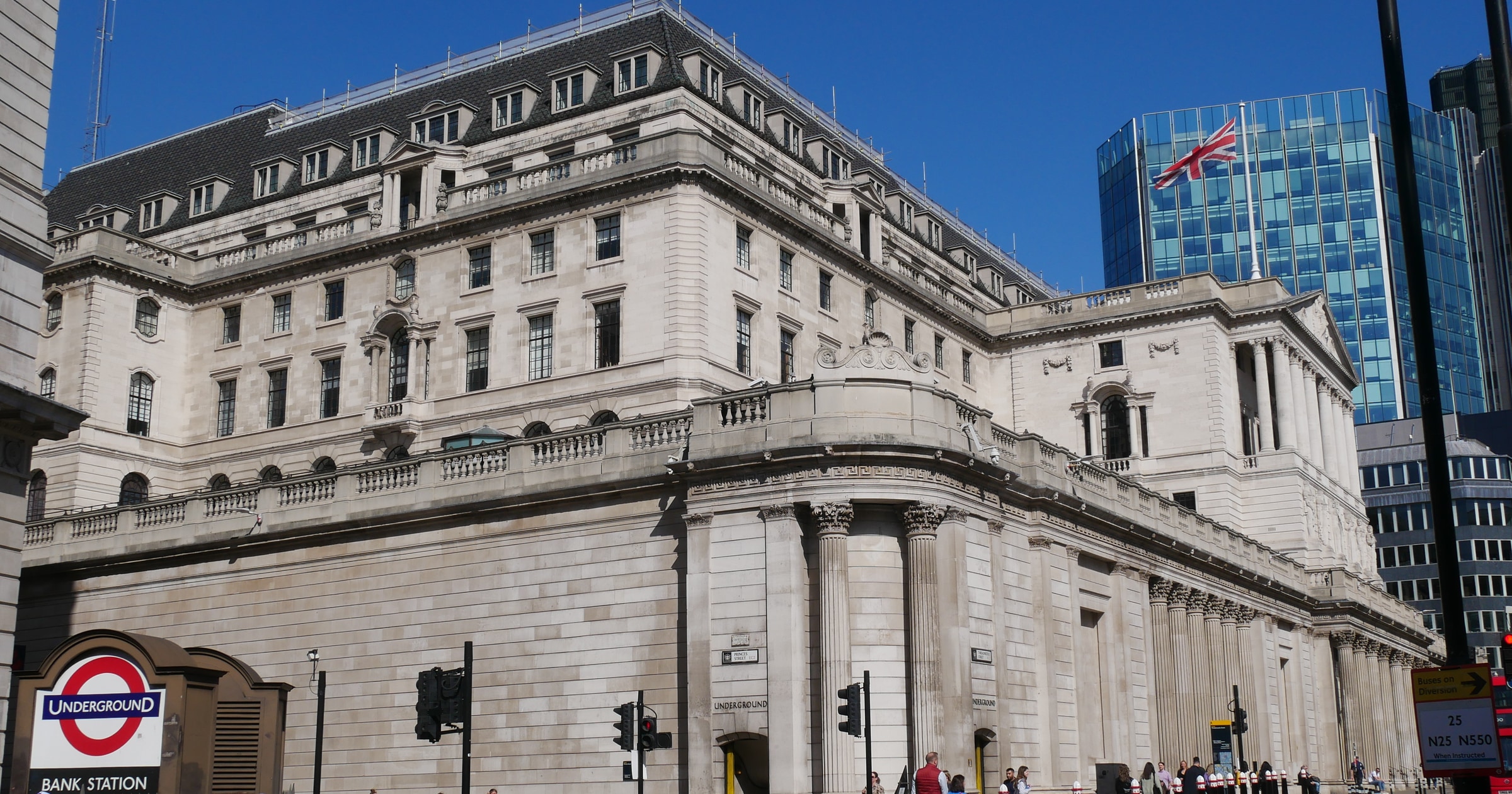
Bank of England warns AI bubble fallout could shrink UK economy by 2.2%
Governor Andrew Bailey outlines a 'triple whammy' scenario where AI market corrections could tip Britain into recession and force interest rate changes
The Bank of England is no longer whispering about AI market risks. It’s spelling them out in bold.
Governor Andrew Bailey has warned that a burst in the AI bubble could contract UK GDP by 2.2%, a figure large enough to push Britain toward recession. The warning, detailed in the Bank’s July 2026 Financial Stability Report, paints a picture of an economy increasingly vulnerable to the fortunes of a handful of tech companies an ocean away.
The triple whammy
Bailey described what he called a “triple whammy” threatening financial stability. First, market bets on AI companies have become dangerously one-sided. Second, nobody actually knows how fast AI adoption will happen. Third, it’s still unclear which companies will survive the inevitable shakeout.
AI firms now account for roughly 50% of the US S&P 500’s total market value. In 2022, that figure was 25%. Capital expenditure expectations for AI-related sectors now exceed $1 trillion by 2028. That’s up from less than $600 billion just six months prior, in December 2025.
Bailey first flagged these concerns back in November and December 2025. By his June 2, 2026 statement, the tone had shifted from cautious observation to something closer to alarm, highlighting what he described as widespread overvaluation in AI markets.
Why the UK should care about Silicon Valley valuations
UK pension funds, insurance companies, and retail investors all hold significant exposure to US equities, either directly or through index-tracking funds that are now half-weighted toward AI. When those stocks correct, the wealth destruction doesn’t respect national borders.
Macro, rates, and crypto—what moved markets and what matters next.
Daily. Free. Join 34,000+ readers across crypto, finance, and policy.
The Bank of England’s 2.2% GDP contraction scenario captures cascading effects including tighter lending conditions, delayed business investment, and consumer pullback.
Bailey also connected the dots to monetary policy, suggesting that an AI-driven economic shock could force the Bank to adjust interest rates.
The dot-com echo
The AI boom has followed a similar playbook to the late 1990s dot-com bubble but at a larger scale. The concentration of value is more extreme, with half the S&P 500 riding on one theme. The capital expenditure commitments are bigger. And the global financial system is more interconnected than it was 25 years ago.
The Bank of England’s decision to model specific GDP impact scenarios suggests this isn’t hypothetical hand-wringing. Central banks don’t typically publish precise contraction estimates unless they want markets and institutions to take the risk seriously.
What this means for investors
The capex surge from under $600 billion to over $1 trillion in projected AI spending raises questions about capital allocation across the broader tech ecosystem. When spending doubles in six months but revenue growth doesn’t keep pace, that gap becomes the market’s vulnerability. The Bank of England just put a number on what that vulnerability could cost: 2.2% of Britain’s entire economic output.
Disclosure: This article was edited by Editorial Team. For more information on how we create and review content, see our Editorial Policy.