
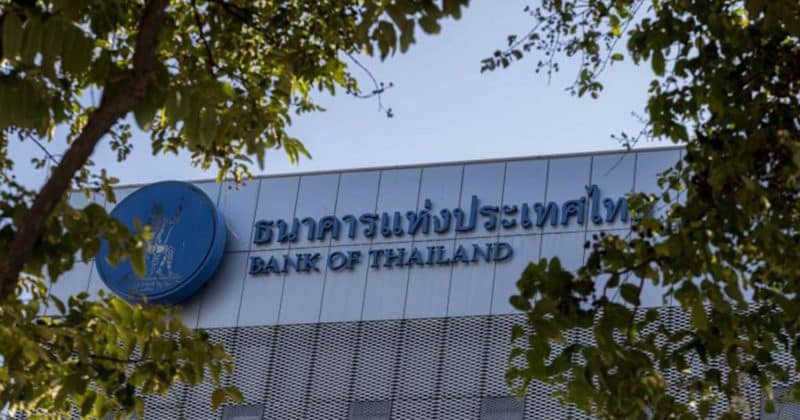
Bank of Thailand advances 1:1 baht-backed stablecoin plan
Thailand's central bank nears completion of its stablecoin design study, with public hearings expected by year-end and formal regulations to follow
Thailand’s central bank just took a concrete step toward legitimizing stablecoins, and it’s doing it the old-fashioned way: by actually backing them with real money.
Bank of Thailand Governor Vitai Ratanakorn announced on June 26 that the central bank’s design study for baht-backed stablecoins is nearing completion. The plan calls for digital tokens pegged 1:1 to the Thai baht, fully backed by reserves held in segregated accounts at licensed institutions. Public hearings are expected by the end of 2026, with formal regulations anticipated in late 2026 or early 2027.
What the framework actually looks like
The BoT’s approach centers on a strict full-reserve requirement. Every stablecoin in circulation must have an equivalent amount of Thai baht sitting in a segregated account at a licensed financial institution.
Initial usage will be limited to payment settlements between financial institutions. The central bank is deliberately starting narrow before expanding the scope.
That expansion could eventually reach some unexpected corners. The BoT has signaled plans to extend stablecoin usage into carbon credit markets and green financing, areas where programmable money could automate compliance and settlement.
Macro, rates, and crypto—what moved markets and what matters next.
Daily. Free. Join 34,000+ readers across crypto, finance, and policy.
The sandbox foundation
The BoT established its Programmable Payment Sandbox back in 2024, creating a controlled testing environment for THB-pegged digital units. On December 24, 2025, the sandbox was expanded to accommodate broader experimentation with these instruments.
Governor Ratanakorn’s announcement also signals that the BoT views stablecoins primarily through a payments infrastructure lens rather than as speculative instruments.
What this means for investors
The green finance angle is worth watching separately. Carbon credit markets have notoriously opaque settlement processes, and programmable stablecoins could address genuine inefficiencies there. If Thailand successfully links its stablecoin infrastructure to carbon markets, it could attract ESG-focused institutional capital looking for transparent, auditable settlement mechanisms.
Public hearings by year-end followed by finalized regulations in early 2027 is an ambitious timeline. The Programmable Payment Sandbox has been running since 2024, which means the BoT isn’t theorizing about how baht stablecoins might work — it already has sandbox data directly informing the regulatory framework.