
Nexo Earn with Nexo
Bank of Russia sells 900,000 ounces of gold, generating $4.3B in proceeds

Bank of Russia sells 900,000 ounces of gold, generating $4.3B in proceeds

Russia's gold reserves hit their lowest level since February 2022 as the Kremlin liquidates bullion to plug a widening budget deficit.

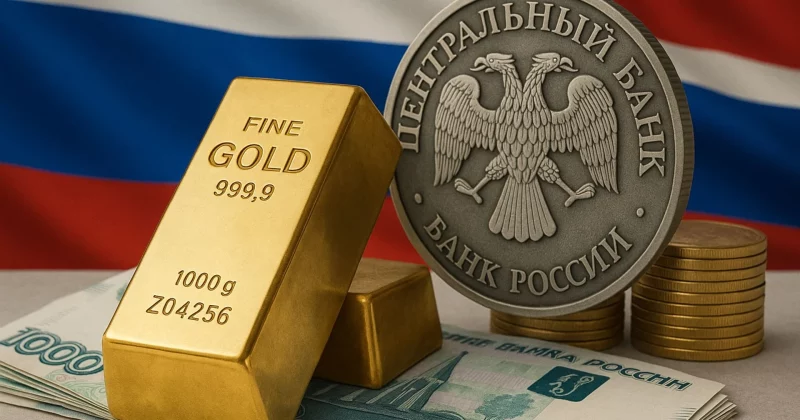
Russia’s central bank has offloaded roughly 900,000 ounces of gold since the start of 2026, pulling in an estimated $4.3 billion in the process.

As of May 1, 2026, the Bank of Russia’s total gold holdings have dropped to 73.9 million ounces. That’s the lowest level recorded since February 2022, the month Russian tanks rolled into Ukraine and the West responded with a wall of sanctions.

Advertisement

Four straight months of decline

Physical gold sales on behalf of Russia’s National Wealth Fund (NWF) began in November 2025, and the pace has only accelerated since. April 2026 alone saw a reduction of 200,000 ounces, the steepest single-month drop in over two decades.

Gold averaged approximately $4,800 per ounce during the January-to-April window. April marked the fourth consecutive month of declining reserves.

A budget hole the size of 4.6 trillion rubles

Russia’s budget deficit had ballooned to 4.6 trillion rubles by the end of March 2026, driven by two forces moving in opposite directions: oil and gas revenues shrinking, and military expenditures growing.

Russia spent years building one of the world’s largest sovereign gold stockpiles, deliberately reducing its dependence on dollar-denominated assets after the first round of sanctions in 2014. The central bank was a net buyer of gold for most of the past decade, accumulating reserves that were supposed to serve as a sanctions-proof financial fortress.

What this means for markets and investors

At the current burn rate, Russia is liquidating roughly 225,000 ounces per month. The remaining 73.9 million ounces still represent decades of runway at that pace. The most significant reduction of gold reserves since 2002 marks a distinct shift from Russia’s previous position as a major gold accumulator.

Disclosure: This article was edited by Editorial Team. For more information on how we create and review content, see our Editorial Policy.

Bank of Russia sells 900,000 ounces of gold, generating $4.3B in proceeds

Bank of Russia sells 900,000 ounces of gold, generating $4.3B in proceeds

Russia's gold reserves hit their lowest level since February 2022 as the Kremlin liquidates bullion to plug a widening budget deficit.

Russia’s central bank has offloaded roughly 900,000 ounces of gold since the start of 2026, pulling in an estimated $4.3 billion in the process.

As of May 1, 2026, the Bank of Russia’s total gold holdings have dropped to 73.9 million ounces. That’s the lowest level recorded since February 2022, the month Russian tanks rolled into Ukraine and the West responded with a wall of sanctions.

Advertisement

Four straight months of decline

Physical gold sales on behalf of Russia’s National Wealth Fund (NWF) began in November 2025, and the pace has only accelerated since. April 2026 alone saw a reduction of 200,000 ounces, the steepest single-month drop in over two decades.

Gold averaged approximately $4,800 per ounce during the January-to-April window. April marked the fourth consecutive month of declining reserves.

A budget hole the size of 4.6 trillion rubles

Russia’s budget deficit had ballooned to 4.6 trillion rubles by the end of March 2026, driven by two forces moving in opposite directions: oil and gas revenues shrinking, and military expenditures growing.

Russia spent years building one of the world’s largest sovereign gold stockpiles, deliberately reducing its dependence on dollar-denominated assets after the first round of sanctions in 2014. The central bank was a net buyer of gold for most of the past decade, accumulating reserves that were supposed to serve as a sanctions-proof financial fortress.

What this means for markets and investors

At the current burn rate, Russia is liquidating roughly 225,000 ounces per month. The remaining 73.9 million ounces still represent decades of runway at that pace. The most significant reduction of gold reserves since 2002 marks a distinct shift from Russia’s previous position as a major gold accumulator.

Disclosure: This article was edited by Editorial Team. For more information on how we create and review content, see our Editorial Policy.