
Barclays predicts SK Hynix’s US shares could double amid memory shortage

Barclays predicts SK Hynix’s US shares could double amid memory shortage

The bank's $330 price target on SK Hynix's freshly minted Nasdaq ADR reflects a bet that AI-driven memory chip demand will outstrip supply through at least 2028.

SK Hynix just landed on Nasdaq, and Barclays is already telling investors the stock has room to run. A lot of room.

The British bank initiated coverage on SK Hynix’s US-listed American Depositary Receipt with an Overweight rating and a $330 price target, implying the shares could roughly double from recent trading levels. The thesis is straightforward: memory chips are getting expensive, supply can’t keep up with demand, and SK Hynix is sitting in the best seat at the table.

A blockbuster debut meets a bullish call

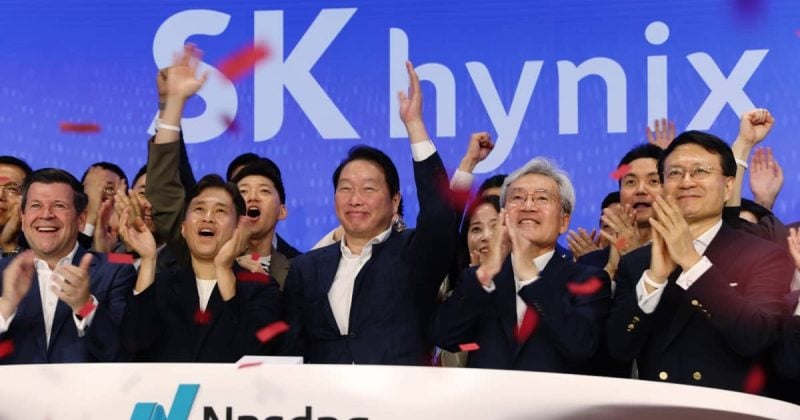
SK Hynix’s Nasdaq listing on July 14, 2026, was anything but quiet. The stock, trading under the ticker SKHY, surged as much as 21% on its first day, marking a $26.5 billion debut on the US market.

Advertisement

The bank’s analysts see a structural supply-demand imbalance in the memory chip market that favors SK Hynix for years, not quarters. The core argument: high-bandwidth memory, the specialized chips that power AI accelerators and sit inside NVIDIA’s GPUs, faces shortages projected to persist through at least 2028.

The listing also brought with it the launch of leveraged ETFs and options trading on the ADR, both arriving on the same day SK Hynix hit Nasdaq.

Why the memory market matters beyond semiconductors

SK Hynix has positioned itself as the dominant supplier of HBM for NVIDIA’s accelerator ecosystem. Barclays’ analysis suggests that memory price increases driven by this shortage will meaningfully boost SK Hynix’s revenue over the coming years, a dynamic that underpins the bank’s aggressive price target.

What crypto investors should actually care about

The AI-crypto intersection has become one of the hottest narrative sectors in digital assets. Tokens tied to decentralized computing, GPU marketplaces, and AI inference networks all have their economics influenced by the availability and cost of the underlying hardware. A memory shortage that persists through 2028 means the hardware powering these networks stays expensive, which could constrain supply growth for decentralized compute platforms while simultaneously supporting the value proposition of existing capacity.

The Q2 earnings release scheduled for July 29 will be the first major data point investors can use to validate or challenge Barclays’ thesis. If SK Hynix reports numbers that confirm accelerating revenue from HBM sales and sustained pricing power, it would reinforce the narrative that AI hardware demand remains structurally undersupplied.

For investors weighing exposure to the AI hardware theme, the risk worth monitoring is execution. SK Hynix needs to continue expanding HBM production capacity without stumbling on yield rates or losing its privileged supplier relationship with NVIDIA. Competitors like Samsung and Micron are investing aggressively to capture their own share of the HBM market, and any breakthrough in supply could compress the pricing premium that Barclays’ entire bull case depends on.

Disclosure: This article was edited by Editorial Team. For more information on how we create and review content, see our Editorial Policy.

Barclays predicts SK Hynix’s US shares could double amid memory shortage

Barclays predicts SK Hynix’s US shares could double amid memory shortage

The bank's $330 price target on SK Hynix's freshly minted Nasdaq ADR reflects a bet that AI-driven memory chip demand will outstrip supply through at least 2028.

SK Hynix just landed on Nasdaq, and Barclays is already telling investors the stock has room to run. A lot of room.

The British bank initiated coverage on SK Hynix’s US-listed American Depositary Receipt with an Overweight rating and a $330 price target, implying the shares could roughly double from recent trading levels. The thesis is straightforward: memory chips are getting expensive, supply can’t keep up with demand, and SK Hynix is sitting in the best seat at the table.

A blockbuster debut meets a bullish call

SK Hynix’s Nasdaq listing on July 14, 2026, was anything but quiet. The stock, trading under the ticker SKHY, surged as much as 21% on its first day, marking a $26.5 billion debut on the US market.

Advertisement

The bank’s analysts see a structural supply-demand imbalance in the memory chip market that favors SK Hynix for years, not quarters. The core argument: high-bandwidth memory, the specialized chips that power AI accelerators and sit inside NVIDIA’s GPUs, faces shortages projected to persist through at least 2028.

The listing also brought with it the launch of leveraged ETFs and options trading on the ADR, both arriving on the same day SK Hynix hit Nasdaq.

Why the memory market matters beyond semiconductors

SK Hynix has positioned itself as the dominant supplier of HBM for NVIDIA’s accelerator ecosystem. Barclays’ analysis suggests that memory price increases driven by this shortage will meaningfully boost SK Hynix’s revenue over the coming years, a dynamic that underpins the bank’s aggressive price target.

What crypto investors should actually care about

The AI-crypto intersection has become one of the hottest narrative sectors in digital assets. Tokens tied to decentralized computing, GPU marketplaces, and AI inference networks all have their economics influenced by the availability and cost of the underlying hardware. A memory shortage that persists through 2028 means the hardware powering these networks stays expensive, which could constrain supply growth for decentralized compute platforms while simultaneously supporting the value proposition of existing capacity.

The Q2 earnings release scheduled for July 29 will be the first major data point investors can use to validate or challenge Barclays’ thesis. If SK Hynix reports numbers that confirm accelerating revenue from HBM sales and sustained pricing power, it would reinforce the narrative that AI hardware demand remains structurally undersupplied.

For investors weighing exposure to the AI hardware theme, the risk worth monitoring is execution. SK Hynix needs to continue expanding HBM production capacity without stumbling on yield rates or losing its privileged supplier relationship with NVIDIA. Competitors like Samsung and Micron are investing aggressively to capture their own share of the HBM market, and any breakthrough in supply could compress the pricing premium that Barclays’ entire bull case depends on.

Disclosure: This article was edited by Editorial Team. For more information on how we create and review content, see our Editorial Policy.