
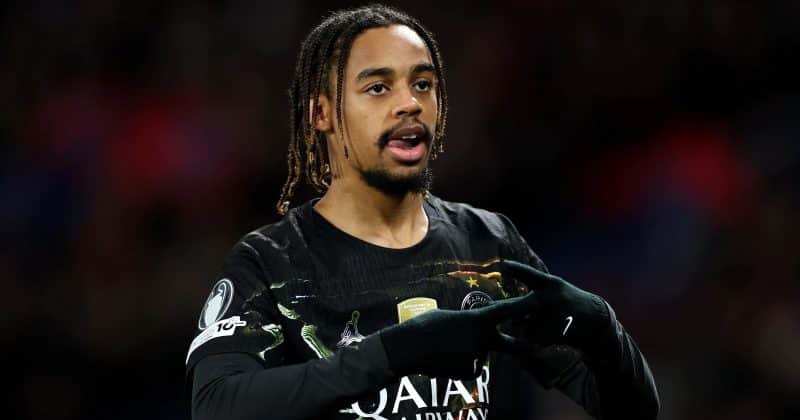
Bradley Barcola scores first World Cup goal with first touch, and PSG’s $100M decision just got harder
The PSG forward came off the bench against Senegal and immediately found the net, adding fuel to a transfer saga that could ripple through the $PSG fan token market.
Bradley Barcola needed exactly one touch to announce himself on the World Cup stage. The 23-year-old Paris Saint-Germain forward entered France’s opener against Senegal as a substitute on June 16 and promptly scored the team’s second goal, extending the lead to 2-0.
It was his first World Cup goal. It was also, quite literally, the first thing he did after stepping onto the pitch.
A perfectly timed audition
PSG acquired him from Lyon for €45 million, a fee that seemed hefty at the time for a player still finding his footing at the top level. Prior to the World Cup, Barcola had already accumulated 20 senior caps and three international goals for France.
Just four days before the Senegal match, reports surfaced on June 12 that PSG was reportedly open to selling Barcola for approximately €100 million. That figure represents nearly double what they paid for him.
What this means for the $PSG fan token
The logic chain is straightforward. If PSG sells Barcola for €100 million, the club pockets a massive profit on a player they bought for €45 million. That €55 million-plus spread represents significant financial upside for the club, which could theoretically be reinvested into new signings.
But the inverse logic also applies. Selling a fan-favorite player who just scored a World Cup goal can sour sentiment. Fan tokens are, after all, driven by fans.
Investors tracking the $PSG token should watch two things closely over the coming weeks. First, Barcola’s continued performance in the World Cup. Second, any concrete developments on the transfer front. The gap between “reportedly open to selling” and “officially sold” is where the real price discovery happens.
The risk, as always with fan tokens, is that these assets don’t represent equity in the club. They don’t pay dividends. Their value is almost entirely a function of community engagement and speculative interest.