
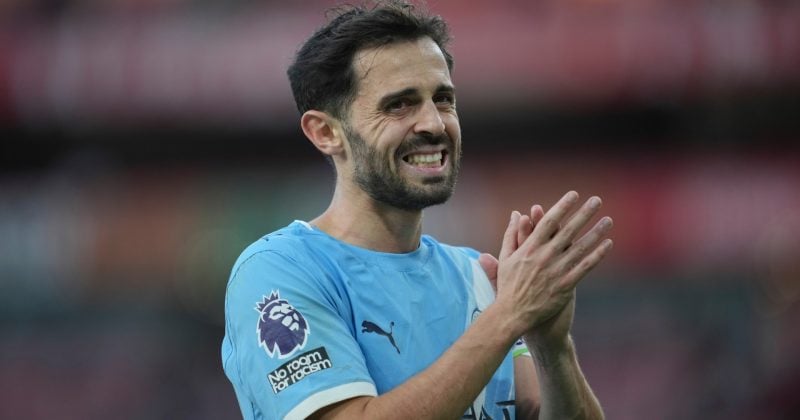
Bernardo Silva’s Real Madrid debut ends early as halftime substitution raises eyebrows
The former Manchester City midfielder was subbed off at the break during Portugal's 1-1 draw with DR Congo, and the transfer has zero crypto market implications for one simple reason.
Bernardo Silva’s first appearance since joining Real Madrid lasted exactly 45 minutes. The Portuguese midfielder was substituted at halftime during his national team’s World Cup qualifier against DR Congo, a 1-1 draw that left his debut performance firmly in the “mixed reviews” category.
For crypto investors scanning the sports-token landscape for a trade, there’s nothing here. Real Madrid doesn’t have an official fan token. That’s the whole story on the market side, but the broader context of why that matters is worth unpacking.
From Manchester to Madrid, on a free
Silva completed his free transfer to Real Madrid on June 17, 2026, signing a two-year deal running through 2028. Nine seasons at Manchester City, a trophy cabinet that would make most clubs jealous, and he walked out the door without a transfer fee changing hands.
The move coincides with José Mourinho’s return to the Real Madrid dugout. Mourinho’s recruitment philosophy has historically leaned toward proven, experienced talent, and Silva fits that template perfectly.
The fan token gap Real Madrid keeps ignoring
Real Madrid remains one of the biggest football clubs on the planet without an official fan token. No presence on Chiliz. No listing on Socios. Nothing on any major blockchain platform designed for sports fan engagement.
The news moving money, markets, and the world—before your day starts.
Daily. Free. Join 34,000+ readers across crypto, finance, and policy.
That means when a marquee signing like Silva happens, there’s no digital asset to absorb the hype. Compare that to clubs like Paris Saint-Germain, Barcelona, or Juventus, all of which have fan tokens that regularly spike or dip based on transfer news, match results, and managerial changes.
When PSG signed major players in previous transfer windows, the $PSG token saw noticeable volume increases within hours. When Barcelona made high-profile moves, $BAR reacted. Real Madrid, by choosing to stay on the sidelines of the fan token economy, essentially leaves that entire dynamic on the table.
What this means for sports token investors
The Silva-to-Madrid move is a useful case study in what doesn’t happen when a major club lacks blockchain infrastructure. Fan tokens derive their short-term price movements from news flow. Player transfers, managerial appointments, Champions League draws, and derby results all function as catalysts. A club without a token removes itself from that entire ecosystem of speculative and engagement-driven trading.
For crypto traders watching football’s transfer market, the presence or absence of a fan token is the single biggest determinant of whether a transfer creates a tradeable crypto event.