
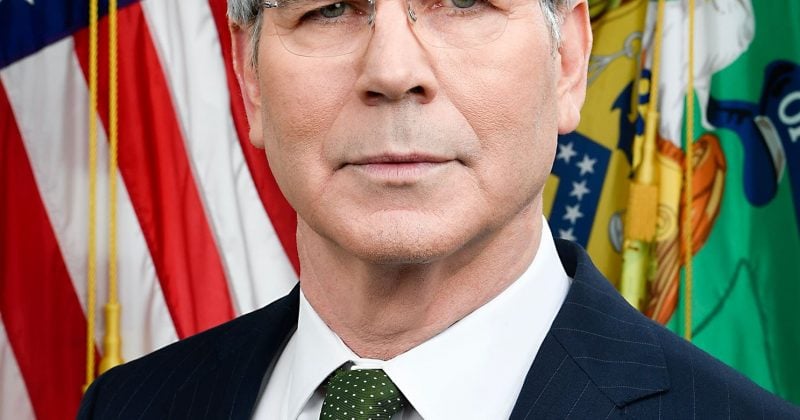
US Treasury Secretary Bessent calls inflation surge a short-term blip as Iran conflict drives prices higher
Bessent points to rising domestic oil production as the antidote to war-driven energy costs, while the Treasury seizes $1B in Iranian-linked crypto assets.
Scott Bessent wants you to know this inflation thing is going to blow over. The US Treasury Secretary characterized the recent price surge, driven largely by the ongoing US-Iran conflict, as a “short-term blip” during briefings in late May 2026.
That’s a bold claim when inflation just hit 4.5% in April 2026, a nearly three-year high. Most of that increase traces directly back to energy costs that have ballooned since the conflict escalated.
The case for “temporary”
Bessent’s optimism rests on a fairly straightforward thesis: as US domestic oil production ramps up, the energy price shock from the Iran conflict will fade. Pair that with what the administration describes as strong job data, and the Treasury Secretary is painting a picture of an economy absorbing a punch rather than taking a knockout.
But “eventually” is doing a lot of heavy lifting in that sentence. Producers don’t flip a switch and flood the market overnight. Permitting, drilling, and distribution timelines mean any production increase takes months to reach consumers in a meaningful way.
The crypto sanctions angle
While Bessent was talking down inflation fears, the Treasury was busy on another front entirely. The department seized approximately $1B in Iranian-linked crypto assets in late May 2026, part of a broader sanctions enforcement push targeting Tehran’s digital financial infrastructure.
The sanctions specifically targeted Nobitex, described as Iran’s largest digital asset exchange, along with other platforms allegedly used to circumvent US financial restrictions.
Bessent himself reportedly pointed to Iran’s dire economic situation as evidence that sanctions are working. Iran is dealing with inflation exceeding 200%, alongside reports of unpaid military personnel and broader economic deterioration.
What this means for crypto investors
The $1B seizure and Nobitex sanctions carry implications that extend well beyond the Iran conflict itself. They signal that the Treasury is both willing and capable of reaching deep into the crypto ecosystem when national security interests are at stake. The Nobitex designation suggests the Treasury is willing to target entire exchanges, not just individual wallets or transactions.
The broader macro picture matters too. If Bessent is wrong about inflation being temporary, the Federal Reserve faces pressure to keep rates elevated or even hike further. If Bessent is right and energy prices do moderate as domestic production increases, the disinflationary impulse could give the Fed room to ease.
What you can do is watch the energy markets closely. If oil prices start declining meaningfully in the coming weeks, Bessent’s “short-term blip” narrative gains credibility. If they don’t, the 4.5% inflation print from April might end up looking like a floor rather than a ceiling.