
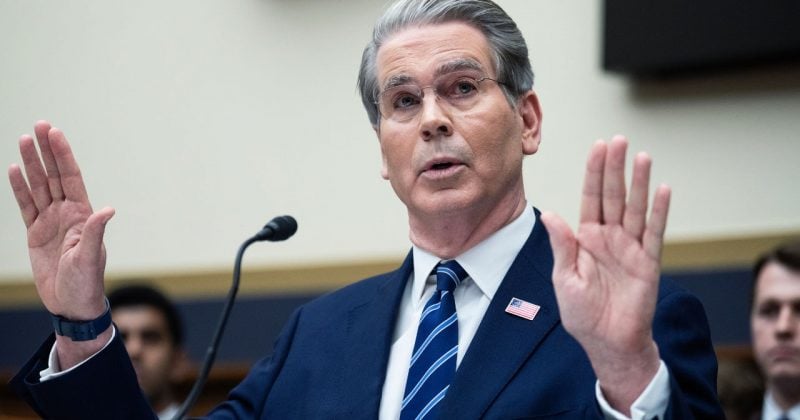
US Treasury seizes nearly $500M in Iranian crypto as Bessent touts ‘Operation Economic Fury’
Treasury Secretary Scott Bessent claims roughly $1 billion in Iranian crypto holdings have been seized, though officials put confirmed figures closer to $500 million plus a separate Tether freeze of $344 million.
Treasury Secretary Scott Bessent announced that the US government has seized nearly $500 million in Iranian-linked cryptocurrency assets, part of an intensified sanctions campaign the administration is calling “Operation Economic Fury.” The figure, combined with a separate Tether freeze of approximately $344 million in USDT tied to Iranian wallets, gets close to the $1 billion total Bessent referenced, though the math requires some generous rounding.
What actually happened
On April 29, 2026, Bessent disclosed the seizure during a Fox Business interview. The nearly $500 million in crypto assets was captured directly by the Treasury Department as part of its maximum pressure campaign against Iran.
Separately, Tether, the issuer of the world’s largest stablecoin by market cap, froze roughly $344 million in USDT connected to Iranian wallets. That freeze preceded Bessent’s announcement, suggesting the two actions were coordinated but distinct.
Here’s the thing about the $1 billion headline number: officials involved in the operation have consistently referenced figures between $344 million and $500 million when discussing specific seizures. The billion-dollar figure appears to combine both the Treasury’s direct seizure and Tether’s freeze into a single, rounder, more politically convenient number. Some officials have described the $1 billion estimate as exaggerated.
Bessent framed the seizures as a humanitarian effort, arguing they would benefit the Iranian people by preventing the regime from accessing and appropriating those funds.
Iran’s crypto playbook
Iranian entities have historically favored alternative networks like Tron and BNB Chain to move money outside the traditional financial system. These chains offer lower fees and, in some cases, less robust compliance infrastructure than Ethereum, making them attractive for sanctions evasion.
The choice of Tron is particularly notable. Tether’s USDT circulates heavily on the Tron network, which has become a preferred rail for cross-border transfers in regions where access to the dollar-based banking system is restricted. By cooperating with Tether to freeze wallets, the Treasury is effectively turning the most popular stablecoin into a sanctions enforcement tool.
The campaign fits within a broader reimplementation of maximum pressure sanctions against Iran that has gained momentum throughout 2025 and into 2026.
What this means for crypto investors
Tether’s cooperation with Treasury signals that the largest stablecoin issuer is functioning, in practice, as an extension of US financial sanctions policy. Every USDT holder should understand what that means: Tether can and will freeze tokens at the request of government authorities. The $344 million Iranian freeze is the most prominent example, but it is not the first, and it certainly will not be the last.
For Tether specifically, the cooperation with Treasury may buy goodwill with regulators, but it also invites harder questions about centralization risk and the company’s role as a quasi-governmental financial gatekeeper.