
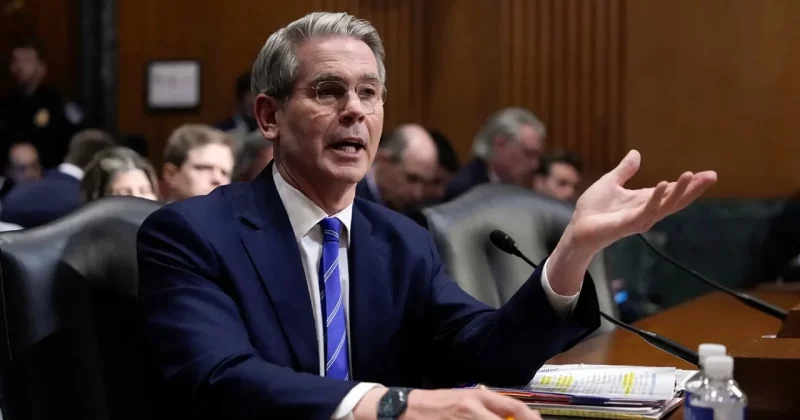
Scott Bessent warns of US manufacturing vulnerabilities at Reagan Forum, ties economic resilience to digital asset strategy
The Treasury Secretary's 'While America Slept' address links decades of industrial decline to national security risks, with implications for crypto infrastructure and stablecoin legislation.
US Treasury Secretary Scott Bessent took the stage at the Ronald Reagan Presidential Library this week with a message that was equal parts alarm bell and policy roadmap. His address, titled “While America Slept,” argued that decades of American industrial policy have traded resilience for efficiency, and that the bill is now coming due.
The speech was delivered at the Reagan National Economic Forum on May 28-29, 2026.
Efficiency was the goal, vulnerability was the result
Bessent’s core thesis is straightforward. The US spent decades optimizing supply chains for cost and speed, offshoring production of critical goods in the process. Semiconductors, rare earth minerals, defense components, energy infrastructure: the country’s ability to produce these domestically has eroded to the point where Bessent characterizes it as a strategic vulnerability.
The COVID-19 pandemic made this painfully clear when chip shortages cascaded through every industry from automakers to consumer electronics.
The forum’s theme, “Building the American Future: Growth, Innovation, and Opportunity at 250,” framed the discussion around what the country should look like at its 250th anniversary.
The administration’s reshoring agenda targets semiconductors and critical minerals as priority sectors. These are the physical backbone of data centers, mining hardware, and the broader tech infrastructure that digital asset networks depend on.
The crypto and markets news you actually need—every morning.
Daily. Free. Join 34,000+ readers across crypto, finance, and policy.
Where crypto fits into the industrial policy puzzle
Bessent didn’t reportedly make direct cryptocurrency references during his Reagan Forum remarks. But the 79th Treasury Secretary, who was appointed in January 2025 after serving as CIO at Soros Fund Management, has been one of the most vocal advocates for digital asset policy within the administration.
He has publicly endorsed stablecoin legislation and backed the Clarity Act, which aims to establish clearer market structure rules for digital assets. He has also opposed the creation of a central bank digital currency, positioning the administration firmly on the side of private-sector innovation over government-issued digital money.
Blockchain infrastructure, Bitcoin mining operations, and data centers all require reliable access to chips, energy, and rare earth materials. If those supply chains remain dependent on foreign production, the entire digital asset ecosystem inherits the same vulnerabilities Bessent is warning about.
Bessent has also advocated for a strategic Bitcoin reserve in other contexts, an approach that fits within a national economic security framework that links manufacturing strength to technological resilience.
What this means for investors
The administration appears to be simultaneously trying to harden the physical infrastructure layer while loosening the regulatory constraints on the digital layer.
The stablecoin legislation Bessent has championed could be the most immediate catalyst. Clear rules for dollar-denominated stablecoins would likely attract institutional capital and expand the US share of global stablecoin issuance, which currently represents the dominant use case for blockchain in traditional finance.
The other risk worth watching is whether the administration’s opposition to a central bank digital currency holds firm as stablecoin legislation advances. A regulatory framework that empowers private stablecoins while blocking a government alternative would be a significant structural advantage for the existing crypto ecosystem.