
Nexo Earn with Nexo
US Treasury Secretary Bessent clarifies what ‘strong dollar’ actually means

US Treasury Secretary Bessent clarifies what ‘strong dollar’ actually means

Bessent's fundamentals-first approach to dollar policy carries quiet implications for stablecoins and crypto markets.

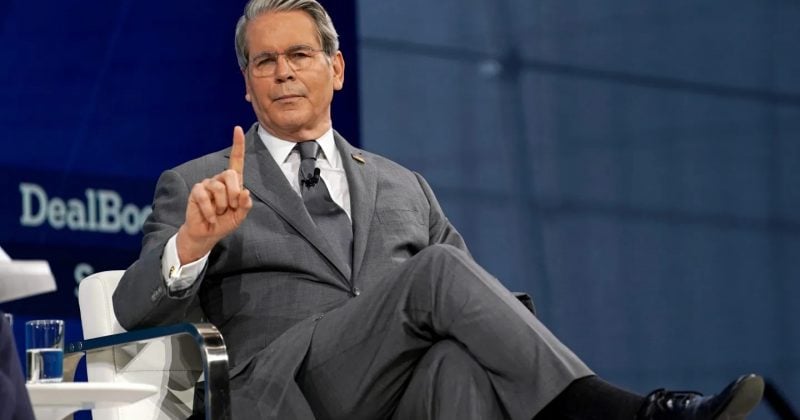
Treasury Secretary Scott Bessent wants everyone to calm down about the dollar. During a CNBC interview on January 28, Bessent laid out a straightforward definition of the US “strong dollar policy”: do the right things for the economy, and the currency takes care of itself.

What Bessent actually said

The core of Bessent’s message was a deliberate separation between “strong dollar” as a policy goal and “strong dollar” as something the government actively engineers through market intervention. His version is the former. A strong dollar, in Bessent’s framing, is the natural result of sound economic fundamentals: reducing trade deficits, pursuing pro-growth policies, and maintaining the kind of fiscal discipline that makes global investors want to hold dollar-denominated assets.

When asked directly about whether the US would intervene to support the Japanese yen, Bessent didn’t hedge. His answer was a flat “Absolutely not.”

Advertisement

He also reaffirmed that nothing has changed regarding the dollar’s role as the world’s reserve currency.

The market responded accordingly. The US dollar index climbed roughly 0.4% after Bessent’s remarks.

The stablecoin angle

Bessent has consistently drawn a line between dollar strength and the growth of dollar-pegged stablecoins. His argument is straightforward: stablecoins create organic demand for US Treasuries, because issuers like Tether and Circle hold massive reserves of government debt to back their tokens.

In prior discussions around the GENIUS Act, the legislative framework designed to regulate stablecoin issuers, he explicitly linked the expansion of stablecoins to reinforcing the dollar’s global reserve status. The logic is circular in the best possible way: more stablecoins means more Treasury purchases, which means more demand for dollars, which means a stronger dollar.

No specific cryptocurrencies came up during the January 28 interview. But the broader policy architecture Bessent has been building since taking office, he was confirmed by the Senate on January 27, 2025, with a 68-29 vote, consistently treats stablecoins as a feature, not a bug.

What this means for investors

For crypto investors, a fundamentals-driven strong dollar policy is, counterintuitively, probably good news for the stablecoin sector. If Washington continues to view stablecoin growth as aligned with its own monetary interests, regulatory frameworks like the GENIUS Act are more likely to be permissive than restrictive.

The risk, of course, is that this cozy relationship comes with strings attached. A government that sees stablecoins as useful for its own monetary policy goals will eventually want more control over how they operate. Reserve requirements, audit mandates, restrictions on backing assets: all of these become more likely as stablecoins become more systemically important.

Disclosure: This article was edited by Editorial Team. For more information on how we create and review content, see our Editorial Policy.

US Treasury Secretary Bessent clarifies what ‘strong dollar’ actually means

US Treasury Secretary Bessent clarifies what ‘strong dollar’ actually means

Bessent's fundamentals-first approach to dollar policy carries quiet implications for stablecoins and crypto markets.

Treasury Secretary Scott Bessent wants everyone to calm down about the dollar. During a CNBC interview on January 28, Bessent laid out a straightforward definition of the US “strong dollar policy”: do the right things for the economy, and the currency takes care of itself.

What Bessent actually said

The core of Bessent’s message was a deliberate separation between “strong dollar” as a policy goal and “strong dollar” as something the government actively engineers through market intervention. His version is the former. A strong dollar, in Bessent’s framing, is the natural result of sound economic fundamentals: reducing trade deficits, pursuing pro-growth policies, and maintaining the kind of fiscal discipline that makes global investors want to hold dollar-denominated assets.

When asked directly about whether the US would intervene to support the Japanese yen, Bessent didn’t hedge. His answer was a flat “Absolutely not.”

Advertisement

He also reaffirmed that nothing has changed regarding the dollar’s role as the world’s reserve currency.

The market responded accordingly. The US dollar index climbed roughly 0.4% after Bessent’s remarks.

The stablecoin angle

Bessent has consistently drawn a line between dollar strength and the growth of dollar-pegged stablecoins. His argument is straightforward: stablecoins create organic demand for US Treasuries, because issuers like Tether and Circle hold massive reserves of government debt to back their tokens.

In prior discussions around the GENIUS Act, the legislative framework designed to regulate stablecoin issuers, he explicitly linked the expansion of stablecoins to reinforcing the dollar’s global reserve status. The logic is circular in the best possible way: more stablecoins means more Treasury purchases, which means more demand for dollars, which means a stronger dollar.

No specific cryptocurrencies came up during the January 28 interview. But the broader policy architecture Bessent has been building since taking office, he was confirmed by the Senate on January 27, 2025, with a 68-29 vote, consistently treats stablecoins as a feature, not a bug.

What this means for investors

For crypto investors, a fundamentals-driven strong dollar policy is, counterintuitively, probably good news for the stablecoin sector. If Washington continues to view stablecoin growth as aligned with its own monetary interests, regulatory frameworks like the GENIUS Act are more likely to be permissive than restrictive.

The risk, of course, is that this cozy relationship comes with strings attached. A government that sees stablecoins as useful for its own monetary policy goals will eventually want more control over how they operate. Reserve requirements, audit mandates, restrictions on backing assets: all of these become more likely as stablecoins become more systemically important.

Disclosure: This article was edited by Editorial Team. For more information on how we create and review content, see our Editorial Policy.