
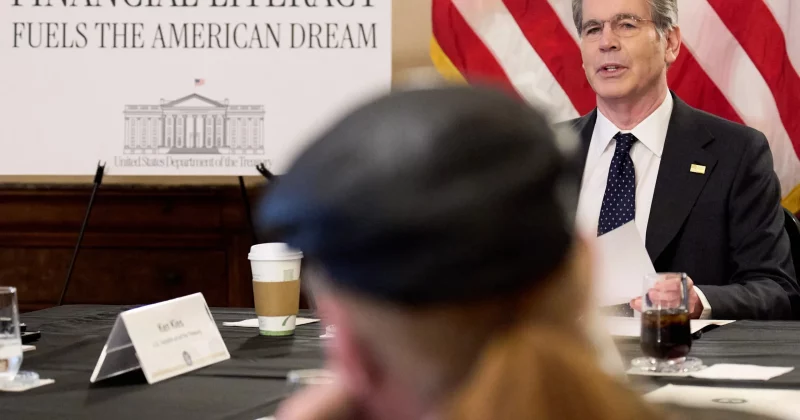
Scott Bessent faces a Treasury yield problem with no easy fix
Rising long-term yields are tightening financial conditions across markets, and the Treasury Secretary's toolkit is looking thin.
The 30-year Treasury yield hit 5.02% on May 14, a level not seen in years. For Treasury Secretary Scott Bessent, who has made lowering long-term borrowing costs a central priority since taking office in January 2025, that number represents something close to a policy failure in real time.
Think of Treasury yields as the price tag the US government pays to borrow money. When investors demand higher yields to hold government bonds, it signals either rising inflation expectations, concerns about fiscal discipline, or both.
The 10-year yield climbed above 4.2% back in April 2025. But the 30-year yield crossing the 5% threshold is a different animal entirely.
Bessent, the 79th US Treasury Secretary, confirmed under President Trump on January 28, 2025, has consistently framed the yield moves as temporary disruptions rather than structural problems. He has attributed recent market fluctuations to leveraged investors and the process of deleveraging rather than anything systemic.
The Treasury Secretary has floated a few ideas. One involves potential easing of bank capital rules, which could theoretically free up demand for Treasuries by making it cheaper for banks to hold them on their balance sheets. Another centers on restraining government spending.
The limited nature of Bessent’s options is the core issue. The Treasury Secretary doesn’t set interest rates. What the Treasury does control, the composition and timing of debt issuance, can influence yields at the margin but can’t override the broader forces pushing them higher.
Spot Bitcoin ETFs experienced net outflows of approximately $1.26 billion during a recent week as yields surged. Bitcoin itself traded below $80,000 when the 30-year yield hit its highest levels, part of a broader retreat in risk assets.
Bessent has engaged with the digital asset space directly, stating that crypto and stablecoins do not threaten the dollar and could even reinforce its hegemony. But he has also made clear that no government support for Bitcoin or similar assets is coming. He stated explicitly that the administration lacks the authority to bail out Bitcoin or direct banks to buy it.
The $1.26 billion in Bitcoin ETF outflows in a single week represents institutional capital actively rotating out of digital assets and into fixed income, chasing yields that haven’t been this attractive in years. Bessent’s proposed bank capital rule changes, even if implemented, would take months to filter through. The Fed, for its part, has shown no urgency to cut rates aggressively enough to pull long-term yields lower.