
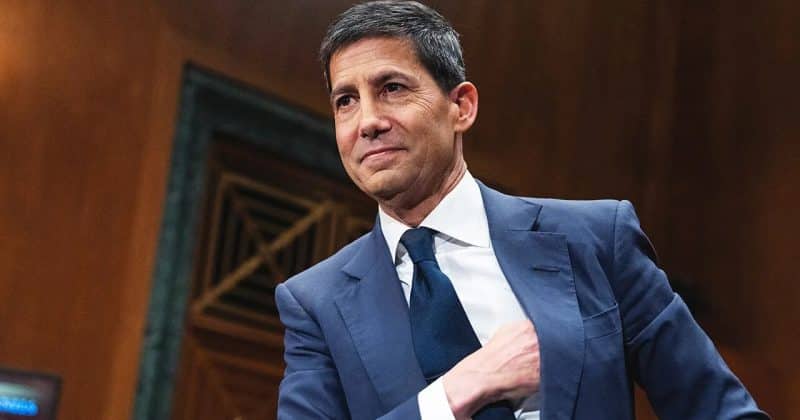
Former Fed Governor Betsy Duke expects hawkish tone from Warsh at first FOMC meeting
The new Fed chair's debut could reshape rate cut expectations and rattle crypto markets already trading in a tight range
Kevin Warsh hasn’t even chaired his first Federal Open Market Committee meeting yet, and former Fed Governor Betsy Duke is already setting expectations: he’s a hawk, and his opening act will be about how the Fed talks, not what it does.
Duke, who served alongside Warsh on the Fed’s Board of Governors, told Bloomberg that the new chair’s first meeting will be “all about communications.”
The Warsh era begins
Warsh was officially sworn in as Fed Chair on May 22, 2026, succeeding Jerome Powell after a confirmation process that was anything but smooth. The Senate confirmed his appointment on May 13 with a vote of 54-45 or 55-45. President Trump had nominated him back on March 4.
His first FOMC meeting is scheduled for June 16-17, and market participants are widely expecting the federal funds rate to hold steady at 3.5% to 3.75%.
Warsh has historically favored reducing the Fed’s reliance on balance-sheet intervention and forward guidance tools like the dot plot, the quarterly chart where individual Fed officials project where rates are headed.
Macro, rates, and crypto—what moved markets and what matters next.
Daily. Free. Join 34,000+ readers across crypto, finance, and policy.
What hawkish means in practice
When Duke calls Warsh a hawk, she’s pointing to his well-documented skepticism about keeping monetary policy too loose for too long. Hawks prioritize fighting inflation, even if it means higher interest rates that slow economic growth.
Inflation remains sticky, and employment data has stayed robust enough to give the Fed cover to keep rates elevated. Market participants are already pricing in limited near-term rate cuts, and a hawkish chair only reinforces that trajectory.
Crypto feels the gravity
Bitcoin has been trading in a relatively tight band in mid-June, fluctuating between $63,686 and $66,399.
The potential reduction in reliance on the dot plot is particularly noteworthy for crypto traders. Digital asset markets have become increasingly sensitive to Fed communications in recent years. Every dot plot release, every press conference, every hint about the pace of cuts or hikes ripples through Bitcoin, Ethereum, and the broader altcoin universe within minutes. Remove that structured guidance, and you get a market that has to work harder to interpret the Fed’s intentions.
Institutional crypto investors should watch the June 16-17 meeting not just for rate decisions, but for any changes to how the Fed presents its economic projections and policy outlook. If Warsh follows through on his historical preference for less prescriptive forward guidance, the playbook for trading Fed meetings changes fundamentally, and crypto portfolios built around anticipating dot plot shifts may need serious rethinking.