
Amazon founder Bezos says AI will create more jobs for humans than it replaces

Amazon founder Bezos says AI will create more jobs for humans than it replaces

The billionaire argues that productivity gains from artificial intelligence will lead to labor scarcity, not mass unemployment, as his AI startup Prometheus closes a $12 billion funding round


Jeff Bezos said artificial intelligence will create more demand for workers rather than make people redundant, pushing back against growing fears that the technology will wipe out jobs.

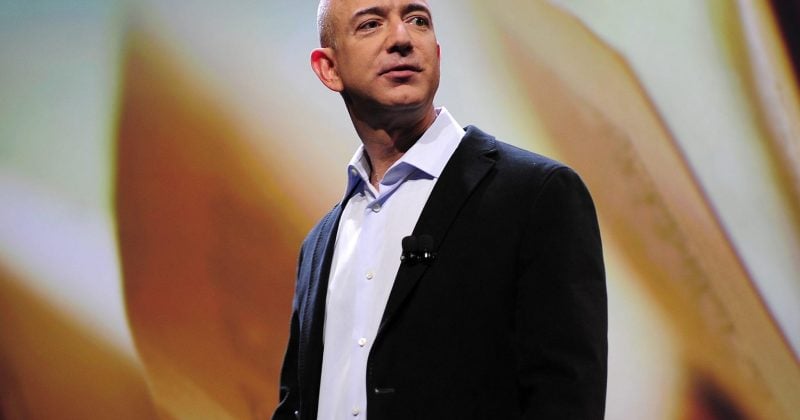
Speaking at VivaTech in Paris, the Amazon founder said he disagrees with the view that AI will leave humans without work. Instead, he argued the technology will remove barriers that currently limit what people can build, solve and produce.

“I totally disagree with this point of view,” Bezos said, referring to concerns that AI will make humans redundant. “And I think, in fact, AI is going to create a labor shortage.”

The comments come as Bezos steps deeper into the AI race through Prometheus, his new venture focused on accelerating physical manufacturing.

The company is targeting industrial systems and advanced production, an area where AI is increasingly moving beyond chatbots and into the physical world.

Advertisement

Bezos framed AI as a tool that expands human capacity rather than replaces it. In his view, the constraint is not a lack of useful work, but the friction that prevents people from acting on bigger ambitions.

That view contrasts with warnings from labor groups and political figures who argue AI could displace workers, weaken job security and concentrate productivity gains among shareholders. The UK’s Trades Union Congress has warned that AI could repeat the damage of deindustrialization if workers do not share in the upside.

Bezos also used the Paris appearance to outline his long term space ambitions through Blue Origin. He said humanity is going to the Moon to stay, arguing that lunar resources could eventually support fuel production and a permanent presence beyond Earth.

Blue Origin is trying to establish itself as a major player in commercial spaceflight and lunar infrastructure, competing with Elon Musk’s SpaceX. Bezos acknowledged the company’s recent New Glenn ground test explosion as a setback, calling it a gut punch for the team, but said critical launch infrastructure survived.

Blue Origin CEO Dave Limp said reconstruction work is already underway and that the company expects launches to resume before the end of the year.

The event also reflected a broader shift across the AI industry. Away from the main stage, Unitree’s humanoid robot drew crowds as it demonstrated how machines could respond to human commands through cognitive signals using EEG based technology.

The demos showed how AI is moving from software into factories, robotics, healthcare and industrial systems. For Bezos, that shift is not a sign that humans are becoming obsolete. It is the reason he thinks more human labor will be needed.

Disclosure: This article was edited by Editorial Team. For more information on how we create and review content, see our Editorial Policy.

Amazon founder Bezos says AI will create more jobs for humans than it replaces

Amazon founder Bezos says AI will create more jobs for humans than it replaces

The billionaire argues that productivity gains from artificial intelligence will lead to labor scarcity, not mass unemployment, as his AI startup Prometheus closes a $12 billion funding round

Share

Add us on Google

Jeff Bezos said artificial intelligence will create more demand for workers rather than make people redundant, pushing back against growing fears that the technology will wipe out jobs.

Speaking at VivaTech in Paris, the Amazon founder said he disagrees with the view that AI will leave humans without work. Instead, he argued the technology will remove barriers that currently limit what people can build, solve and produce.

“I totally disagree with this point of view,” Bezos said, referring to concerns that AI will make humans redundant. “And I think, in fact, AI is going to create a labor shortage.”

The comments come as Bezos steps deeper into the AI race through Prometheus, his new venture focused on accelerating physical manufacturing.

The company is targeting industrial systems and advanced production, an area where AI is increasingly moving beyond chatbots and into the physical world.

Advertisement

Bezos framed AI as a tool that expands human capacity rather than replaces it. In his view, the constraint is not a lack of useful work, but the friction that prevents people from acting on bigger ambitions.

That view contrasts with warnings from labor groups and political figures who argue AI could displace workers, weaken job security and concentrate productivity gains among shareholders. The UK’s Trades Union Congress has warned that AI could repeat the damage of deindustrialization if workers do not share in the upside.

Bezos also used the Paris appearance to outline his long term space ambitions through Blue Origin. He said humanity is going to the Moon to stay, arguing that lunar resources could eventually support fuel production and a permanent presence beyond Earth.

Blue Origin is trying to establish itself as a major player in commercial spaceflight and lunar infrastructure, competing with Elon Musk’s SpaceX. Bezos acknowledged the company’s recent New Glenn ground test explosion as a setback, calling it a gut punch for the team, but said critical launch infrastructure survived.

Blue Origin CEO Dave Limp said reconstruction work is already underway and that the company expects launches to resume before the end of the year.

The event also reflected a broader shift across the AI industry. Away from the main stage, Unitree’s humanoid robot drew crowds as it demonstrated how machines could respond to human commands through cognitive signals using EEG based technology.

The demos showed how AI is moving from software into factories, robotics, healthcare and industrial systems. For Bezos, that shift is not a sign that humans are becoming obsolete. It is the reason he thinks more human labor will be needed.

Disclosure: This article was edited by Editorial Team. For more information on how we create and review content, see our Editorial Policy.