
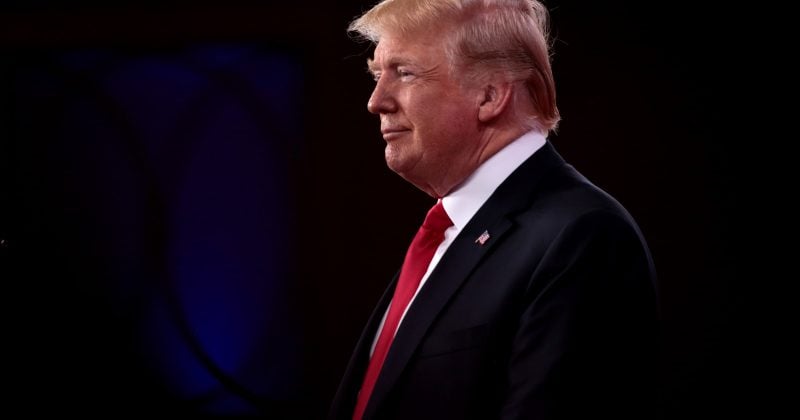
Bipartisan senators reach agreement with Trump administration on sweeping new Russian sanctions

Bipartisan senators reach agreement with Trump administration on sweeping new Russian sanctions

The Sanctioning Russia Act of 2025 could impose tariffs up to 500% on countries doing business with Russia, and the crypto industry should be paying attention to what's not in the bill.

A bipartisan group of US senators has struck a deal with the Trump administration to move forward on what could become one of the most aggressive sanctions packages ever aimed at Russia. The legislation, if passed, would give the president authority to slap tariffs as high as 500% on countries and entities that keep buying Russian energy.

What’s actually in the bill

The Sanctioning Russia Act of 2025, formally designated S.1241, was introduced on April 1, 2025, by Senators Lindsey Graham (R-SC) and Richard Blumenthal (D-CT). It targets the economic lifeline that keeps Russia’s war machine running: oil, gas, and uranium exports.

Advertisement

The mechanism is straightforward. Rather than sanctioning Russia directly, the bill goes after Russia’s customers. Any country or entity conducting business with Russia’s energy sector could face tariffs up to 500% on their own imports into the United States.

The bill has attracted 84 Senate co-sponsors and 151 in the House. Senator Graham announced in January 2026 that President Trump had effectively greenlit the legislation, clearing the way for a potential vote. The White House has also expressed reservations about the bill potentially constraining ongoing negotiations around peace talks with Ukraine.

The lobbying push and related legislation

Lawmakers are planning to lobby Treasury Secretary Scott Bessent directly during the NATO summit scheduled for July 7–8, 2026. The DROP Act, introduced in December 2025, and the NOPE Act from April 2026 both aim to further penalize Russian oil revenues through different mechanisms.

What crypto investors should notice

The Sanctioning Russia Act does not contain specific provisions targeting digital assets or cryptocurrency. Earlier congressional proposals had explicitly flagged cryptocurrency as a tool for sanctions evasion. The fact that this particular bill doesn’t go there suggests legislators are keeping their focus narrow, aimed squarely at Russia’s energy sector through conventional economic channels.

Disclosure: This article was edited by Editorial Team. For more information on how we create and review content, see our Editorial Policy.

Bipartisan senators reach agreement with Trump administration on sweeping new Russian sanctions

Bipartisan senators reach agreement with Trump administration on sweeping new Russian sanctions

The Sanctioning Russia Act of 2025 could impose tariffs up to 500% on countries doing business with Russia, and the crypto industry should be paying attention to what's not in the bill.

A bipartisan group of US senators has struck a deal with the Trump administration to move forward on what could become one of the most aggressive sanctions packages ever aimed at Russia. The legislation, if passed, would give the president authority to slap tariffs as high as 500% on countries and entities that keep buying Russian energy.

What’s actually in the bill

The Sanctioning Russia Act of 2025, formally designated S.1241, was introduced on April 1, 2025, by Senators Lindsey Graham (R-SC) and Richard Blumenthal (D-CT). It targets the economic lifeline that keeps Russia’s war machine running: oil, gas, and uranium exports.

Advertisement

The mechanism is straightforward. Rather than sanctioning Russia directly, the bill goes after Russia’s customers. Any country or entity conducting business with Russia’s energy sector could face tariffs up to 500% on their own imports into the United States.

The bill has attracted 84 Senate co-sponsors and 151 in the House. Senator Graham announced in January 2026 that President Trump had effectively greenlit the legislation, clearing the way for a potential vote. The White House has also expressed reservations about the bill potentially constraining ongoing negotiations around peace talks with Ukraine.

The lobbying push and related legislation

Lawmakers are planning to lobby Treasury Secretary Scott Bessent directly during the NATO summit scheduled for July 7–8, 2026. The DROP Act, introduced in December 2025, and the NOPE Act from April 2026 both aim to further penalize Russian oil revenues through different mechanisms.

What crypto investors should notice

The Sanctioning Russia Act does not contain specific provisions targeting digital assets or cryptocurrency. Earlier congressional proposals had explicitly flagged cryptocurrency as a tool for sanctions evasion. The fact that this particular bill doesn’t go there suggests legislators are keeping their focus narrow, aimed squarely at Russia’s energy sector through conventional economic channels.

Disclosure: This article was edited by Editorial Team. For more information on how we create and review content, see our Editorial Policy.