
Nexo Earn with Nexo
Bitcoin Depot files for Chapter 11 bankruptcy amid strict regulations

Bitcoin Depot files for Chapter 11 bankruptcy amid strict regulations

North America's largest Bitcoin ATM operator takes all 9,000 machines offline after revenue collapses nearly 50% and California's withdrawal caps squeeze the business model.

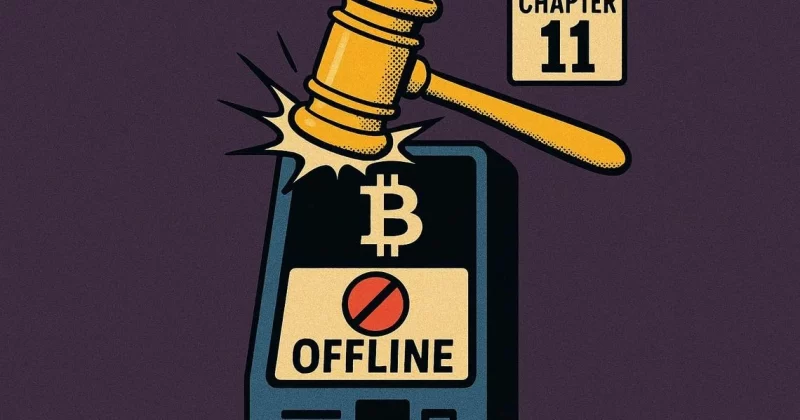
Bitcoin Depot, the largest Bitcoin ATM operator in North America, filed for Chapter 11 bankruptcy protection on May 18, 2026. The Atlanta-based company is pulling the plug on all 9,000 of its machines across 47 states, a move that effectively shuts down the biggest physical on-ramp to Bitcoin in the country.

The filing caps a brutal stretch for the Nasdaq-listed company (ticker: BTM). Revenue fell nearly 49% year over year, and a $12.2 million profit flipped into a $9.5 million loss. The stock, already battered, cratered roughly 80% following the announcement, sliding from around $3 to $0.75.

California’s withdrawal cap and the compliance squeeze

Bitcoin Depot singled out California as the primary antagonist in its regulatory struggles, calling it the only state with a $1,000 daily withdrawal limit on crypto ATMs.

Advertisement

Over the past two years, state attorneys general across the country have ramped up enforcement actions against crypto ATMs. The machines have drawn scrutiny for their role in facilitating fraud and scams, particularly targeting elderly consumers who are instructed by scammers to deposit cash at Bitcoin ATMs.

Bitcoin Depot had already flagged material weaknesses in its operations and issued a “going concern” warning on May 12, just six days before the bankruptcy filing.

The Bitcoin ATM industry’s credibility problem

Bitcoin ATMs have always occupied an awkward space in the crypto ecosystem. They serve a real function, giving people without bank accounts or exchange accounts a way to buy Bitcoin with cash. But the fees are steep, often ranging from 10% to 20% per transaction, and the machines have become a magnet for fraud schemes.

The pattern is well-documented at this point. A scammer calls a victim, usually posing as a government official or tech support agent, and directs them to a Bitcoin ATM to deposit cash. The money converts to Bitcoin and vanishes into the scammer’s wallet. The ATM operator collects its fee either way.

What this means for investors and the broader market

For investors holding BTM shares, the 80% stock decline leaves little room for optimism. Chapter 11 bankruptcy allows for reorganization rather than liquidation, which means there’s a theoretical path to the company emerging in some form. But with all 9,000 ATMs offline and revenue in freefall, any restructuring plan would need to address the fundamental problem: the regulatory environment has changed.

The broader implications extend beyond Bitcoin Depot. Other Bitcoin ATM operators, including companies like CoinFlip and Coinme, will be watching closely. Bitcoin ATMs represent one of the few ways to buy crypto with cash, and their disappearance would reduce physical access to Bitcoin for unbanked and underbanked populations.

Disclosure: This article was edited by Editorial Team. For more information on how we create and review content, see our Editorial Policy.

Bitcoin Depot files for Chapter 11 bankruptcy amid strict regulations

Bitcoin Depot files for Chapter 11 bankruptcy amid strict regulations

North America's largest Bitcoin ATM operator takes all 9,000 machines offline after revenue collapses nearly 50% and California's withdrawal caps squeeze the business model.

Bitcoin Depot, the largest Bitcoin ATM operator in North America, filed for Chapter 11 bankruptcy protection on May 18, 2026. The Atlanta-based company is pulling the plug on all 9,000 of its machines across 47 states, a move that effectively shuts down the biggest physical on-ramp to Bitcoin in the country.

The filing caps a brutal stretch for the Nasdaq-listed company (ticker: BTM). Revenue fell nearly 49% year over year, and a $12.2 million profit flipped into a $9.5 million loss. The stock, already battered, cratered roughly 80% following the announcement, sliding from around $3 to $0.75.

California’s withdrawal cap and the compliance squeeze

Bitcoin Depot singled out California as the primary antagonist in its regulatory struggles, calling it the only state with a $1,000 daily withdrawal limit on crypto ATMs.

Advertisement

Over the past two years, state attorneys general across the country have ramped up enforcement actions against crypto ATMs. The machines have drawn scrutiny for their role in facilitating fraud and scams, particularly targeting elderly consumers who are instructed by scammers to deposit cash at Bitcoin ATMs.

Bitcoin Depot had already flagged material weaknesses in its operations and issued a “going concern” warning on May 12, just six days before the bankruptcy filing.

The Bitcoin ATM industry’s credibility problem

Bitcoin ATMs have always occupied an awkward space in the crypto ecosystem. They serve a real function, giving people without bank accounts or exchange accounts a way to buy Bitcoin with cash. But the fees are steep, often ranging from 10% to 20% per transaction, and the machines have become a magnet for fraud schemes.

The pattern is well-documented at this point. A scammer calls a victim, usually posing as a government official or tech support agent, and directs them to a Bitcoin ATM to deposit cash. The money converts to Bitcoin and vanishes into the scammer’s wallet. The ATM operator collects its fee either way.

What this means for investors and the broader market

For investors holding BTM shares, the 80% stock decline leaves little room for optimism. Chapter 11 bankruptcy allows for reorganization rather than liquidation, which means there’s a theoretical path to the company emerging in some form. But with all 9,000 ATMs offline and revenue in freefall, any restructuring plan would need to address the fundamental problem: the regulatory environment has changed.

The broader implications extend beyond Bitcoin Depot. Other Bitcoin ATM operators, including companies like CoinFlip and Coinme, will be watching closely. Bitcoin ATMs represent one of the few ways to buy crypto with cash, and their disappearance would reduce physical access to Bitcoin for unbanked and underbanked populations.

Disclosure: This article was edited by Editorial Team. For more information on how we create and review content, see our Editorial Policy.