
Nexo Earn with Nexo
Bitcoin ETFs see $70.4M in outflows as Ethereum ETFs shed $28.1M in consecutive retreat

Bitcoin ETFs see $70.4M in outflows as Ethereum ETFs shed $28.1M in consecutive retreat

US-listed crypto funds lost a combined $98.5M as institutional appetite showed signs of cooling after weeks of heavy inflows.

Spot Bitcoin ETFs hemorrhaged $70.4M in the latest trading session, while their Ethereum counterparts dropped $28.1M. That is $98.5M walking out the door in a single day, and it was not a one-off.

The outflows were consecutive, meaning this marks at least the second straight session of net negative flows across both product categories.

The numbers in context

Just recently, Bitcoin ETFs alone pulled in $2.13B in a single week, with some stretches showing zero outflows across all issuers. On the flip side, Bitcoin ETFs also saw $1.1B in outflows over just three days during a separate period. The current $70.4M daily outflow for Bitcoin funds is notable but nowhere near the worst bleeding these products have experienced.

Advertisement

Ethereum ETFs losing $28.1M is a comparatively smaller figure in absolute terms. But Ethereum funds have consistently attracted less capital than their Bitcoin equivalents since launching, so any outflow registers as more significant on a proportional basis.

ETF flows have become the single most-watched indicator for measuring institutional crypto demand. When BlackRock’s IBIT or Fidelity’s FBTC see inflows, the market reads it as a signal that large allocators are buying the dip or building positions.

Why the shift matters

Consecutive outflows tell a different story than a single bad day. One session of negative flows can be noise, maybe a large holder rebalancing a portfolio or taking profits after a run-up. Two or more sessions in a row suggest something closer to a deliberate repositioning.

The fact that both Bitcoin and Ethereum funds saw outflows simultaneously is also worth noting. Nobody was rotating from Bitcoin into Ethereum or vice versa. Capital was simply leaving the crypto ETF complex altogether.

What this means for investors

Weeks of $2B-plus in inflows can be followed by multi-day stretches of billion-dollar outflows. Periods of outflows have historically coincided with short-term price weakness in Bitcoin and Ethereum, since ETF issuers must sell the underlying assets to meet redemptions. Conversely, inflow surges tend to put upward pressure on spot prices as issuers buy to back new shares.

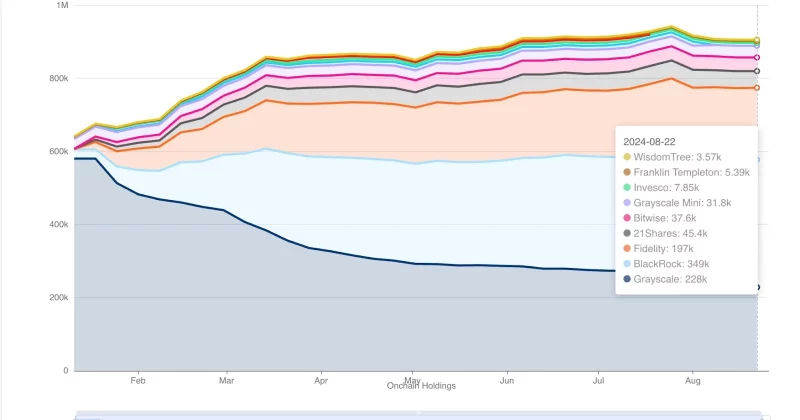
During outflow periods, the distribution of losses is rarely even. Some funds tend to see disproportionate redemptions while others hold steady or even attract small inflows. Tracking which specific funds are losing capital, and which are retaining it, often reveals more about market sentiment than the aggregate number alone.

Disclosure: This article was edited by Editorial Team. For more information on how we create and review content, see our Editorial Policy.

Bitcoin ETFs see $70.4M in outflows as Ethereum ETFs shed $28.1M in consecutive retreat

Bitcoin ETFs see $70.4M in outflows as Ethereum ETFs shed $28.1M in consecutive retreat

US-listed crypto funds lost a combined $98.5M as institutional appetite showed signs of cooling after weeks of heavy inflows.

Spot Bitcoin ETFs hemorrhaged $70.4M in the latest trading session, while their Ethereum counterparts dropped $28.1M. That is $98.5M walking out the door in a single day, and it was not a one-off.

The outflows were consecutive, meaning this marks at least the second straight session of net negative flows across both product categories.

The numbers in context

Just recently, Bitcoin ETFs alone pulled in $2.13B in a single week, with some stretches showing zero outflows across all issuers. On the flip side, Bitcoin ETFs also saw $1.1B in outflows over just three days during a separate period. The current $70.4M daily outflow for Bitcoin funds is notable but nowhere near the worst bleeding these products have experienced.

Advertisement

Ethereum ETFs losing $28.1M is a comparatively smaller figure in absolute terms. But Ethereum funds have consistently attracted less capital than their Bitcoin equivalents since launching, so any outflow registers as more significant on a proportional basis.

ETF flows have become the single most-watched indicator for measuring institutional crypto demand. When BlackRock’s IBIT or Fidelity’s FBTC see inflows, the market reads it as a signal that large allocators are buying the dip or building positions.

Why the shift matters

Consecutive outflows tell a different story than a single bad day. One session of negative flows can be noise, maybe a large holder rebalancing a portfolio or taking profits after a run-up. Two or more sessions in a row suggest something closer to a deliberate repositioning.

The fact that both Bitcoin and Ethereum funds saw outflows simultaneously is also worth noting. Nobody was rotating from Bitcoin into Ethereum or vice versa. Capital was simply leaving the crypto ETF complex altogether.

What this means for investors

Weeks of $2B-plus in inflows can be followed by multi-day stretches of billion-dollar outflows. Periods of outflows have historically coincided with short-term price weakness in Bitcoin and Ethereum, since ETF issuers must sell the underlying assets to meet redemptions. Conversely, inflow surges tend to put upward pressure on spot prices as issuers buy to back new shares.

During outflow periods, the distribution of losses is rarely even. Some funds tend to see disproportionate redemptions while others hold steady or even attract small inflows. Tracking which specific funds are losing capital, and which are retaining it, often reveals more about market sentiment than the aggregate number alone.

Disclosure: This article was edited by Editorial Team. For more information on how we create and review content, see our Editorial Policy.