
Bitwise estimates Bitcoin’s fair value at $224K amid debt fears
A sovereign default-risk model pegs Bitcoin well above current prices as global borrowing needs balloon to $29 trillion.
Bitwise Europe’s latest macro report puts a number on something Bitcoin maximalists have long argued in the abstract: that the world’s sovereign debt problem makes BTC structurally undervalued. The number is $224,000, derived from a credit default swap framework applied to G20 government bonds.
That’s not a price prediction. It’s a theoretical fair value based on what investors would pay for insurance against sovereign defaults, and what Bitcoin might be worth if it absorbed even a fraction of that hedging demand.
The $29 trillion refinancing wall
The OECD estimates that governments and corporations worldwide will need to borrow roughly $29 trillion in 2026. That’s a 17% increase from 2024 levels.
The scarier detail: 78% of that sovereign issuance is just rolling over existing debt. In English, most of the borrowing isn’t funding new roads or schools. It’s paying off old IOUs with fresh IOUs.
Japan’s bond market is flashing its own warning. By late May 2026, 10-year Japanese Government Bond yields hit multi-decade highs, exposing cracks in a market valued at around $7.5 trillion.
The International Monetary Fund has cautioned that markets may not remain as forgiving toward excessive sovereign borrowing as they have been in the past.
The news moving money, markets, and the world—before your day starts.
Daily. Free. Join 34,000+ readers across crypto, finance, and policy.
How Bitwise gets to $224K
The $224,000 figure comes from applying Greg Foss’s Credit Default Swap-based valuation model to G20 sovereign debt. The framework treats Bitcoin as a form of decentralized portfolio insurance against the risk of government defaults.
The logic works like this: CDS contracts are financial instruments that pay out if a borrower defaults. They have a market price that reflects the perceived probability of default. Foss’s model essentially asks what Bitcoin would be worth if it captured the value currently embedded in sovereign CDS pricing across the G20. As of mid-May 2026, that math lands at roughly $224,000 per BTC.
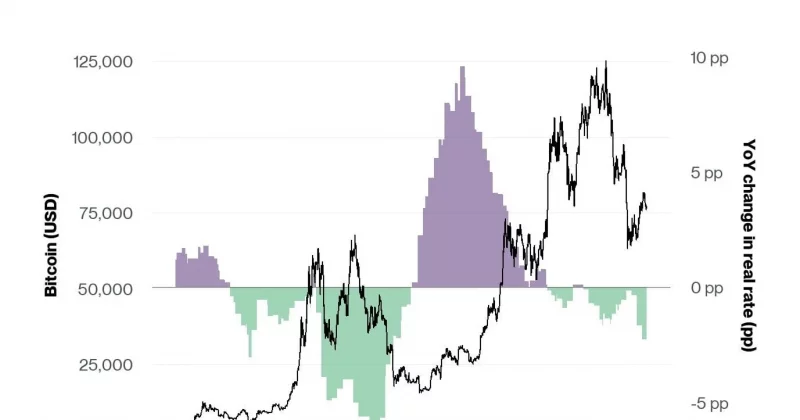
Bitwise is careful to frame this as indicative rather than a near-term target. High real yields across developed markets are keeping a lid on speculative assets for now, creating what Bitwise describes as a period of expected price stability.
Bitwise’s report highlights Bitcoin’s track record of outperforming gold specifically on days when US Treasuries decline.
Supply dynamics add fuel
On the supply side, long-term holders now control approximately 14.85 million BTC, roughly 74.3% of the total supply. That’s a record.
Only about 27% of Bitcoin sits in the hands of short-term or speculative investors.
Bitwise also flags Bitcoin’s MVRV ratio, a metric that compares market value to realized value, as sitting below its historical average. Only 36% of past measurements have been lower. Meanwhile, US tech stocks are trading at what the report calls extreme valuations.