
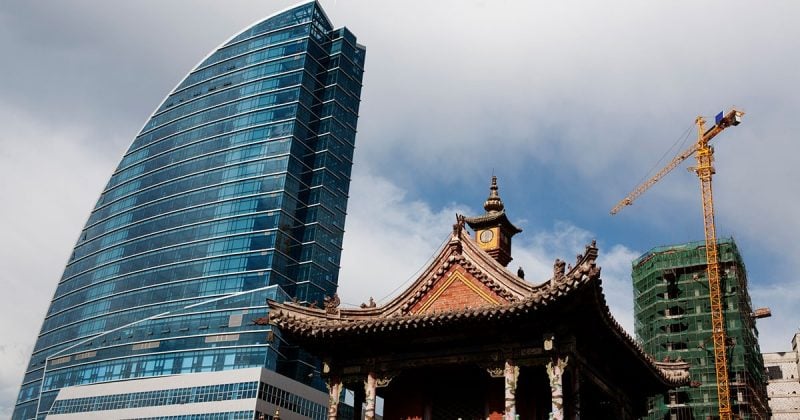
BLAST Premier picks Ulaanbaatar for its 2027 Counter-Strike tournament, signaling esports’ push into frontier markets

BLAST Premier picks Ulaanbaatar for its 2027 Counter-Strike tournament, signaling esports’ push into frontier markets

The $1.25 million CS2 event marks the first tier-one esports competition in Mongolia, as tournament organizers chase audiences in overlooked regions

BLAST Premier just planted a flag in one of the most unexpected places on the competitive gaming map. The esports organizer announced that Ulaanbaatar, Mongolia, will host the BLAST Open 2027 S2, a Counter-Strike 2 tournament running May 10-23, 2027, with a $1.25 million prize pool.

What BLAST is building

The Ulaanbaatar event will feature 16 teams. Eleven of those squads earn their spots through Valve Regional Standings, the ranking system that governs competitive CS2. The remaining five will fight through regional qualifiers spanning Asia, Europe, North America, and South America.

Advertisement

This isn’t BLAST’s first interaction with Mongolia. The organizer held a regional qualifier in Ulaanbaatar back in 2025, essentially running a test drive before committing to a full-scale event.

The Mongolia stop fits into BLAST’s broader 2027 circuit, which includes six major events scattered across the globe. Other confirmed host cities include Rio de Janeiro, Singapore, Hong Kong, and Malta.

What this means for investors watching esports and gaming

Since its inception in 2020, BLAST Premier has awarded over $26 million in cumulative prize pools across its events. The $1.25 million prize pool for BLAST Open 2027 S2 is substantial but not record-breaking by CS2 standards.

For crypto-adjacent investors, the landscape here is notably quiet. BLAST’s 2027 announcements have leaned on traditional sponsorship and audience engagement models rather than blockchain integrations or token-based fan engagement. That’s a departure from the 2021-2022 era, when esports organizations were racing to sign crypto exchange sponsorships.

Disclosure: This article was edited by Editorial Team. For more information on how we create and review content, see our Editorial Policy.

BLAST Premier picks Ulaanbaatar for its 2027 Counter-Strike tournament, signaling esports’ push into frontier markets

BLAST Premier picks Ulaanbaatar for its 2027 Counter-Strike tournament, signaling esports’ push into frontier markets

The $1.25 million CS2 event marks the first tier-one esports competition in Mongolia, as tournament organizers chase audiences in overlooked regions

BLAST Premier just planted a flag in one of the most unexpected places on the competitive gaming map. The esports organizer announced that Ulaanbaatar, Mongolia, will host the BLAST Open 2027 S2, a Counter-Strike 2 tournament running May 10-23, 2027, with a $1.25 million prize pool.

What BLAST is building

The Ulaanbaatar event will feature 16 teams. Eleven of those squads earn their spots through Valve Regional Standings, the ranking system that governs competitive CS2. The remaining five will fight through regional qualifiers spanning Asia, Europe, North America, and South America.

Advertisement

This isn’t BLAST’s first interaction with Mongolia. The organizer held a regional qualifier in Ulaanbaatar back in 2025, essentially running a test drive before committing to a full-scale event.

The Mongolia stop fits into BLAST’s broader 2027 circuit, which includes six major events scattered across the globe. Other confirmed host cities include Rio de Janeiro, Singapore, Hong Kong, and Malta.

What this means for investors watching esports and gaming

Since its inception in 2020, BLAST Premier has awarded over $26 million in cumulative prize pools across its events. The $1.25 million prize pool for BLAST Open 2027 S2 is substantial but not record-breaking by CS2 standards.

For crypto-adjacent investors, the landscape here is notably quiet. BLAST’s 2027 announcements have leaned on traditional sponsorship and audience engagement models rather than blockchain integrations or token-based fan engagement. That’s a departure from the 2021-2022 era, when esports organizations were racing to sign crypto exchange sponsorships.

Disclosure: This article was edited by Editorial Team. For more information on how we create and review content, see our Editorial Policy.