
Bloom Energy rises 2% after signing $2.6B fuel cell deal with AI infrastructure firm Nebius
The ten-year agreement positions Bloom as a power backbone for Nebius's expanding AI data center footprint, with up to 328MW of installed fuel cell capacity.
Bloom Energy just locked in the kind of contract that makes Wall Street sit up straight. The fuel cell maker announced a multi-year supply agreement with Nebius, a European AI infrastructure company, worth up to $2.6B in aggregate service fees over a decade. Bloom’s stock climbed roughly 2% on the news.
Look, a 2% move isn’t exactly fireworks. But the significance here isn’t the pop. It’s what the deal structure tells us about how AI companies are solving their most stubborn problem: getting enough power, fast enough, without drowning in red tape.
What the deal actually looks like
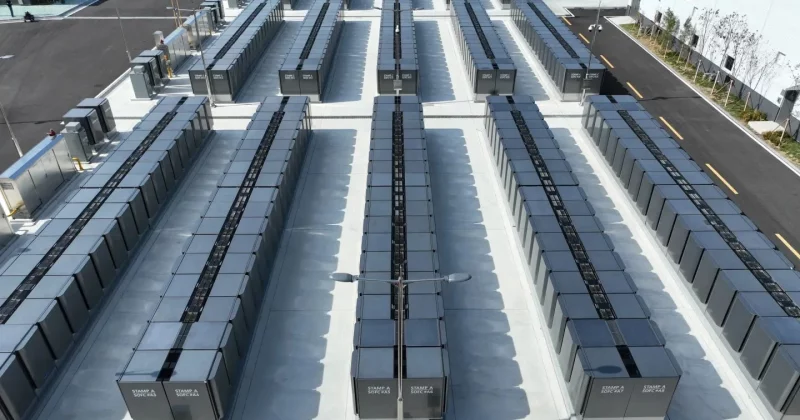
Under the agreement, Bloom will install, operate, and maintain fuel cell systems for Nebius across three distinct phases. At full deployment, the arrangement calls for 250MW of guaranteed capacity and 328MW of installed capacity. In English: that’s enough electricity to power a small city, dedicated entirely to running AI workloads.
The three-phase structure is worth paying attention to. It suggests Nebius is scaling its data center buildout incrementally rather than committing to a single massive deployment upfront. Bloom, meanwhile, gets the benefit of a long revenue runway without needing to deliver everything on day one.
Perhaps the most interesting wrinkle is the accounting treatment. The deal is structured so that Nebius books the arrangement as operating expense, not capital expenditure. That’s a deliberate choice. For Nebius, it means the power infrastructure doesn’t sit on its balance sheet as a depreciating asset. For Bloom, it means recurring service revenue rather than a one-time equipment sale.
Think of it like the difference between buying a car and leasing one. Nebius gets to use the fuel cells without owning them, while Bloom retains the asset and collects steady payments. Over ten years, those payments add up to as much as $2.6B.
Why AI companies are bypassing the grid
Here’s the thing about building AI data centers in 2025: the compute side is hard, but the power side might be harder. Training and running large language models requires enormous, uninterrupted electricity. Traditional grid connections can take years to secure, and onsite generation permits come with their own regulatory maze.
The news moving money, markets, and the world—before your day starts.
Daily. Free. Join 34,000+ readers across crypto, finance, and policy.
Bloom’s fuel cell technology offers a shortcut. The company’s solid oxide fuel cells convert natural gas (or hydrogen, or biogas) directly into electricity through an electrochemical process, bypassing combustion entirely. They can be deployed on-site at data centers without the permitting headaches that come with building a traditional power plant.
That’s exactly the value proposition for Nebius. Rather than waiting in line for grid capacity or wrestling with permits for conventional onsite generation, Nebius gets a turnkey power solution managed entirely by Bloom. The fuel cells show up, Bloom installs and maintains them, and Nebius focuses on what it actually wants to do: run AI infrastructure.
This pattern is becoming increasingly common across the tech sector. As AI workloads strain existing electrical grids, hyperscalers and AI-focused companies are hunting for alternative power sources that can be deployed quickly and reliably. Bloom has been positioning itself at the center of that trend for years, and this Nebius deal is the latest evidence that the strategy is paying off.
What this means for investors
For Bloom Energy shareholders, the $2.6B headline number is attention-grabbing, but the real story is what it implies about the company’s revenue visibility. A ten-year service agreement provides the kind of predictable cash flow that fuel cell companies have historically struggled to demonstrate. Bloom has long faced skepticism about whether its technology could generate consistent, large-scale demand. A contract of this magnitude, from a well-funded AI infrastructure player, is a meaningful counterargument.
The opex structure also matters for Bloom’s financial profile. Because Bloom retains ownership of the fuel cell systems and provides them as a managed service, the company books recurring revenue rather than lumpy equipment sales. That tends to command a higher valuation multiple from the market, since recurring revenue is more predictable and defensible.
The competitive landscape is worth watching closely. Bloom isn’t the only company chasing the AI power opportunity. Nuclear startups, natural gas peaker plants, and even legacy utility companies are all angling for data center contracts. But Bloom’s modular deployment model and ability to sidestep traditional permitting gives it an edge on speed, which is arguably the single most important variable for AI companies racing to scale.
The risk, as always with Bloom, is execution. Installing and maintaining 328MW of fuel cell capacity across three phases over multiple years is a complex operational undertaking. Any delays, performance issues, or cost overruns could eat into the projected $2.6B in service fees. Investors should also keep an eye on Nebius itself. As a European AI infrastructure provider, its own growth trajectory and funding stability will determine how quickly the three phases actually materialize.
The broader signal is clear, though. AI’s insatiable appetite for electricity is creating a new class of power infrastructure deals that didn’t exist two years ago. Bloom Energy just grabbed one of the largest, and the market, however modestly, noticed.