
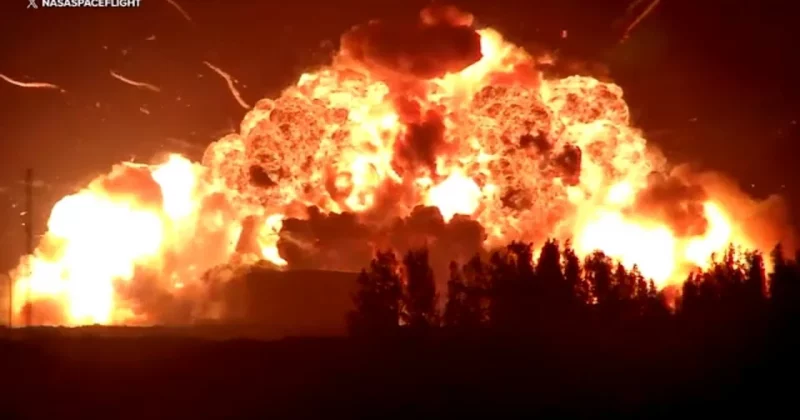
Blue Origin’s New Glenn rocket explodes during test at Cape Canaveral
The massive fireball, visible across Florida, marks a major setback for Jeff Bezos's space company as it races to compete with SpaceX in the heavy-lift launch market.
A Blue Origin New Glenn rocket exploded during a static fire test at Cape Canaveral on the evening of May 28, producing a fireball large enough to be seen across wide stretches of Florida. No one was injured, but the 320-foot rocket, the launchpad, and surrounding infrastructure were not so lucky.
The explosion occurred around 9:00 p.m. EDT at Launch Complex 36, Cape Canaveral Space Force Station. The blast was severe enough to collapse a nearby lightning tower, and Blue Origin described the incident as an “unexpected anomaly.” All company personnel were accounted for following the event.
What happened, and what was at stake
The test was a precursor to an upcoming launch for Amazon’s Project Kuiper, the company’s ambitious plan to deploy large constellations of broadband internet satellites. No satellites were aboard the rocket during the test, which limits the immediate financial damage from lost hardware.
The company completed New Glenn’s first successful orbital flight just in January 2025, a milestone that took years longer than originally planned.
The competitive landscape just got more lopsided
Blue Origin’s New Glenn was supposed to be the credible alternative to SpaceX. At roughly 320 feet tall, it’s a genuinely massive rocket designed to carry heavy payloads to orbit, giving commercial and government customers a second option beyond SpaceX.
For Project Kuiper specifically, Amazon has been under pressure to begin deploying its satellite constellation at scale, and New Glenn was supposed to be a key vehicle for those launches.
What this means for investors and the broader market
Amazon, which is publicly traded and funding Project Kuiper, now faces increased uncertainty around its satellite internet timeline. The company has committed billions to the program, and every delay in getting satellites to orbit is a delay in generating revenue from the service.
After an anomaly of this magnitude, Blue Origin will need to conduct a thorough failure analysis, implement corrective actions, and likely repeat the static fire test successfully before anyone will allow the vehicle to fly again. That process typically takes months, not weeks.