
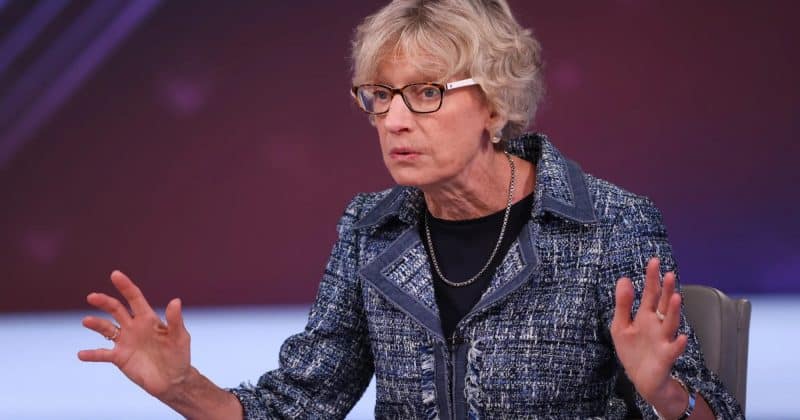
Bank of England’s Catherine Mann signals potential activist rate hike if inflation doesn’t cool
The hawkish MPC member voted to hold rates at 3.75% in June but left the door wide open for a surprise tightening later this year.
Catherine Mann, one of the Bank of England’s most hawkish voices, has put markets on notice: if UK inflation expectations and price pressures don’t start behaving, she’s ready to push for higher interest rates. Not a gentle nudge. An “activist” hike.
Mann, an external member of the Monetary Policy Committee, voted with the majority to hold the Bank Rate at 3.75% during the June 2026 meeting. But the minutes, published on June 18, made clear she’s keeping her trigger finger warm. She committed to closely evaluating inflation expectations and signaled a willingness to act if the numbers don’t improve.
Why Mann’s stance matters more than usual
The UK inflation rate has remained stubbornly above the Bank of England’s 2% target. Energy costs have been a persistent driver, but what’s arguably more concerning is the drift in household expectations. When consumers start expecting prices to keep rising, they behave in ways that make it happen. They demand higher wages, companies pass those costs along, and suddenly you’ve got a self-fulfilling prophecy that central bankers lose sleep over.
Mann has served on the MPC as an external member since 2022 and has built a reputation as the committee’s inflation hawk. Throughout her tenure, she has advocated for an ‘activist’ monetary policy approach that maintains restrictive interest rates longer to combat ongoing inflation before considering cuts.
In May 2026, she raised a different but related concern: that rate hikes could increase volatility in the gilt market due to the behavior of hedge funds and overseas investors. That’s a meaningful caveat. It suggests she’s not blind to the potential side effects of aggressive tightening, but she views persistent inflation as the greater threat.
The mechanics of an activist hike
The phrase “activist hike” deserves unpacking. In central banking, it typically means a rate increase that goes beyond what markets are pricing in, designed to send a strong signal rather than just make an incremental adjustment.
The news moving money, markets, and the world—before your day starts.
Daily. Free. Join 34,000+ readers across crypto, finance, and policy.
At 3.75%, the Bank Rate sits at a level that reflects significant tightening from the near-zero rates of the early 2020s. But Mann’s argument is essentially that the current rate may not be restrictive enough if inflation expectations continue drifting upward.
The MPC’s June decision to hold was unanimous according to the published minutes, which means Mann’s hawkish commentary represents a conditional future stance rather than an immediate dissent. She’s not breaking ranks yet. She’s drawing a line in the sand for later this year.
What this means for investors and crypto markets
When a central bank raises rates, it strengthens the local currency. In this case, a stronger British pound would mean tighter financial conditions in the UK, which typically creates headwinds for risk assets.
No specific digital assets were mentioned in connection with Mann’s comments, and the crypto market hasn’t shown a direct correlation to UK monetary policy in the way it sometimes reacts to Federal Reserve decisions. Tighter financial conditions reduce overall risk appetite, and the gilt market, which Mann herself flagged as vulnerable to volatility, could see significant moves.
The key dates to watch are the upcoming inflation reports and MPC meetings through the second half of 2026. If UK consumer price data continues to run hot and household inflation expectations keep drifting upward, Mann’s “activist hike” moves from theoretical to probable.