
Bosch begins sample production at first US semiconductor plant, backed by $225M CHIPS Act funding

Bosch begins sample production at first US semiconductor plant, backed by $225M CHIPS Act funding

The German industrial giant's $2 billion Roseville facility signals a deepening push to onshore critical chip manufacturing, with ripple effects across the broader tech investment landscape.

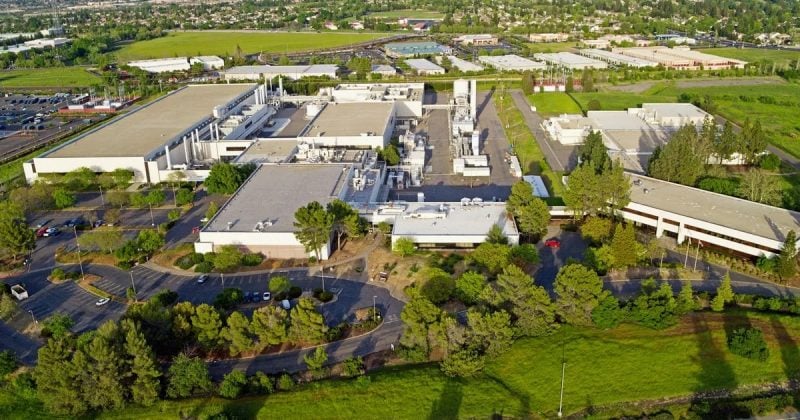
Bosch just fired up its first US semiconductor fab, beginning sample production of silicon carbide chips at a facility in Roseville, California on July 13. The plant represents a roughly $2 billion bet that domestic chip manufacturing is the future, not just a political talking point.

The move is backed by a $225 million agreement with the US Department of Commerce under the CHIPS and Science Act. Commercial production is expected to begin by late 2026, and Bosch estimates its total US investments could reach $7.5 billion by 2031.

Advertisement

What Bosch is actually building

The Roseville facility, which Bosch acquired from TSI Semiconductors in 2023, houses about 130,000 square feet of clean-room space. It handles both front-end semiconductor manufacturing and back-end testing, a full-stack operation that reduces reliance on external partners.

The plant is producing silicon carbide, or SiC, chips on 200mm wafers. SiC is the material of choice for power electronics in electric vehicles and energy conversion systems because it handles high voltages and temperatures far better than traditional silicon.

Right now, roughly 250 people work at the site, with expectations for that number to grow as production scales. Bosch plans to push SiC production capacity into the mid-nine-figure unit range across its US and German facilities.

The CHIPS Act pipeline keeps delivering

Bosch’s $225 million federal funding slice is part of the broader CHIPS and Science Act machinery that has been channeling tens of billions of dollars into domestic semiconductor projects. The law, signed in 2022, was designed to reduce America’s dependence on Asian chip fabs, particularly those in Taiwan and South Korea, for critical semiconductor supply chains.

Silicon carbide semiconductors are industrial-grade components that power EV drivetrains, solar inverters, and industrial motor controls. Bosch’s projected $7.5 billion in US investments by 2031 suggests the company sees this as a long-term commitment.

Disclosure: This article was edited by Editorial Team. For more information on how we create and review content, see our Editorial Policy.

Bosch begins sample production at first US semiconductor plant, backed by $225M CHIPS Act funding

Bosch begins sample production at first US semiconductor plant, backed by $225M CHIPS Act funding

The German industrial giant's $2 billion Roseville facility signals a deepening push to onshore critical chip manufacturing, with ripple effects across the broader tech investment landscape.

Bosch just fired up its first US semiconductor fab, beginning sample production of silicon carbide chips at a facility in Roseville, California on July 13. The plant represents a roughly $2 billion bet that domestic chip manufacturing is the future, not just a political talking point.

The move is backed by a $225 million agreement with the US Department of Commerce under the CHIPS and Science Act. Commercial production is expected to begin by late 2026, and Bosch estimates its total US investments could reach $7.5 billion by 2031.

Advertisement

What Bosch is actually building

The Roseville facility, which Bosch acquired from TSI Semiconductors in 2023, houses about 130,000 square feet of clean-room space. It handles both front-end semiconductor manufacturing and back-end testing, a full-stack operation that reduces reliance on external partners.

The plant is producing silicon carbide, or SiC, chips on 200mm wafers. SiC is the material of choice for power electronics in electric vehicles and energy conversion systems because it handles high voltages and temperatures far better than traditional silicon.

Right now, roughly 250 people work at the site, with expectations for that number to grow as production scales. Bosch plans to push SiC production capacity into the mid-nine-figure unit range across its US and German facilities.

The CHIPS Act pipeline keeps delivering

Bosch’s $225 million federal funding slice is part of the broader CHIPS and Science Act machinery that has been channeling tens of billions of dollars into domestic semiconductor projects. The law, signed in 2022, was designed to reduce America’s dependence on Asian chip fabs, particularly those in Taiwan and South Korea, for critical semiconductor supply chains.

Silicon carbide semiconductors are industrial-grade components that power EV drivetrains, solar inverters, and industrial motor controls. Bosch’s projected $7.5 billion in US investments by 2031 suggests the company sees this as a long-term commitment.

Disclosure: This article was edited by Editorial Team. For more information on how we create and review content, see our Editorial Policy.