
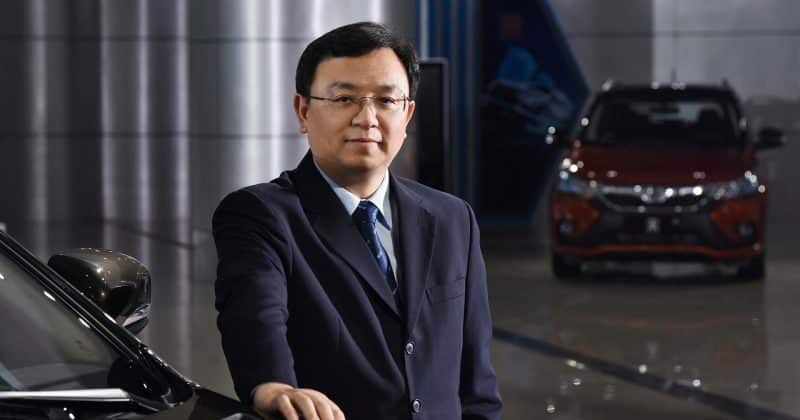
BYD chairman Wang Chuanfu expects firm to become largest automaker in five years
The Chinese EV giant, already the world's biggest electric vehicle seller, is setting its sights on dethroning Toyota from the top of the entire auto industry.
Wang Chuanfu has never been accused of thinking small. The BYD chairman told shareholders at the company’s 2025 annual general meeting that he expects BYD to become the world’s largest automaker by scale within five years, targeting roughly 2031 for the milestone.
For context, that would mean overtaking Toyota, a company that has held the global sales crown for the better part of two decades. BYD isn’t exactly starting from the parking lot, though. The Shenzhen-based manufacturer has been the world’s largest seller of plug-in electric vehicles since 2024, when it moved approximately 4.3 million passenger vehicles.
A pattern of audacious targets
Back in 2008, Wang Chuanfu publicly set a goal for BYD to lead China’s automotive market by 2015 and achieve global leadership by 2025. The China target came late. The global leadership target, at least in the EV-specific category, arrived roughly on time.
The company’s 2025 projections tell a story of continued momentum. BYD is expected to sell around 4.6 million passenger vehicles globally this year, up from the 4.3 million it moved in 2024. That’s growth of about 7% year-over-year.
BYD stopped producing internal combustion engine vehicles entirely in 2022. No hedging, no “we’ll keep a few gas models around just in case.” A clean break.
The news moving money, markets, and the world—before your day starts.
Daily. Free. Join 34,000+ readers across crypto, finance, and policy.
The scale behind the ambition
BYD employs approximately 970,000 people, making it the largest industrial company in the world by headcount. That workforce powers a vertically integrated operation that spans battery manufacturing, semiconductor production, and vehicle assembly.
BYD’s Blade Battery, introduced in 2020, helped redefine safety and cost expectations for lithium iron phosphate cells.
Toyota sold over 10 million vehicles in recent years across a portfolio that still leans heavily on hybrids and traditional powertrains. Closing that gap means BYD would need to roughly double its current output.
What this means for investors
The geopolitical landscape is the wildcard. BYD faces steep tariffs in the US and increasing scrutiny in the European Union. The company has been responding by building factories outside China, including planned facilities in Hungary, Turkey, and Brazil.