
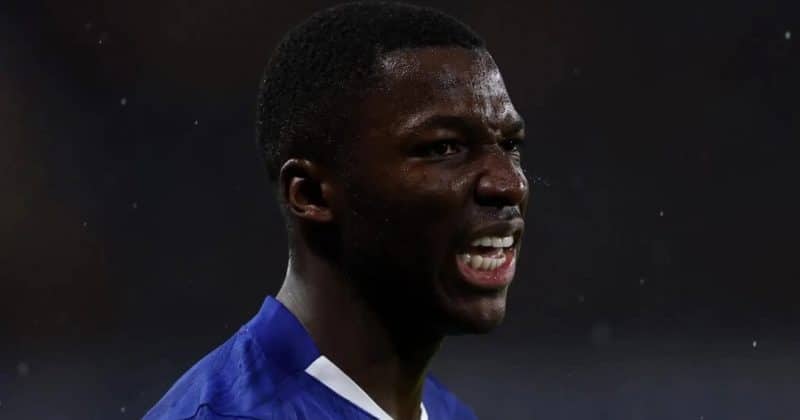
Moisés Caicedo named Ecuador captain by Enner Valencia
Chelsea midfielder receives the armband from Ecuador's all-time great during the 2026 World Cup in a generational leadership shift
Enner Valencia, the 36-year-old striker who has spent the better part of a decade as the heartbeat of Ecuador’s national team, has officially handed the captain’s armband to Chelsea midfielder Moisés Caicedo. The passing of the torch happened on the pitch during a group-stage match at the 2026 FIFA World Cup, and it carries the weight of a generational transition for a footballing nation on the rise.
Caicedo, who is in his early twenties, now leads a squad that has achieved something Ecuador hasn’t managed in two decades: reaching the knockout rounds of a World Cup.
A torch passed on the biggest stage
Valencia’s credentials to make this call are beyond question. He scored all three of Ecuador’s goals at the 2014 World Cup in Brazil, a tournament that cemented his status as a national icon. Now representing his country in a third World Cup at age 36, his willingness to step aside speaks to both self-awareness and confidence in his successor.
For Caicedo, the moment wasn’t entirely unfamiliar. He captained Ecuador in a September 2024 World Cup qualifier against Peru and wore the armband for Chelsea in an August 2024 match against Servette.
Ecuador’s quiet rise
Ecuador reaching the knockout rounds of the World Cup for the first time in 20 years is a genuine milestone for a country that has historically lived in the shadow of South American giants like Brazil, Argentina, and Colombia.
The news moving money, markets, and the world—before your day starts.
Daily. Free. Join 34,000+ readers across crypto, finance, and policy.
Caicedo’s rise mirrors the team’s trajectory. He moved to Chelsea and established himself in one of the most competitive leagues in world football. His ability to control midfield tempo, break up opposition play, and distribute the ball under pressure makes him the kind of captain who leads by example rather than by volume.
Valencia, meanwhile, represents the old guard. A player who carried Ecuador’s attacking burden for years, his decision to pass the armband isn’t retirement, but it is an acknowledgment that the team’s center of gravity has shifted.
What this means for Ecuador’s World Cup run
The fact that Valencia passed the armband publicly, on the pitch, and during a World Cup match suggests this was planned and agreed upon rather than spontaneous. Ecuador’s advancement to the knockout rounds validates that belief.
The blend of youth and experience in Ecuador’s squad gives them a legitimate chance. Caicedo provides the engine in midfield, while Valencia’s presence, even without the armband, offers veteran steadiness. Valencia simply looked at Caicedo, handed him the armband, and told an entire country where the future lives.