
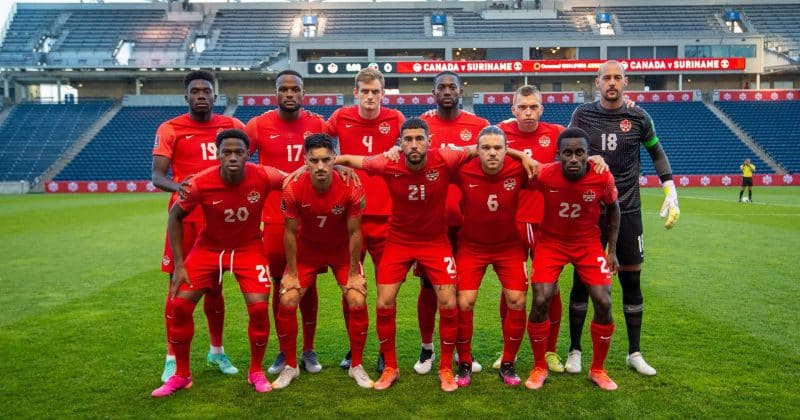
Canada earns first-ever men’s World Cup point with 1-1 draw against Bosnia
The historic result at BMO Field highlights both a milestone for Canadian soccer and the growing crypto infrastructure underpinning the 2026 tournament
It took 40 years, three World Cup appearances, and a whole lot of patience, but Canada finally has a point on the men’s World Cup scoreboard.
On June 12, 2026, Canada drew 1-1 with Bosnia and Herzegovina in their Group B opener at BMO Field in Toronto, securing the first point in Canadian men’s World Cup history. For a nation that went pointless in both 1986 and 2022, this feels less like a draw and more like a statement of intent.
How the match unfolded
Bosnia struck first. Jovo Lukic found the net in the 20th minute, and for the better part of an hour, it looked like Canada’s World Cup homecoming might follow a painfully familiar script.
Then Cyle Larin happened. The Canadian striker equalized in the 77th minute, sending BMO Field into scenes that will be replayed on Canadian sports broadcasts for decades.
The result is especially notable given Bosnia’s path to the tournament. This is a side that knocked off Italy in the World Cup playoffs back in March 2026. Taking a point off them is not charity work.
Head coach Jesse Marsch’s squad still has unfinished business in Group B, which also includes Qatar and Switzerland.
Canada’s 2026 campaign carries extra significance because the country is co-hosting alongside the United States and Mexico. The expanded 48-team format gave more nations a seat at the table, but earning a result as a host is a different kind of pressure entirely.
The news moving money, markets, and the world—before your day starts.
Daily. Free. Join 34,000+ readers across crypto, finance, and policy.
The crypto layer underneath the beautiful game
The 2026 World Cup represents the deepest integration of blockchain technology into FIFA’s flagship event to date. FIFA has partnered with several crypto firms for sponsorships and fan engagement tools, including collaborations with platforms like Kraken, Avalanche, and Chiliz.
There was no immediate market reaction tied to the match outcome.
Chiliz is the blockchain infrastructure behind Socios.com, which powers fan tokens for dozens of major sports organizations, letting fans buy digital tokens tied to their favorite teams, which can grant voting rights on minor club decisions and access to exclusive content.
Avalanche’s involvement speaks to the Layer 1 blockchain’s ongoing push into mainstream brand partnerships. Kraken’s sponsorship is another example of major exchanges using global sporting events as customer acquisition funnels, a playbook that Crypto.com refined with its Formula 1 and UFC deals.
FIFA has been experimenting with digital collectibles since the 2022 Qatar World Cup, and the 2026 edition is expected to expand those efforts.
What this means for crypto investors watching the tournament
For traders, the tokens to monitor are the ones directly tied to tournament sponsorships and fan engagement. Chiliz (CHZ) and fan tokens associated with participating national teams could see increased trading volume as the group stages progress. Historically, fan token activity spikes during major tournaments and recedes after elimination.
There are risks worth flagging. Regulatory scrutiny around crypto sponsorships in sports has intensified in multiple jurisdictions. The UK and parts of the EU have already cracked down on crypto advertising tied to sporting events. Investors should also be wary of low-liquidity fan tokens, which can be prone to sharp price swings driven by relatively small trades.