
Cape Verde’s World Cup fairy tale offers a blueprint for small-nation sports investment
An archipelago of 525,000 people just outperformed football giants at the 2026 World Cup, and the economics behind the run deserve attention.
A country with roughly the population of Tucson, Arizona, just went toe-to-toe with Spain, Uruguay, and Argentina at the World Cup. Cape Verde, an archipelago nation of about 525,000 people off the west coast of Africa, made their first-ever FIFA World Cup appearance in 2026, and they didn’t just show up. They competed.
The Blue Sharks, as the national team is known, drew 0-0 against Spain, played Uruguay to a 2-2 stalemate, and held Saudi Arabia scoreless. They advanced out of Group H. Then they pushed defending champions Argentina to extra time in the Round of 32 before falling 3-2. For a nation covering just 4,033 square kilometers, this is the sporting equivalent of a micro-cap token suddenly sitting in the top 100 by market cap.
How a tiny nation outpaced Cameroon
Cape Verde’s road to the tournament started in CAF qualifying, where they topped Group D with 23 points. That’s seven wins, two draws, and just one loss across the entire campaign. They clinched their spot in October 2025.
The team they edged out for the top spot? Cameroon, a five-time World Cup participant with a football pedigree that includes Roger Milla, Samuel Eto’o, and decades of African football dominance.
Head coach Pedro “Bubista” Brito, who has led the squad since 2020, built the team around a diaspora recruitment strategy, tapping players with Cape Verdean heritage developed in European football academies across Portugal, the US, France, and the Netherlands.
Goalkeeper Vozinha anchored the defense through qualifying and into the tournament, while multiple forwards contributed crucial goals during the qualifying run.
The news moving money, markets, and the world—before your day starts.
Daily. Free. Join 34,000+ readers across crypto, finance, and policy.
The expanded World Cup changes everything
Cape Verde’s run doesn’t happen without FIFA’s decision to expand the World Cup from 32 to 48 teams starting in 2026. That expansion increased Africa’s allocation from five spots to roughly nine, depending on the intercontinental playoff outcomes.
With 54 member associations in CAF, Africa previously had a qualification rate of roughly 9%. The expanded format nearly doubled that.
What Cape Verde’s fairy tale means for small-nation economics
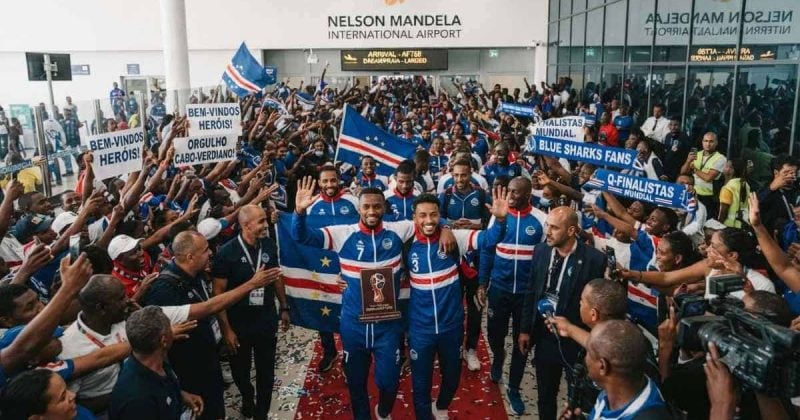
When the team returned to the capital city of Praia after their elimination, they received a hero’s welcome.
Cape Verde’s FIFA ranking climbed to 67th as of June 2026. For context, that puts a nation of half a million people ahead of countries with populations in the tens of millions. Rankings matter because they influence future tournament seedings, which influence future draws, which influence future results.
FIFA distributes significant prize money to every participating nation, and for a country of Cape Verde’s size, even a base-level payout represents a meaningful injection into the national football infrastructure.