
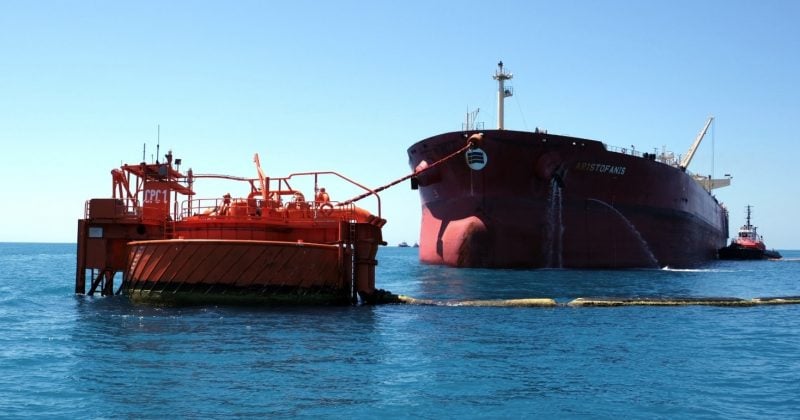
Caspian Pipeline Consortium halts oil loading after drone strike hits Black Sea terminal
A Ukrainian naval drone knocked out a key mooring at Russia's Novorossiysk terminal, disrupting over 1% of global oil supply and forcing Kazakhstan to scramble for alternative export routes
A drone strike on the Caspian Pipeline Consortium’s Black Sea terminal has shut down oil loading operations, sending a jolt through one of the world’s most strategically loaded energy chokepoints. The attack, which hit Single Point Mooring 2 at the CPC terminal near Novorossiysk on November 29, 2025, rendered the mooring inoperable and forced tankers to withdraw immediately.
No injuries or oil spills were reported.
Why this pipeline matters more than most people realize
The CPC pipeline carries roughly 80% of Kazakhstan’s crude oil exports and accounts for over 1% of global oil supply. The attack knocked one of three key export moorings out of commission entirely.
Kazakhstan’s contingency response and what it reveals about supply chain fragility
Kazakhstan’s energy ministry moved quickly after the attack, activating alternative export routes to absorb the disruption. The primary redirect went through the Baku-Tbilisi-Ceyhan pipeline, which runs from Azerbaijan through Georgia and exits at Turkey’s Mediterranean coast, bypassing Russia entirely.
Loading operations eventually resumed in early 2026, but with only one functioning mooring operational as of January 2026. That is a meaningful reduction in throughput capacity, and it means the terminal is running with considerably less redundancy than usual.
Macro, rates, and crypto—what moved markets and what matters next.
Daily. Free. Join 34,000+ readers across crypto, finance, and policy.
Another drone event near the CPC terminal was reported in July 2026, underscoring that the terminal remains a target and that the risk of further operational disruptions has not receded.
What oil markets and investors should be watching
For commodity traders, this kind of event is a reminder that geopolitical risk premiums in oil are not theoretical. Disruptions to facilities handling over 1% of global supply, even temporary ones, can tighten an already constrained market.
For investors tracking energy equities and commodity exposure, the July 2026 follow-on incident near the terminal is the more important data point. One strike can be treated as a one-off. A pattern of strikes targeting the same facility suggests the CPC terminal has become a recurring pressure point in a broader conflict.
Broader market contagion has been limited so far, partly because Kazakhstan’s rerouting through BTC has kept some volume moving. Watch Kazakh export data and BTC utilization rates as leading indicators of whether this disruption stays contained or starts compounding.