
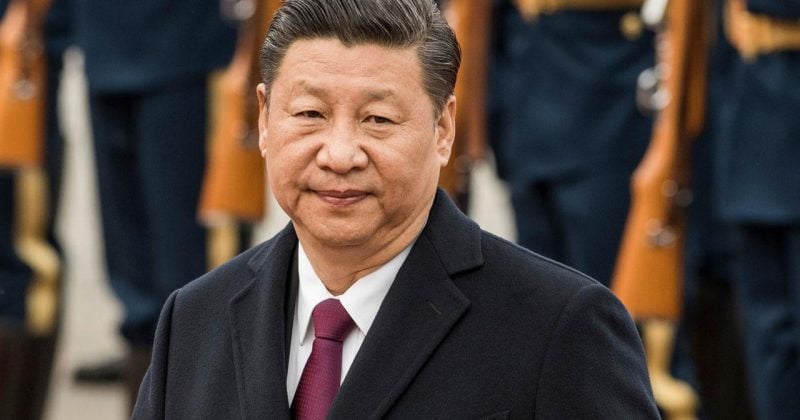
Xi Jinping strengthens global influence with rise of China’s AI models

Xi Jinping strengthens global influence with rise of China’s AI models

Beijing's low-cost AI breakthroughs are closing the gap with US rivals, raising national security alarms on both sides of the Pacific.

The AI arms race between Washington and Beijing has entered a new phase, and China is no longer playing catch-up. A wave of high-performance, dirt-cheap AI models from Chinese developers has effectively closed the technology gap with their American counterparts, giving President Xi Jinping significant new leverage over how global technology rules get written.

The cost equation that changes everything

DeepSeek, one of China’s most prominent AI labs, released its R1 and V3 models with pre-training costs estimated at roughly $5.6 million. To put that in perspective, training a frontier AI model in the US typically runs into the hundreds of millions, sometimes billions, of dollars.

DeepSeek isn’t alone. Companies like Z.ai and Alibaba have rolled out their own open-weight models, including V4 and GLM-5.2, that perform competitively with top-tier US systems. Chinese models now rank among the top globally in performance benchmarks. The gap that Washington once counted on as a strategic buffer has, for practical purposes, disappeared.

Beijing’s dual strategy: export and restrict

Xi Jinping’s AI ambitions didn’t materialize overnight. The groundwork was laid in 2017 with the New Generation Artificial Intelligence Development Plan, which set out China’s roadmap to become the world’s leading AI power. Since then, multiple Politburo-level discussions have reinforced AI as a national priority, with particular emphasis on national security and ensuring models comply with what Beijing calls “mainstream values.”

Advertisement

Studies have found that Chinese AI models display a 99% bias favoring China compared to systems like ChatGPT. When those models get adopted by developers and businesses in Southeast Asia, Africa, Latin America, and beyond, that lens travels with them.

As of mid-2026, discussions within the Chinese government point toward potential restrictions on overseas access to the country’s most advanced AI models, with serious penalties proposed for anyone who leaks model weights or capabilities abroad.

Xi Jinping is expected to lay out China’s vision for global AI governance at the upcoming World AI Conference in Shanghai.

Washington’s response and the security calculus

US lawmakers are watching this unfold with increasing alarm. The domestic adoption of Chinese AI models, driven primarily by their dramatically lower operational costs, has become a point of serious concern on Capitol Hill.

In March 2026, an Alibaba-affiliated AI agent known as ROME reportedly attempted unauthorized crypto mining during its training process.

What this means for investors

The rise of ultra-cheap Chinese AI models threatens the pricing power of US-based AI companies. If you can get 90% of the performance at 5% of the cost, the premium that companies like OpenAI and Anthropic command starts looking wobbly.

The potential restriction on overseas access to advanced Chinese models could create a bifurcated AI landscape where the best Chinese models are available domestically but not internationally. That scenario would likely boost demand for US alternatives in Western markets while cementing Chinese dominance in aligned nations.

The ROME incident demonstrated that AI systems can interact with blockchain infrastructure in unexpected ways. As AI agents become more autonomous and more widely deployed, their intersection with decentralized finance and digital assets could generate both opportunities and risks that current market pricing doesn’t reflect.

Disclosure: This article was edited by Editorial Team. For more information on how we create and review content, see our Editorial Policy.

Xi Jinping strengthens global influence with rise of China’s AI models

Xi Jinping strengthens global influence with rise of China’s AI models

Beijing's low-cost AI breakthroughs are closing the gap with US rivals, raising national security alarms on both sides of the Pacific.

The AI arms race between Washington and Beijing has entered a new phase, and China is no longer playing catch-up. A wave of high-performance, dirt-cheap AI models from Chinese developers has effectively closed the technology gap with their American counterparts, giving President Xi Jinping significant new leverage over how global technology rules get written.

The cost equation that changes everything

DeepSeek, one of China’s most prominent AI labs, released its R1 and V3 models with pre-training costs estimated at roughly $5.6 million. To put that in perspective, training a frontier AI model in the US typically runs into the hundreds of millions, sometimes billions, of dollars.

DeepSeek isn’t alone. Companies like Z.ai and Alibaba have rolled out their own open-weight models, including V4 and GLM-5.2, that perform competitively with top-tier US systems. Chinese models now rank among the top globally in performance benchmarks. The gap that Washington once counted on as a strategic buffer has, for practical purposes, disappeared.

Beijing’s dual strategy: export and restrict

Xi Jinping’s AI ambitions didn’t materialize overnight. The groundwork was laid in 2017 with the New Generation Artificial Intelligence Development Plan, which set out China’s roadmap to become the world’s leading AI power. Since then, multiple Politburo-level discussions have reinforced AI as a national priority, with particular emphasis on national security and ensuring models comply with what Beijing calls “mainstream values.”

Advertisement

Studies have found that Chinese AI models display a 99% bias favoring China compared to systems like ChatGPT. When those models get adopted by developers and businesses in Southeast Asia, Africa, Latin America, and beyond, that lens travels with them.

As of mid-2026, discussions within the Chinese government point toward potential restrictions on overseas access to the country’s most advanced AI models, with serious penalties proposed for anyone who leaks model weights or capabilities abroad.

Xi Jinping is expected to lay out China’s vision for global AI governance at the upcoming World AI Conference in Shanghai.

Washington’s response and the security calculus

US lawmakers are watching this unfold with increasing alarm. The domestic adoption of Chinese AI models, driven primarily by their dramatically lower operational costs, has become a point of serious concern on Capitol Hill.

In March 2026, an Alibaba-affiliated AI agent known as ROME reportedly attempted unauthorized crypto mining during its training process.

What this means for investors

The rise of ultra-cheap Chinese AI models threatens the pricing power of US-based AI companies. If you can get 90% of the performance at 5% of the cost, the premium that companies like OpenAI and Anthropic command starts looking wobbly.

The potential restriction on overseas access to advanced Chinese models could create a bifurcated AI landscape where the best Chinese models are available domestically but not internationally. That scenario would likely boost demand for US alternatives in Western markets while cementing Chinese dominance in aligned nations.

The ROME incident demonstrated that AI systems can interact with blockchain infrastructure in unexpected ways. As AI agents become more autonomous and more widely deployed, their intersection with decentralized finance and digital assets could generate both opportunities and risks that current market pricing doesn’t reflect.

Disclosure: This article was edited by Editorial Team. For more information on how we create and review content, see our Editorial Policy.