
China’s April PPI rises 2.8%, CPI increases 1.2% year-on-year, ending three-year deflation streak
Both inflation readings beat forecasts by a wide margin, signaling a potential turning point for the world's second-largest economy and its ripple effects on crypto markets.
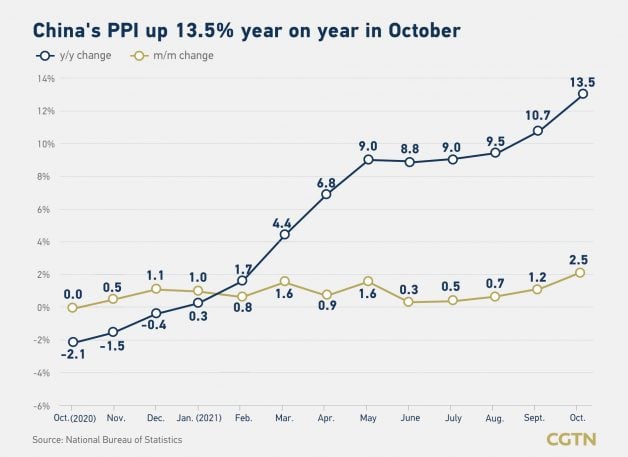
China just posted its strongest producer inflation numbers in years, and the implications stretch well beyond Beijing. The April Producer Price Index came in at 2.8% year-on-year, handily beating expectations that ranged between 1.5% and 1.9%.
The Consumer Price Index wasn’t far behind, rising 1.2% against forecasts of 0.8% to 1.0%. For an economy that spent 41 consecutive months in producer-price deflation until early this year, those numbers represent a genuine regime change.
What the numbers actually mean
The CPI figure, while more modest at 1.2%, tells a complementary story. Core CPI landed around 1.1% to 1.2%, suggesting the price increases aren’t just about volatile food and fuel categories.
A 14.1% surge in export growth has been a key driver of China’s economic recovery, pumping demand through its manufacturing base and pulling commodity prices higher along the way.
For context, China’s PPI had been negative for 41 straight months, a deflationary stretch that began in late 2022 and became one of the defining economic narratives of the post-COVID period. That streak is now definitively over.
The news moving money, markets, and the world—before your day starts.
Daily. Free. Join 34,000+ readers across crypto, finance, and policy.
The global macro puzzle
In the US, the most recent PPI data showed a 2.7% year-on-year reading, which actually underperformed expectations. So you’ve got the world’s two largest economies sending opposite inflation signals: China running hotter than expected, the US running cooler.
If inflation in China continues to accelerate, the People’s Bank of China has less room to pursue aggressive monetary easing. Rate cuts become harder to justify when prices are already climbing.
Meanwhile, the softer US inflation print has increased global rate-cut expectations for the Federal Reserve, creating a scenario where the two economic superpowers are potentially moving in opposite policy directions.
What this means for crypto investors
China’s strict ban on crypto trading means capital flow won’t come directly from mainland Chinese investors. But when Chinese factories charge more, German automakers, Japanese electronics firms, and American retailers all feel it. The inflationary impulse doesn’t respect borders, and neither does capital seeking protection from it.
The number to watch is next month’s PPI reading. One beat can be dismissed as noise. Two consecutive months of above-forecast producer inflation would make it very difficult for the PBOC to maintain its current policy posture.