
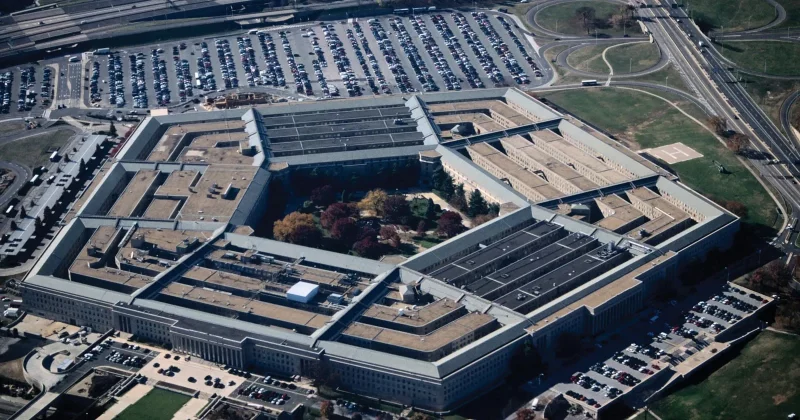
China blocks Pentagon visit amid $14B Taiwan arms deal talks
Beijing suspends high-level military dialogue with Washington as leverage over a massive Taiwan weapons package, following a familiar playbook of coercive diplomacy.
China is refusing to allow a Pentagon visit until the Trump administration makes a decision on a $14 billion arms deal for Taiwan. It’s the kind of diplomatic hostage-taking that Beijing has turned into something of an art form.
The move follows a well-established pattern: the US signals military support for Taiwan, China retaliates by freezing military-to-military communications, and both sides play a very expensive game of chicken over the Taiwan Strait. This time, the stakes involve one of the largest proposed weapons packages in the history of US-Taiwan defense relations.
What’s in the deal, and why does China care
The exact composition of the $14 billion package hasn’t been fully detailed, but it lands in a context that’s already loaded. On December 17, 2025, US arms sales notifications to Taiwan totaled approximately $11.1 billion to $11.4 billion, including 82 HIMARS rocket launchers and 420 ATACMS tactical missiles.
Those are not ceremonial weapons. HIMARS and ATACMS are battle-tested systems that Ukraine has used to devastating effect against Russian forces. Giving Taiwan access to them sends a very specific message about the kind of fight Washington expects might happen in the western Pacific.
Beijing’s objection isn’t just about hardware. It’s about the principle that the US continues to arm what China considers a breakaway province. Every major arms sale triggers the same diplomatic circuit breaker: China sanctions US defense firms, suspends military dialogue, and issues sharp warnings through state media.
The difference this time is the scale. A $14 billion package would represent one of the most significant single arms deals with Taiwan in decades, dwarfing many of the individual sales approved under previous administrations.
The legal framework and historical context
The US is legally obligated to provide Taiwan with defensive weapons under the 1979 Taiwan Relations Act. That law, passed when Washington switched diplomatic recognition from Taipei to Beijing, commits the US to supplying arms “of a defensive character” to Taiwan.
In English: the US made a deal with China to recognize one government, but simultaneously passed a law ensuring the other one could still defend itself. It’s the kind of diplomatic contradiction that only Washington could turn into four decades of policy.
The Trump administration, during its first term, approved multiple significant arms packages for Taiwan. That history makes the current standoff particularly interesting, because Beijing is essentially trying to use access to Pentagon officials as a bargaining chip to influence a decision that the president has already shown willingness to make before.
Congress has also been pushing the envelope. The National Defense Authorization Act for fiscal year 2026 allocates up to $1 billion specifically for Taiwan security funding and mandates a joint drone program with Taiwan by March 2026. That’s not a one-off sale. That’s infrastructure for a long-term defense partnership.
Look, China’s anger isn’t irrational. From Beijing’s perspective, the US is systematically building up the military capabilities of an island that China has pledged to reunify with the mainland, by force if necessary. Every HIMARS launcher is a data point in that calculus.
The coercive diplomacy playbook
Blocking Pentagon visits is a tactic Beijing has deployed repeatedly. The logic is straightforward: military-to-military communication channels are valuable to both sides, particularly for avoiding accidental escalation in contested areas like the South China Sea and Taiwan Strait. By threatening to shut those channels down, China creates a cost for US arms sales that goes beyond the diplomatic complaint.
The problem with this approach is that it’s self-defeating in the long run. Suspending military dialogue during periods of high tension is exactly when you need military dialogue the most. It’s like unplugging your smoke detector because you’re angry at the fire department.
China’s threats function primarily as coercive signaling, designed to influence US-Taiwan relations by raising the perceived cost of engagement. But the track record suggests they haven’t actually prevented any major arms sales from going through. The US has continued to approve packages under Democratic and Republican administrations alike.
Beijing also typically sanctions US defense firms involved in Taiwan sales. These sanctions are largely symbolic, since major American defense contractors don’t rely on Chinese market access. But they serve a domestic audience and establish a paper trail of objection that Beijing can reference in future diplomatic negotiations.
What this means for investors
For crypto and broader financial markets, the Taiwan situation is the single most important geopolitical risk factor that most investors don’t price in until it’s too late. Taiwan produces the vast majority of the world’s advanced semiconductors. Any serious disruption to that supply chain would make the 2021 chip shortage look like a minor inconvenience.
The defense spending trajectory is also worth watching. Up to $1 billion in dedicated Taiwan security funding per year, combined with multi-billion-dollar arms packages, signals that the US is treating a potential Taiwan conflict as a planning scenario rather than a theoretical one. That has downstream effects on everything from defense stocks to commodity markets to digital assets that investors treat as geopolitical hedges.
Bitcoin has historically seen price movements during periods of elevated US-China tension, as some investors rotate into assets perceived as outside the traditional financial system’s blast radius. Whether that correlation holds during an actual crisis is untested, but the narrative alone can move markets.
The key variable now is timing. If the Trump administration approves the $14 billion package, expect a predictable but intense cycle of Chinese retaliation, frozen dialogue, and elevated rhetoric. If it delays or restructures the deal as a concession, that would represent a genuine shift in the decades-long pattern of US-Taiwan arms sales, and one that markets would need to reassess quickly.