
China’s factory-gate inflation accelerates amid Middle East conflict
Producer prices surged 2.8% in April, ending a historic deflationary streak as Strait of Hormuz disruptions ripple through commodity markets.
China’s Producer Price Index just posted its sharpest jump in 45 months. The 2.8% year-on-year increase in April, reported by the National Bureau of Statistics, marks a dramatic reversal for an economy that spent the better part of three and a half years watching factory-gate prices fall.
The culprit is familiar: energy. Conflict in Iran and disruptions at the Strait of Hormuz, the narrow waterway through which a massive share of the world’s oil trade flows, have sent commodity prices surging.
The numbers behind the surge
In March, China’s PPI managed a modest 0.5% year-on-year gain, barely positive and still carrying the hangover of a 41-month deflationary streak. One month later, that figure jumped to 2.8%. The monthly gain alone was 1.7%.
Analysts had expected something in the range of 1.5% to 1.6%. The market was bracing for a noticeable uptick, and still got caught off guard by the magnitude.
NBS statistician Huo Lihui pointed to mining, oil and gas, raw materials, and non-ferrous metals as the primary drivers.
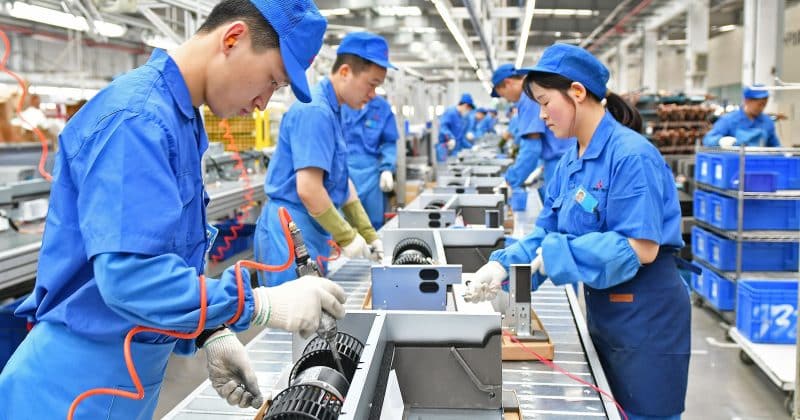
Consumer prices didn’t follow the same playbook. China’s CPI rose just 1.2% year-on-year in April, a gap that tells a clear story: manufacturers are absorbing higher costs but can’t pass them along to consumers because domestic demand remains stubbornly weak.
The news moving money, markets, and the world—before your day starts.
Daily. Free. Join 34,000+ readers across crypto, finance, and policy.
Geopolitical roots, economic consequences
Roughly a fifth of the world’s petroleum passes through the Strait of Hormuz on any given day. The current conflict in Iran has created sustained disruption to shipping lanes, pushing crude oil and natural gas prices higher across international markets.
The International Monetary Fund and other institutions have already started adjusting their forecasts. China’s GDP growth projection for 2026 has been revised downward to a range of 4.4% to 4.7%, reflecting both the inflationary pressure from external commodity shocks and the persistent challenge of weak consumer spending at home.
Analysts have noted that the central government may hold off on immediate policy intervention. The thinking: with producer prices rising due to external factors rather than domestic overheating, aggressive stimulus could amplify inflation without solving the underlying supply-side problem.
What this means for investors and the crypto market
For traditional equity investors, the margin pressure story is the one to watch. Chinese manufacturers, particularly in sectors like steel, chemicals, and electronics assembly, face a period where costs are rising faster than their ability to raise prices.
For crypto markets, rising inflation at the producer level historically nudges a portion of investors toward assets perceived as inflation hedges. The more relevant dynamic may be what happens to global liquidity. If China’s central bank holds off on easing while the economy slows, that’s a tightening signal from one of the world’s major liquidity sources.
May’s PPI data, expected around June 10, will be the next data point to confirm whether April was a one-off shock or the start of a sustained inflationary trend.