
China emerges as key buyer of Iranian oil after US sanctions waiver
General License X opens a 60-day window for Iranian crude sales, but Asian refiners outside China aren't exactly lining up
The US just opened the door for Iranian oil to flow legally onto global markets. China was already standing on the other side, waiting.
On June 22, 2026, the US Treasury’s Office of Foreign Assets Control issued General License X, a temporary sanctions waiver permitting the production, delivery, and sale of Iranian oil and petrochemicals for 60 days. The license expires on August 21, 2026, and it’s tied to broader diplomatic efforts around Iran’s nuclear program.
China currently absorbs approximately 90% of all Iranian crude exports. Asian refiners outside of China have signaled limited interest in stepping up purchases, citing adequate existing stockpiles and the compliance headaches that come with touching sanctioned oil, even when a temporary license says it’s fine.
A waiver without many takers
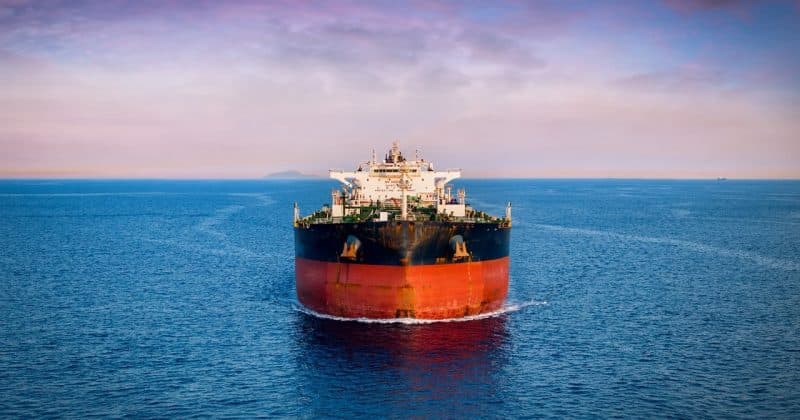
As of late March 2026, more than 150 million barrels of oil were reportedly en route to China. Some estimates place that figure closer to 161 million barrels.
Shandong’s independent refiners, often called “teapots” because of their smaller scale relative to state-owned giants like Sinopec, have been the backbone of this trade for years. They buy discounted Iranian crude because it’s cheap, and they’ve built entire procurement networks around it. A 60-day waiver doesn’t change the underlying market structure. It just makes a portion of it temporarily legal.
Macro, rates, and crypto—what moved markets and what matters next.
Daily. Free. Join 34,000+ readers across crypto, finance, and policy.
The sanctions whack-a-mole problem
Throughout 2025 and into early 2026, the US took enforcement actions against Chinese companies involved in Iranian oil imports. Qingdao Haiye, for example, was among the entities targeted. These actions were designed to squeeze the financial infrastructure that facilitates the trade, hitting shipping companies, trading firms, and port operators with sanctions designations that cut them off from the US financial system.
The issuance of General License X represents something of an about-face, or at least a strategic pause. After spending months trying to punish the very trade it’s now temporarily permitting, Washington appears to have concluded that the geopolitical calculus favors engagement over enforcement, at least for the next 60 days.
What this means for investors
The concentrated nature of Iranian oil demand, with roughly 90% flowing to a single country, tells you something important about the commodity’s risk profile. This isn’t a normal market with diversified buyers and transparent pricing. It’s a bilateral trade dressed up as an international commodity flow.
The more interesting play may be watching what happens to secondary sanctions enforcement after August 21. If negotiations over Iran’s nuclear program make progress, the waiver could be extended or expanded. If talks collapse, Washington could snap back to aggressive enforcement, potentially targeting an even broader set of Chinese entities than before.
When 90% of a sanctioned country’s exports flow to a single buyer regardless of enforcement actions, the sanctions regime starts to look less like a blockade and more like a tax on transaction complexity. The barrels still move. They just cost more to ship, insure, and finance.